
Online Casino American Roulette in the UK: What to Check
 Available in GB
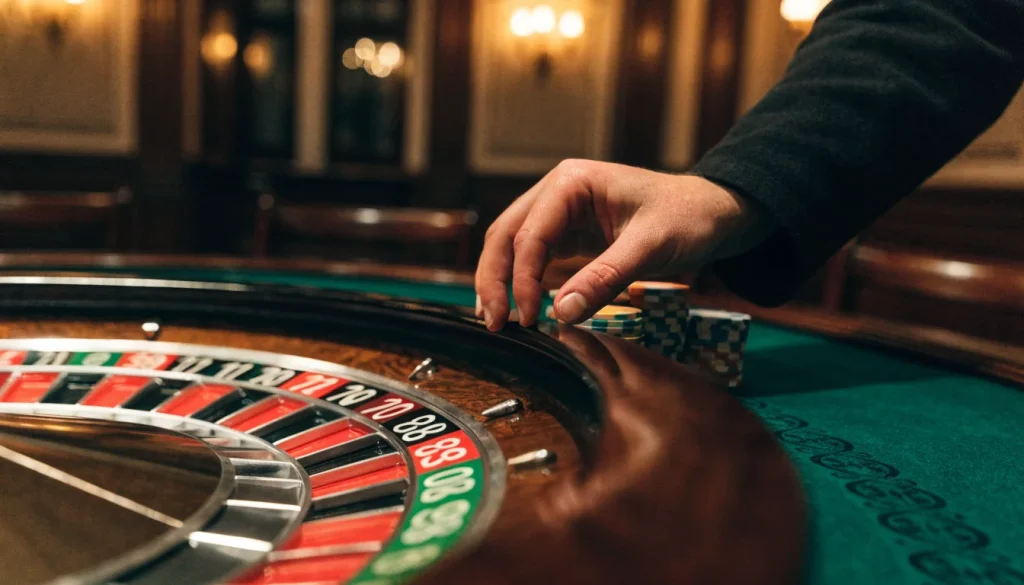
A guide to verifying a casino’s UK licence and understanding American roulette’s double-zero wheel, table layout and real-money safeguards.
Finding an American Roulette Casino in Great Britain
An American roulette table may be the reason a casino catches someone’s attention; its licence is the more consequential detail. For remote gambling offered to people in Great Britain, the operator must hold the relevant licence from the UK Gambling Commission. That requirement follows the market being served, not the location of the company’s servers or other key equipment. A business cannot step outside the rule simply by placing its technical operation elsewhere.
The Commission regulates commercial gambling in Great Britain and is the sole regulator for it. Its remit includes online casinos. This makes the public register a practical starting point when assessing an online casino offering American roulette: it lets the public check whether the business named on the site is recorded as holding an operating licence.
Check the operator, not just the branding
Casino websites often present a brand prominently, while the legal business responsible for the gambling may have a different name. Those names should not be treated as interchangeable without checking. The relevant question is whether the company behind the service has the required operating licence for serving Great Britain consumers.
Before depositing, find the operator’s licence number on its website and check that number against the Gambling Commission’s public register. The number should lead to a register entry for the business responsible for the casino. The name and other identifying details should make sense alongside the information given on the site. A logo, a claim to be “licensed”, or a licence number printed in a footer is not, by itself, confirmation: the register is where the claim can be tested.
This is a modest act of scrutiny, but it changes the quality of the information. A licence statement on a casino’s own page is the operator speaking about itself; a register entry is the regulator’s public record. Neither makes every aspect of a gambling service suitable for every person, but the check addresses a narrower and essential point: whether the business is authorised to offer remote gambling in this market.
Online Casino Tournaments UK: Formats and Rules
Read the register entry carefully
The Commission issues operating licences to businesses and personal licences to individuals who work in relevant roles. For someone checking an online casino, the operating licence is the central item: it concerns the business offering gambling, rather than an individual employee. The distinction matters because the presence of a person’s licence would not establish that the casino company itself holds the required authorisation.
The register should be checked using the number supplied by the operator, rather than relying only on a search for the casino’s brand. A brand may not be the name under which the company appears. If the number does not produce a matching business entry, or the information appears inconsistent, that is a reason to pause rather than to infer that the casino is covered. The point is not to solve a naming puzzle on the operator’s behalf; it is to establish that the licence belongs to the business responsible for the service.
A search result, a copied licence image or a statement on an affiliate page is not a substitute for checking the public register. The register can also be revisited if the operator’s details change. Regulatory status is about the operator and its authorisation, not a permanent quality attached to a familiar brand name.
Keep the geography straight
“UK” is often used casually to describe the market, but the relevant rule for remote gambling is specific: operators serving consumers in Great Britain must hold the appropriate Gambling Commission licence, wherever their key equipment is located. This is why a foreign address does not, on its own, settle the licensing question. The location of the business’s machinery does not remove the obligation to be licensed for the British market.
Northern Ireland has a distinct legal position under the Gambling Act 2005, which governs gambling in England, Wales and Scotland rather than Northern Ireland. For a search focused on American roulette casinos in Great Britain, the practical check remains the operator’s Commission licence and its public-register entry. The broader label “UK” should not obscure the market to which the licensing requirement applies.
Licence Verification
Step 1: Find the number
Locate the operator’s licence number on the casino’s website.
Step 2: Search the register
Check that number against the Gambling Commission’s public register.
Step 3: Verify details
Ensure the name and identifying details on the register match the information given on the site.
A licence check is not a ranking of casinos and does not establish that one roulette offer is better than another. It cannot verify odds, betting options, the quality of a table or whether a particular game is available at a given moment. Those are separate questions. Here, the concern is more basic: whether a remote operator offering casino gambling to Great Britain consumers is authorised to do so.
The order matters. First identify the business, then verify its licence number on the Commission’s register, and only then consider depositing. It is a small administrative ritual, set against an industry built to make play feel immediate. The register is less theatrical. That is its virtue.
What Makes a Casino Suitable for American Roulette
A casino’s suitability for American roulette is less a matter of a grand claim on its home page than of how plainly it describes the game it offers. A useful listing identifies the version as American roulette, rather than relying on a generic roulette label and leaving the distinction to be discovered after opening the game. The rules and table information should be easy to find before play begins, and written clearly enough to connect the game’s name with what appears on screen.
That clarity matters because “American roulette” is not simply a decorative title. Players looking for this version need to know that the casino is presenting the game under that designation, and that its rules page corresponds to the game itself. An accurate description lets a player compare the offer with their expectations without having to infer the rules from a thumbnail, promotional line or unexplained label. Mystery is a poor substitute for information.
Online Bingo in the UK: Rooms, Patterns and Slots
The information should also be coherent across the casino’s pages. A game listing, rules display and in-game help should not appear to describe different versions or leave important terms scattered across unrelated screens. This is not a demand for elaborate prose. A concise explanation, available before wagering, is more useful than a page of promotional language that says little about the actual game. Suitability begins with the ability to understand what is being offered.
Rules and game information
A casino’s rules material is part of the experience, not an ornamental document. It should set out the rules that apply to the particular roulette game and make the relevant terms accessible before play. Information about inside bets and outside bets belongs within that explanation, so that those labels are not left as unexplained jargon. The payout terms should likewise be presented in a way that can be read alongside the game rules, rather than requiring guesswork or reliance on advertising copy.
This does not mean that every casino needs to turn a game page into a manual. It means the essential information should be findable, consistent and specific to the game on offer. A clear rules panel can help distinguish a practical description from a sales pitch; a vague promise of a “full roulette experience” cannot. The difference is plain enough.
Do
- Identify the game as American roulette explicitly
- Provide accessible rules before play begins
- Ensure consistent information across all pages
Don’t
- Use generic roulette labels
- Hide essential terms in promotional language
- Rely on thumbnails or slogans to explain rules
The presentation also affects whether the game feels manageable. Readable text, visible help information and a layout that does not obscure key terms make it easier to pause and check what a label means. This is not a claim about any particular software feature. It is a basic standard for information: if the rules are technically present but hard to locate or read, they do little work for the player.
Protections are part of suitability
A casino’s suitability cannot be judged only by its roulette catalogue. Player protections are part of the same practical picture. In Great Britain, operators must verify a customer’s age before allowing a deposit. New customers must be prompted to set a financial limit before their first deposit, and account-level controls for limits must remain accessible. These measures are more meaningful when their purpose and location are explained plainly, rather than hidden behind promotional menus.
Self-exclusion is another important safeguard. A casino should make its responsible-gambling tools visible and explain how account controls work. A complaints route matters too: UK-licensed operators must provide an internal complaints process and access to an approved Alternative Dispute Resolution service. These are not decorative assurances. They describe how a customer can raise a problem and what routes exist if it is not resolved internally.
Payment restrictions also form part of the regulated environment. UK-licensed casinos cannot accept credit cards for gambling, and operators cannot accept wallet payments where the wallet allows credit-card funds to be used for gambling. Clear payment information helps prevent a mismatch between what a player expects to use and what the account will accept. A polished roulette screen cannot compensate for obscure account terms.
Mines Casino Game in the UK: Rules and Risks
The wider principle is that the game should sit inside an account environment that makes safeguards usable. A financial limit is only meaningful if it can be understood and managed; self-exclusion is only a real protection if its availability is not concealed. The purpose is not to make roulette appear harmless. It is to make the boundaries visible.
A practical standard, not a league table
There is no single feature that makes one American roulette casino “the best” for every player. The useful comparison is between what a casino says it offers and how much dependable information it provides about the game, its rules and its protections. A long catalogue is not evidence of clarity; a confident slogan is not evidence of suitability.
For a game involving money, the relevant standard is modest but firm: the game should be identified accurately, its rules should be accessible, account protections should be plainly explained, and the operator should not obscure the conditions that govern play. The wider caution remains essential: gamble only what can be afforded to lose.
Recommended online casinos
- SlotoSportBonus: 500% up to £ 10 200+ 777 FS · Payout speed: 1-3 business days
- x3betBonus: Welcome Pack 100% Up to £1.000 + 200 Free Spins · Payout speed: 1-3 business days
- AmunbetBonus: Join now and get 450% up to 2,700 GBP + 450 FS · Payout speed: 1-3 business days
- WinBeastBonus: €5000 + 500 FS + €650 Freebet · Payout speed: 1-3 business days
- NightLuckBonus: Welcome Pack + 805% Up To 6400€ + 280 FS · Payout speed: 1-3 business days
- ZombillionBonus: Welcome Pack 250% up to £4000 + 200 FS · Payout speed: 1-3 business days
- DieselwinBonus: Welcome Pack 250% up to £4000 + 200 FS · Payout speed: 1-3 business days
American Roulette Online in the UK: The Game in Context
American roulette online is best understood first as a casino game made available through an online service, not as a particular casino or a promise about how a session will look. The name identifies a version of roulette; it does not, by itself, explain the presentation, the controls or the terms attached to a particular offering. Those belong to the service displaying the game.
French Roulette Online Casinos in the UK
That distinction matters because “online” describes the setting, while “American” describes the game being offered. A search for an American roulette casino in the UK can blur the two. One result may concern a casino business, another a game, and another a page discussing roulette in general. They are related subjects, but they are not interchangeable. The game can be considered without endorsing a venue, and a venue’s availability of roulette does not establish the details of every game it provides.
The digital setting also changes the distance between casino and player. A casino game once encountered in a physical room can now appear as part of an online catalogue, among other forms of entertainment. That shift is not merely technical. It turns the casino into a service that is present wherever a connected screen is, while the rules governing commercial gambling remain attached to the market in which that service operates. In Great Britain, remote gambling offered to consumers is regulated by the Gambling Commission, even when the operator’s key equipment is located elsewhere.
The legal framework gives this form of entertainment a distinctly public character. The Gambling Commission is the sole regulator for commercial gambling in Great Britain, and online gambling is legal for adults aged eighteen and over when offered by a properly licensed operator. The Gambling Act 2005 governs gambling in England, Wales and Scotland, though not Northern Ireland. A casino is not simply a room with a particular appearance: the Act defines it through the arrangement that gives people an opportunity to take part in one or more casino games. Online, the room may disappear from view; the regulated activity does not.
Live Dream Catcher Casino in the UK: What to Check
That framework is relevant to American roulette without being part of the game’s identity. A game name says what kind of casino entertainment is being presented. It does not establish whether a particular service is appropriately licensed, nor does it settle what protections or terms apply to an account. Those questions concern the operator and the conditions under which the game is offered. The distinction is useful: a familiar name can make a product seem self-explanatory, when in practice the game and the service around it are separate things.
There is also a difference between the general subject of online American roulette and the close examination of a particular display. A game can be introduced at this broad level without treating its wheel, betting surface or individual controls as universal. Online presentation is not a guarantee of one fixed appearance. The category gives the game a name; the screen gives it a particular form. Conflating the two makes a description sound more certain than the experience warrants.
Nor does the phrase “American roulette online casino” describe a special kind of institution. It usually points to the intersection of a casino service and a named roulette game. The useful question is what is actually being offered, and under what arrangements, rather than whether a string of words makes the offering sound distinct. In a crowded digital catalogue, labels do a great deal of work. They do not do all of it.
In Great Britain, remote gambling offered to consumers is regulated by the Gambling Commission, regardless of where the operator’s key equipment is located.
The game’s online context is therefore both ordinary and revealing. It is one item in the wider world of casino entertainment, presented through a remote service and governed by rules that reach beyond the screen. In Britain, that means the commercial activity sits within a local regulatory system, rather than becoming legally weightless simply because it is delivered over the internet. The screen is a doorway, not a jurisdiction.
Like other forms of gambling, roulette involves the possibility of losing money. Any participation belongs within the boundary of what can be afforded to lose; no presentation or familiar name changes that. The game can be approached as entertainment, but the commercial setting is designed around wagering, not certainty. That is the sober context.
The American Roulette Wheel and Its Double-Zero Design
The American roulette wheel is identified by its double-zero design: alongside a zero, it has a separate double-zero marking. That distinction gives the American label its practical meaning. It is not a reference to the casino’s location or to a particular style of presentation, but to a feature of the wheel itself.
The two markings matter because roulette begins with a wheel and a moving ball, not with the betting surface laid out beside it. The ball comes to rest at a marked position, and the wheel’s design determines which positions are possible outcomes. The double zero is therefore not decorative punctuation. It is part of the wheel’s identity.
A player encountering an online American roulette casino may see the wheel rendered on screen rather than turning in a room. The image can be animated, but the designation still points to the same defining feature: the distinct zero and double-zero markings. A digital presentation does not make those labels interchangeable, nor does it make the wheel merely a background for the game.
That distinction is easy to overlook when the interface gives equal visual prominence to the wheel, the felt and the controls. Yet each serves a different purpose. The wheel produces the result; the betting surface organises the choices; the interface carries both to the screen. Keeping those roles separate makes the term “American roulette” less mysterious. It names a wheel design, not a promise about the look or quality of a casino’s software.
The double zero also explains why the American designation is worth noticing before the game begins. A single zero and a double zero are separate marked outcomes, not two ways of writing the same thing. The second marking changes the wheel’s set of possible results, and that is the core distinction conveyed by the name. No elaborate history is needed to see the point. One extra mark, a different design.
The American roulette wheel is often discussed as though its name alone settles every detail of how a game works. It does not. The designation identifies the double-zero arrangement, while the rules and other features belong to the particular game being offered. A wheel image can help establish what version is on screen, but it cannot, by itself, answer every question about the game or the casino.
There is a small cultural neatness to the design: a national label survives in the vocabulary of an online game, even when the wheel is only a moving image on a device. The name still asks the viewer to recognise a difference in the object. Not the room. Not the table. The wheel.
For anyone comparing versions, the useful point is simple: American roulette is distinguished by the presence of both zero and double zero. That is the wheel-level meaning of the term, and the reason the double-zero design deserves attention before other parts of the game are considered.
Live American Roulette: Dealers, Tables and the Casino Room
A live-dealer game changes the character of an online casino. Instead of encountering only a digital game interface, the player watches a dealer conduct play in a studio or casino setting, with the screen carrying the action into a remote session. The roulette table becomes a shared point of attention: the dealer’s gestures, the pace of the game and the view of the room matter alongside the game itself.
Live Casino Lightning Roulette in the UK: How It Works
That presentation can make a live American roulette session feel closer to a visit to a casino floor, though the setting remains mediated by a screen. It is not the same as sitting at a physical table. The dealer is present in the broadcast, while the player participates remotely; the room is visible, but not entered. This distance is part of the format, not a defect to be concealed.
The live casino has a broader place in Britain’s online gambling culture than roulette alone. Grosvenor first introduced its live casino games in 2013, presenting a range that included Blackjack, Texas Hold’em and Roulette. The launch placed familiar casino-room games in a format that could be watched and joined online. It also reflected a lasting feature of casino life: the appeal lies not only in a game’s rules, but in its performance and social atmosphere.
A live dealer gives that atmosphere a human focus. The dealer’s role is to conduct the session on camera, while the interface provides the remote player’s point of entry. How clearly the action is shown, whether the table feels calm or hurried, and how naturally the presentation holds together are all part of the experience. These are qualities of delivery, not promises about a result.
The phrase “live American roulette” can describe more than one kind of offering. A live casino may present roulette among its games, but that alone does not establish that a particular table uses the American variant. The game’s name and description should make the distinction clear before play begins. The dealer’s presence is no substitute for checking what is actually being offered.
There is a small social theatre to the arrangement: a room organised around a table, a dealer carrying the pace, and distant participants following from separate screens. Online, that theatre is both intimate and remote. The camera brings the table close; the separation remains.
A live session can make the casino feel less like a menu of games and more like a place with a rhythm. That impression should not be mistaken for a reason to wager beyond what can be afforded to lose. The room may be virtual. The money is not.
Attention: The atmospheric appeal of a live dealer session does not change the fact that the money wagered is real; only gamble what can be afforded to lose.
Playing Online: Bets, Payouts and What Can Be Verified
Playing American roulette online involves more than selecting a wager and waiting for an outcome. The useful first step is to establish what the particular game says about its rules and returns. A casino’s roulette title alone does not establish those details, and a familiar name is not a substitute for the information shown with the game.
Before staking money, the displayed rules and payout information should be read as part of the game, not as fine print to be visited after a result. The relevant figures are those attached to the specific version being played. A general description of American roulette cannot confirm the return for every wager on every online table; nor can a figure from one game safely be carried over to another. If the game does not make its payout terms clear, there is no sound basis for assuming them.
The same restraint applies to explanations of how to play. A reliable account should describe only what the selected game’s instructions actually show. The interface may provide a rules panel or help information; its contents, rather than a guide written for a different version, are the practical reference. This matters because a player is making decisions within a particular game, not an abstract idea of roulette. Details should be checked before a wager is placed.
A payout is not the same thing as a promise of profit. It describes a game’s stated return for a result under its published terms; it cannot tell a player what will happen in an individual round. The distinction is plain, though gambling language often tries to make uncertainty sound tidier than it is. The arithmetic can be exact. The outcome is not.
For anyone considering a real-money game, the broader safeguards remain relevant even when attention is fixed on a single wager. Operators must verify age before allowing deposits, and gambling should be limited to money that can be afforded to lose. Those protections do not supply missing game rules, and they do not turn a payout description into a forecast.
A careful explanation of online play can therefore do two things: point to the rules and return information provided for the exact game, and refuse to invent figures that are not established there. That is less theatrical than a table of confident numbers. It is also more useful.
Reading the American Roulette Table Layout
The table is the part of an online roulette game where wagers are arranged. On screen, it gives a visual map of the available betting positions; it is separate from the wheel and from the dealer or other presentation around the game. The precise appearance can vary between games, so a familiar arrangement should not be mistaken for proof that every interface works in the same way.
A table layout can look busy because it compresses many possible choices into one surface. Lines, boxes, labels and colour help distinguish places where a wager may be made. Their purpose is practical: they show where a selection belongs and, once a wager is placed, help make that selection visible. The layout is not merely decoration. It is the interface between a player’s intention and the game’s record of that wager.
Online casinos without ID in the UK: what to expect
In a digital version, the surface may be viewed on a computer or a smaller screen. Scale changes what is easy to read. Labels that seem clear on a large display can become crowded when the same table is reduced, while touch controls may make selecting a position feel different from using a mouse. The underlying image can remain recognisable even as the way of interacting with it changes.
American roulette casino table layouts may also differ in presentation. One game might make the betting area prominent; another might share the screen with other visual elements. These are design choices, not evidence that the available wagers or their terms are identical. The game’s own labels and information should be read as part of the interface rather than inferred from the look of another table.
For a player, the useful habit is to check the selected position before confirming a wager and to notice how the game indicates that selection. A highlight, marker or other visual response can help show what has been entered, but the precise cue depends on the interface. If the display is unclear, guessing is a poor substitute for understanding it.
The table can make a complicated set of choices appear orderly. That order is designed, not neutral: it directs attention and makes some parts of the surface easier to find than others. A measured pause over the layout is therefore part of using it, not a detour from the game. The screen is a map, not the territory.
The Online American Roulette Game
An online American roulette game is a casino game made available through an internet gambling service. Its name identifies the game being offered; it does not, by itself, describe how the game is presented on screen or what a particular casino provides around it. Those distinctions matter in a category where one familiar title can appear in more than one format.
The online game should not be confused with live-dealer American roulette. In a live presentation, a dealer and a physical table form part of the viewing experience. A game offered online without that live-dealer format remains an online casino game, but the label alone does not establish what its screen looks like, who supplies it, or which additional features are present. Such details vary by offering and need to be checked in its own description.
Nor does the phrase “American roulette” settle every practical question about playing. The game’s identity is one thing; the choices available during a round and the information shown on a betting screen are another. Those belong to the rules and interface of the specific game, rather than being guaranteed by its name. A casino’s title or thumbnail is a starting point, not a full account.
That modest distinction is useful because online gambling turns a broad casino tradition into a collection of labelled products. The label can tell a player which game is being advertised, while leaving presentation and operating details to the individual offering. No mystery is required, but neither should assumptions do the work of a game description.
Verification Before Play
- Verify the operator holds a UK Gambling Commission licence
- Confirm the game is specifically identified as American roulette
- Read the displayed rules and payout terms
- Set a financial limit on the account
In Great Britain, online casino gambling sits within a regulated market: businesses offering remote gambling to consumers must hold the relevant Gambling Commission licence. That legal status concerns the operator, not the meaning of a game title. An online American roulette game is therefore best understood as the game itself, separate from the live room, the operator’s credentials and the mechanics of placing a wager.
Playing for Real Money: Limits and Player Protections
Real-money American roulette sits within a wider system of protections for online gambling in Great Britain. Operators must verify a customer’s age before allowing a deposit, and online gambling is legal for adults aged eighteen and over only at sites holding a UK Gambling Commission licence. The checks and controls around an account are part of the arrangement, not an optional extra.
Before a new customer makes a first deposit, the operator must prompt them to set a financial limit and provide accessible controls for managing account limits. UK-licensed casinos must also offer self-exclusion tools. These measures can help put distance between a player and gambling, but they do not remove the need to decide what money can safely be lost.
A specialist gambling review reports online slot stake limits of £5 per game cycle for adults aged twenty-five and over and £2 for those aged eighteen to twenty-four. The same kind of review says those limits do not cover roulette or blackjack. They concern slots, not roulette wagers, and should not be mistaken for a roulette payout rule.
Best online slots payout percentages: what they show
That distinction matters: the absence of those particular slot limits does not make roulette risk-free or imply that a player’s personal spending is protected by a fixed cap. Account-level financial controls remain relevant, while self-exclusion is available for those who need to stop access rather than merely adjust a limit.
The wider British approach treats gambling as a licensed activity with duties placed on operators, while leaving the player’s financial judgement consequential. A real-money game can consume funds quickly; the safeguards are there to support control, not to promise a favourable result. Only gamble what can be afforded to lose.
How Many Pockets Does an American Roulette Wheel Have?
A precise pocket count should not be inferred from the words “American roulette” alone. The familiar claim that an American wheel has thirty-eight pockets is not established simply by seeing that label, and it should not be repeated as a verified specification without reliable information about the particular game.
That distinction matters online. A title can identify a game category without documenting every physical feature represented on screen. The pocket count is a concrete specification, not a detail that can safely be supplied by assumption. Where a casino publishes rules or a game description, those materials are the place to look for an explicit statement; silence is not confirmation.
The same care applies to descriptions copied between sites. A repeated figure may look authoritative through sheer familiarity, but repetition is not proof. If the published information does not state the count, the accurate account is that the count has not been confirmed—not that a conventional answer must apply to every version carrying the name.
This is a narrow question, but it reflects a wider habit in online gambling: separating a recognised label from a documented feature. The distinction is less dramatic than a spinning wheel, and more useful. A game name can orient a player; only clear rules can settle a specification.
So, how many pockets are on an American roulette wheel? The count should be treated as unconfirmed unless the rules for the specific game state it plainly. That is more cautious than supplying a familiar number, but a confident guess is still a guess.
What are the online slot stake limits in Great Britain?
The limit is £5 per game cycle for adults aged 25 and over, and £2 for adults aged 18 to 24. These limits do not apply to roulette or blackjack.
Are online casino games licensed and regulated?
Yes. The UK Gambling Commission regulates online gambling in Great Britain, and remote operators serving consumers there must hold the relevant licence.
Is LuckyPays licensed by the UK Gambling Commission?
The Gambling Commission’s public register dated 26 September 2026 does not show an entry for LuckyPays or luckypays.io.
Casino Games
Prepared by the Skrill Casino editorial staff.