
UK Skrill Casino Bonuses and Welcome Offer Rules
 Available in GB
Skrill Casino Safety Verification vs Official Legality
The fastest way to get confused about whether Skrill is “safe for casinos” is to treat it as one question, when it is actually two that happen to share a sentence. Is the wallet safe — is your money protected, your data encrypted, your account regulated? That is a payments question, answered by the FCA. Is playing at a casino through Skrill legal — are you allowed to gamble this way in the UK? That is a gambling question, answered by the Gambling Commission. Conflate them and you will reassure yourself about the wrong thing, which is exactly the mistake I see players make when they decide a casino is “safe” because the wallet is regulated, or “dodgy” because gambling feels legally grey.
So this audit splits them deliberately and answers each on its own terms. The wallet’s safety stands or falls on its financial regulation and its security engineering. The legality of your play stands or falls on whether the casino holds a UK licence, with the wallet being almost beside the point. Skrill can be perfectly safe while the casino you point it at is unlicensed and best avoided; the wallet’s regulation does not vouch for the operator.
Wallets are no longer a niche payment habit you have to justify, either, which is part of why this matters to so many people. One in five UK cardholders now routes more than half of their transactions through a digital wallet, even as 59 per cent still do not use one at all — a split market in which the wallet-using minority is large, growing and squarely the audience asking these safety questions. Let us answer them properly.
A secure platform not only protects your personal data but also ensures that Skrill casino withdrawals are processed smoothly and without unnecessary verification delays.
Skrill’s FCA Status and What It Protects
Andrew Rhodes, who runs the Gambling Commission, made an observation in a recent keynote that frames why payment regulation matters more every year: “95 per cent of adults have the Internet at home… People average over 4 hours online a day, 75 per cent of which is on smartphones.” When that much of life and money has moved onto a phone, the question of who regulates the wallet on that phone stops being academic. For Skrill in the UK, the answer is the Financial Conduct Authority.
What does FCA oversight actually protect? Three things, concretely. First, safeguarding of funds: as a regulated e-money institution, Skrill is required to hold customer money separately from its own operating funds, so your balance is not the company’s to spend or lose in the ordinary course of business. Second, conduct standards: the FCA imposes rules on how the wallet treats you, handles complaints and manages risk, with a regulator empowered to act if it falls short. Third, anti-money-laundering obligations, which are why the wallet verifies your identity — an inconvenience that is also a protection, because it keeps the rails clean.
It is worth being precise about what this is not. FCA regulation of an e-money firm is not the same as the Financial Services Compensation Scheme protection you get on a bank deposit. The safeguarding regime separates and protects your funds, but it operates differently from bank deposit insurance, and a player who assumes “regulated equals bank-guaranteed” has overestimated the cover. The protection is real and substantial; it is just a different shape from the one most people picture, and knowing the shape matters if you ever need to rely on it.
For a casino player specifically, the FCA layer means the money sitting in your Skrill wallet between sessions is held under a regime designed to keep it yours. That is a genuine advantage over leaving a balance inside a casino account, where your funds sit under the operator’s arrangements rather than a dedicated e-money safeguarding regime. The wallet is, in this narrow but important sense, a safer place to park money than the casino is — which is one of the quieter arguments for cashing out promptly rather than letting balances linger on a gaming site.
There is a practical test you can run on any e-money firm to confirm it is what it claims. A genuinely FCA-regulated wallet appears on the regulator’s public register, with its permissions and status listed, and that register is searchable rather than something you take on the firm’s marketing word. I would no more trust a wallet’s own claim of regulation than I would trust a casino’s own claim of a licence — both are verifiable against an authority that does not answer to the company being checked. For Skrill, that verification confirms the e-money permissions that the safeguarding and conduct protections rest on, and running the check yourself once is worth more than any reassurance a website can print about itself.

Encryption, Tokenisation and Account Security
Strip the jargon away and account security comes down to a single promise: the casino never touches your sensitive details, and nobody intercepts them in transit. That promise is what tokenisation and encryption deliver, and it is the most underappreciated reason the wallet is safer than handing a card straight to a gaming site.
Tokenisation means that when you pay a casino through Skrill, the operator receives a token — a stand-in reference — rather than your actual financial credentials. The casino learns that a verified payment arrived; it does not learn your card number, your bank details, or anything it could misuse or leak in a breach. Encryption protects the same data while it travels, scrambling it so that an interceptor sees noise rather than numbers. Together they mean a casino data breach cannot expose what the casino never held. This is a structural protection, not a promise of good behaviour — the wallet is safer because of what the casino is architecturally prevented from seeing.
British players have intuited this advantage even without the vocabulary for it. Asked which payment type they consider safest, 57 per cent of online bettors named digital wallets, and 65 per cent rated them fastest for receiving winnings — and the safety perception rests largely on exactly this separation between the player’s real credentials and the merchant. The wallet sits between you and the casino as a buffer, and players feel the reassurance of that buffer even when they could not draw the diagram.
There is a subtler benefit that only shows up over time. Because the casino holds a token rather than your real credentials, a future breach of that operator cannot reach back and compromise the card sitting behind the wallet — the exposure is capped at the token, which is useless outside the original arrangement. Compare that with handing a card straight to a dozen different gaming sites over a year: each one becomes a separate copy of your details, and a breach at any of them is a breach of you. The wallet collapses that sprawl into a single regulated point of contact, so the question stops being whether every casino you have ever touched has flawless security and becomes whether one regulated wallet does. That is a far smaller, far more answerable question, and it is the structural reason the buffer keeps paying off long after the first deposit clears.
Is Casino Play via Skrill Legal in the UK?
Let me kill a myth that costs players real anxiety: gambling at a licensed online casino is entirely legal in the UK, and using Skrill to fund it changes nothing about that legality. There is no asterisk, no grey zone, no quiet illegality you are getting away with. Online gambling is a large, legal, regulated and frankly mainstream activity here, and the wallet is just a payment method pointed at it.
The scale alone should dispel any sense of operating in the shadows. The UK gambling industry generated 16.8 billion pounds in gross gambling yield in the year to the end of March 2025, up 7.3 per cent on the year before, and 48 per cent of UK adults gambled in the past month — a figure that falls to 28 per cent once you strip out people who only play the lottery, but which still describes a national pastime rather than a fringe vice. This is not an underground economy you are sneaking Skrill into; it is a licensed sector measured in billions and participated in by a large slice of the adult population.
The legality that actually requires your attention is the casino’s, not the wallet’s. A UK-licensed casino holds a Gambling Commission licence, submits to its rules on player protection, fairness and anti-money-laundering, and is the thing that makes your play legal and your funds recoverable through a regulated channel. Skrill funding an unlicensed offshore site does not borrow the wallet’s legitimacy — the wallet is regulated, but the gambling at an unlicensed operator sits outside UK consumer protection entirely, and that is where players genuinely expose themselves.
So the legal question resolves cleanly once you separate the two layers. Your payment method is regulated by the FCA and legal to use. Your play is legal provided the casino holds a UK licence. The wallet cannot make an unlicensed casino safe to use, and a UK licence does not depend on which wallet funds it — they are independent guarantees, and you want both. Checking the casino’s licence is the single most important legality step you can take, and it is one the wallet will never do for you.

Spotting Unsafe or Unlicensed Skrill Casinos
The most dangerous casino is not the one that looks dodgy — it is the one that looks polished but lacks the licence underneath. I have reviewed sites with slick design, generous-looking offers and a Skrill logo at the cashier that turned out to be unlicensed for the UK, and the wallet’s presence had lulled players into trusting them. Skrill acceptance is not a safety badge. Let me give you the checks that actually separate a safe operator from a hazardous one.
Start with the licence, because nothing else matters if it is missing. A legitimate UK-facing casino displays its Gambling Commission licensing information, and that detail is verifiable against the regulator’s own public register rather than taken on the site’s word. A site that buries, fakes or omits its licence is one to walk away from regardless of how good the wallet support looks. The licence is the load-bearing wall; everything else is decoration.
After the licence, look at the terms and the transparency. Clear, findable payment terms, stated payout times, honest fee disclosure and a real complaints route are the markers of an operator that expects scrutiny. Vague “up to” payout promises, hidden exclusions, terms that contradict themselves between pages, and a support channel that does not respond are the markers of one that does not. The wallet you fund with does not change any of this — a regulated wallet pointed at an opaque operator is still your money flowing somewhere opaque.
Be especially wary of the pitch that tries to use the wallet’s reputation as cover, particularly any site implying you can skip verification because you are paying with Skrill. Verification is a legal requirement at a licensed UK casino and a protection for you, and a site offering to bypass it is advertising that it does not follow the rules. That specific red flag is common enough that I have unpacked it in full in the piece on verifying your Skrill account for UK casino play, because the players most likely to be caught are the ones who think the wallet exempts them from checks. It does not, and any operator claiming otherwise has told you exactly what it is.
What Data Skrill Shares With Casinos
Players worry about the wrong privacy threat. The fear is usually that the casino can see into the wallet — your balance, your other transactions, your spending elsewhere. It cannot, and understanding what is actually shared turns a vague anxiety into a manageable fact. When you pay a casino through Skrill, the data flow is narrow and one-directional in the ways that matter.
The casino receives confirmation that a payment of a given amount succeeded, an associated transaction reference, and the account-level identity details needed to match you to your gaming account and satisfy anti-money-laundering rules. What it does not receive is your wider Skrill transaction history, your balance, your funding sources, or visibility into what you do with the wallet anywhere else. The wallet acts as a gate, passing through only what the transaction requires and holding back the rest. Tokenisation, again, is doing the heavy lifting — the casino sees a verified payment, not a window into your finances.
The flow runs the other way too, and this is the part players forget. Your casino activity is visible to Skrill, because the wallet processes the transactions, so the merchant name and the gambling nature of the spend are known to it. This is not surveillance for its own sake; it is the basis of the anti-money-laundering and risk monitoring that the FCA requires, and it is the same mechanism that lets the wallet flag unusual patterns. The wallet knowing you gamble is a feature of a regulated system, not a leak.
For practical privacy, the implication is reassuring. The casino cannot build a picture of your finances from a Skrill deposit, which is a real improvement over a card that exposes more to the merchant’s systems. Your obligation is to keep your own end tidy — accurate account details, prompt responses to verification, and an awareness that the wallet’s records are an honest log of your gambling that exists whether you look at it or not.
One misconception is worth correcting head-on, because it drives bad decisions. Some players reach for the wallet specifically hoping it hides their gambling from view — from a bank, a partner, anyone — and the wallet does not do that as completely as they imagine. A bank that funds the wallet can see money going to Skrill, and the wallet itself records every gambling transaction in full. What the wallet provides is a buffer between the casino and your card details, not a cloak that erases the activity from existence. If your reason for choosing Skrill is concealment rather than security, you have misunderstood the tool, and the gap between what you think it hides and what it actually logs is exactly where unpleasant surprises live.

Practical Steps to Keep Your Wallet Secure
All the regulation and encryption in the world cannot save an account whose owner reuses a password from a forum that got breached in 2019. Wallet security, at the point where it actually fails, is usually about habits rather than technology — and the habits are not hard, they are just easy to skip. Here is the short, non-negotiable list I give every player.
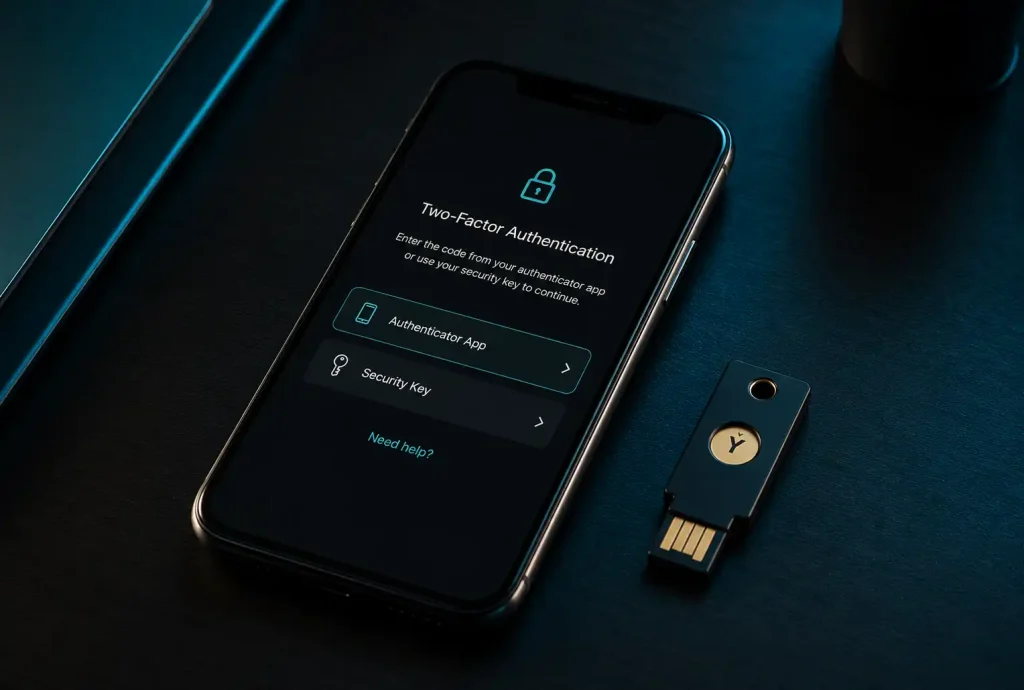
Turn on two-factor authentication and leave it on, because it is the single control that defeats most account takeovers even when a password leaks. Use a unique, strong password that exists nowhere else, since credential reuse is how a breach of an unrelated site becomes a breach of your wallet. Keep your contact details current so security alerts and verification requests actually reach you. And treat any unexpected log-in prompt, especially on public Wi-Fi or via a link in a message, as hostile until proven otherwise — phishing aimed at wallet users is a real and growing problem precisely because wallets have become so widely used.
That growth in usage is the backdrop to why hygiene matters more now than it did. UK digital wallet transactions exceeded 9 billion in 2023, up from around 1 billion in 2019, and the share of card transactions running through wallets climbed from 8 per cent to 29 per cent over the same stretch. A payment method handling that volume is a payment method criminals study, which is why the basic controls have shifted from optional to essential. The reassuring part is that the wallet supplies the tools; you only have to switch them on and not undermine them. Do that, and the security side of “is Skrill safe” rests where it should — on a regulated, encrypted system that you are not actively sabotaging.
We strictly recommend playing only at fully licensed platforms, which you can easily find on our list of trusted Skrill casino sites.
Skrill Safety Questions Answered
Three questions sit right on the seam between the two halves of this audit — the wallet’s safety and the casino’s legality — and they are the ones players most often get tangled in. Each answer keeps the two layers separate, because that separation, more than any single fact, is what makes the whole picture clear. The same split market where one in five cardholders lives largely in their wallet is the one asking them.
What happens to my Skrill balance if a casino goes bust?
Your Skrill balance is unaffected, because it sits in the wallet under FCA safeguarding rules, not inside the casino. Only money you had transferred into the casino account is exposed to the operator"s failure, which is one of the strongest arguments for cashing out to the wallet promptly rather than leaving funds on a gaming site. The wallet and the casino are separate pots, and a casino collapsing does not reach into the regulated wallet.
Is it legal to use Skrill at offshore casinos from the UK?
The wallet is legal to use, but an offshore casino without a UK licence sits outside UK consumer protection, so funding one means your play is not covered by the safeguards a licensed site provides. Skrill"s regulation does not extend its legitimacy to an unlicensed operator. The safe and clearly protected route is a casino holding a Gambling Commission licence, which you can verify on the regulator"s public register before depositing.
Can Skrill freeze my account for gambling activity?
Skrill can restrict or review an account under its anti-money-laundering and risk obligations, and unusual or unverified activity can trigger that, but gambling itself at licensed casinos is a normal, expected use of the wallet rather than grounds for a freeze. Keeping your verification current and your activity consistent with your account details is what keeps reviews rare. A freeze is far more often about unverified patterns than about gambling as such.
Articles
Written by the editors at Skrill Casino.