
Comparing Skrill and Neteller Casino Payment Methods
 Available in GB
Two Wallets, One Owner: Why the Choice Matters
The most surprising fact in this entire comparison is that you are choosing between two products made by the same company. Skrill and Neteller are both Paysafe wallets, run from the same stable, sharing infrastructure, compliance and a good deal of their plumbing — which is why, when players ask me which is better, my first instinct is to ask why they think there should be a meaningful gap at all. And this is a genuinely different question from comparing Skrill with PayPal, where the two products are owned by rivals and behave like rivals; here you are comparing siblings.
That shared parentage is not trivia. It sets the boundaries of how different the two can actually be, and it explains why the real distinctions are narrow and specific rather than sweeping. Paysafe is not a small operation splitting hairs — its total payment volume reached around 155 billion dollars by the end of 2025, and Skrill and Neteller are two of the larger faucets pouring into that figure. When one company processes at that scale across both brands, the differences that survive are deliberate positioning choices, not accidents of engineering.
So the honest framing for this whole piece is that we are not looking for a knockout. We are looking for the handful of places where two sibling wallets diverge enough to matter to a UK casino player — acceptance, fees, limits, and the kind of player each has drifted toward — and ignoring the vast middle where they are functionally identical, which turns out to be most of the territory.
If you are considering alternative payment methods outside the Paysafe group, our comparison of Skrill vs PayPal at UK casinos highlights the key differences in transaction fees.
How Skrill and Neteller Sit Within Paysafe
To understand why the two wallets feel so similar, you have to look at who is steering them, and the answer is one set of hands. Both Skrill and Neteller live inside Paysafe, the listed payments group that also runs PaysafeCard and a sprawl of merchant-services businesses. They are not competitors that happened to be bought by the same owner and left to fight; they are co-managed products positioned at slightly different angles to the same market.
The scale of the parent matters because it tells you what kind of company stands behind your wallet. Paysafe Limited reported around 3,300 employees in its 2024 annual filing, and moved roughly 155 billion dollars in payment volume by the close of 2025. That is a regulated, publicly accountable business with a compliance apparatus sized to match — which is reassuring for a gambling player, because it means both wallets sit under the same robust oversight rather than one being a lightly-run also-ran.
The shared ownership is something Paysafe has historically been quite open about treating as a strength. Lorenzo Pellegrino, in his time as chief executive across Skrill, Neteller and Income Access, framed the group’s purpose as connection: “Whether a transaction takes place online or in the real world, it’s all about making a connection. At Skrill we’re dedicated to better connecting consumers and our merchant partners through payments.” Strip the corporate gloss and the substance is that both wallets are built to do the same job — bridge a player and a merchant — which is exactly why they overlap so heavily.
What this means for you is practical. Do not expect one wallet to be dramatically safer, faster or better-regulated than the other, because they draw from the same well. The differences that remain are positioning differences — which casinos each brand has chased, which fee schedule each runs, which loyalty scheme each offers — layered on top of a shared foundation. Once you internalise that the foundation is common, you can stop agonising over the choice as if it were Apple versus Android and start treating it as picking between two trims of the same car, where the engine, chassis and safety rating are shared and only the badge and a few options change.

Casino Acceptance: Where Each Wallet Wins
If there is one battleground where the two siblings genuinely diverge, it is acceptance, and it is the first thing I check for any player deciding between them. Acceptance is simply which casinos will take the wallet at the cashier, and despite the shared owner, the two brands do not have identical footprints across UK-facing sites. The differences are small in absolute terms but decisive when your favourite site takes one and not the other.
Both wallets benefit from enormous global reach — Skrill alone is usable across more than 135 countries and offers a prepaid Mastercard in around 30 of them, and Neteller’s footprint is comparably broad. That worldwide acceptance is part of why both are iGaming staples: an operator licensing payment rails for a multi-market business naturally reaches for wallets that already work everywhere. So at the level of “is this wallet broadly accepted at UK casinos”, the answer for both is an unambiguous yes.
The divergence shows up at the margins. Historically, Neteller carried a slightly stronger association with the gambling sector in some markets, while Skrill has pushed harder on consumer-facing breadth, and individual operators end up favouring one brand in their cashier hierarchy for reasons of contract terms rather than capability. The result is that a given UK casino might list Skrill prominently and Neteller as a secondary option, or vice versa, or both equally — there is no universal pattern, which is precisely why you check the specific site rather than trusting a general rule.
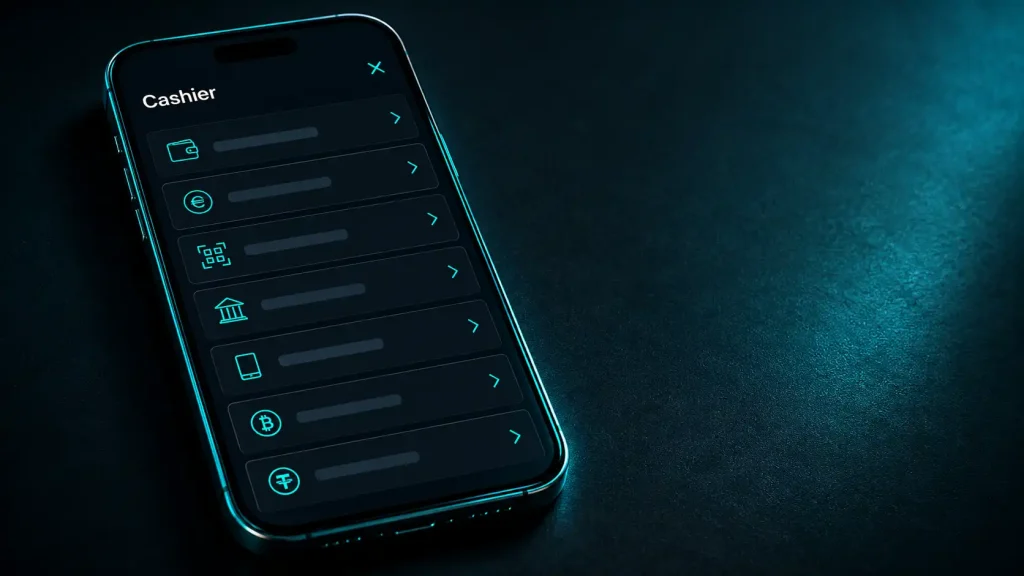
There is a deeper reason the patchwork persists, and it is about operators rather than wallets. Operators choose which payment methods to feature based on their own commercial calculus, and because there is no standard player to design a single cashier around, no two casinos arrive at the same line-up. A site courting high-volume regulars stocks its cashier differently from one chasing casual mobile players, and the Skrill-versus-Neteller prominence falls out of that strategy. The practical upshot: pick your casino first, then take whichever sibling it accepts, because the acceptance question is answered by the operator and not by any inherent superiority of one wallet. Where this gets sharper is the comparison with a method many UK sites barely support at all, which I have laid out in the look at how Skrill compares with PayPal at UK casinos.
One nuance worth flagging, because players misread it constantly: a wallet appearing lower in a cashier list is not a signal that it is worse or slower. Cashier order is set by commercial agreements and by which method the operator wants to steer you toward, not by any quality ranking. I have watched players pick the wallet listed first under the assumption it must be the “recommended” one, when the ordering was simply where the operator’s deal landed it. Treat the position in the list as marketing furniture, not advice, and judge each sibling on the things that actually vary — the fee that hits your usage, the limits on your verification tier — rather than on where a cashier happens to slot it.
Fees Head to Head
Fees are where players expect a clear winner and almost never get one, because the two siblings run schedules that are far more alike than different. The honest headline is that for the transactions a casino player actually makes — funding the account, receiving a payout — both wallets are typically free at the casino itself, with the costs lurking elsewhere in the wallet’s own schedule.
The fee that matters most to a casino player is the cost of getting money out of the wallet and onto a card. Skrill charges a typical 1.99 per cent to withdraw funds to a debit card, and Neteller’s equivalent sits in a comparable band, because shared ownership means shared logic on where to levy charges. Neither wallet generally charges you to deposit into a casino, and neither charges the casino’s payout into your wallet — the friction point is the last leg, wallet to bank or card, and it is roughly symmetrical between the two.
Where small gaps appear, they tend to be in the ancillary charges: currency conversion margins, inactivity fees on a dormant account, the cost of a wallet-to-wallet transfer. These vary between the brands and over time, and they are exactly the charges players ignore until one bites. An inactivity fee on a wallet you funded for a single casino run and then forgot is a classic way to lose money to a sibling wallet without ever making a transaction — both run them, and the specifics differ enough to be worth reading.
My guidance on fees is to stop hunting for the cheaper sibling and start managing the fee that dominates your own usage. If you regularly pull winnings back to a card, the withdrawal-to-card percentage is your real cost and it is broadly the same on both, so the choice should turn on something else. If you leave balances sitting in the wallet between sessions, inactivity terms matter more than the headline withdrawal fee. The fee comparison rarely picks a winner because the schedules were designed by the same team to sit close together; the winner is decided by how you, specifically, move money.
A worked example makes this concrete without naming any operator. Say you pull 500 pounds of winnings from your wallet to a debit card on either sibling. At the roughly 1.99 per cent card-withdrawal rate, that is just under 10 pounds gone on the way out — and it is the same on both, so the brand choice saves you nothing. Now imagine you instead leave that 500 pounds sitting in the wallet for a year between sessions. On one sibling an inactivity fee might quietly nibble at the balance; on the other the terms might differ by a pound or two a month. Over twelve months that ancillary charge can dwarf the one-off withdrawal fee you fixated on. The lesson is that the fee that hurts is the one attached to your actual behaviour, and that fee is almost never the headline percentage both brands advertise.

Speed and Limits Compared
Speed is the dimension where players are most convinced there must be a difference, and it is the dimension where there is least. Both wallets clear casino deposits instantly and both credit payouts on their fast final leg the moment the casino releases funds — and crucially, neither controls the part of a payout that actually takes time, which is the operator’s queue and review. So when a player tells me Neteller paid out faster than Skrill, what they have almost always measured is two different casinos, not two different wallets.
The perception that wallets are fast is real and well-earned across both brands. With 65 per cent of UK online bettors rating digital wallets the quickest route to their winnings and 57 per cent calling them the safest way to pay, the speed reputation attaches to the category rather than to one sibling over the other. That category-level trust is why a casino can pair either wallet with a “fast payout” claim and have it ring true to players — the wallet leg genuinely is fast, on both.
Limits are a touch more interesting because they can diverge with your account status. Both wallets impose transaction ceilings that rise as you verify and as your account ages, and an unverified account on either brand faces tighter caps than a long-standing verified one. The differences between the siblings here are usually smaller than the difference between your own verified and unverified states, which is the lever you actually control. A fully verified wallet of either brand will clear far more than a fresh, unverified one of the other.
The takeaway mirrors the fees section: do not choose your wallet for speed, because they are level, and do not blame your wallet for a slow payout, because the wallet was the fast part. Verify whichever sibling you pick to lift its limits, match it to a casino that has automated its own payout queue, and the speed you experience will be identical regardless of which of the two logos sits on your cashier.

Who Actually Uses Each Wallet
Strip away the marketing and look at who is actually holding these wallets, and a sharp profile emerges that applies to both. Users of Skrill and Neteller skew heavily male — around 70 per cent — and cluster in the 18-to-45 age band, with a strong tilt toward iGaming, sports betting and crypto. This is not two different audiences; it is largely one audience that happens to hold whichever sibling it signed up for first.
That shared demographic is itself revealing. When two products owned by the same company attract near-identical user bases, it confirms that players are not selecting between them on meaningful grounds — they are landing on one or the other through a casino’s cashier default, a friend’s recommendation, or which brand they encountered first. The choice is frequently arbitrary at the point of sign-up, which is part of why so few players can articulate why they use the sibling they do.
For a UK casino player, the practical relevance is that you fit the profile both wallets were built around, so neither is poorly suited to you on demographic grounds. The product-market fit is excellent for both, because gambling-oriented users are exactly who these wallets were designed to serve. The interesting question is not which wallet matches you — both do — but whether the heavy concentration of gambling activity in this user base shapes how operators and the wallets themselves treat your transactions, which it does, through the bonus exclusions and verification scrutiny that follow wallet users around regardless of brand.
That scrutiny is the hidden cost of belonging to a profile that is so strongly associated with gambling. Because both siblings carry a user base where iGaming, betting and crypto are dominant use cases, transactions on either can attract a closer compliance look than the same money moving through a method with a more diffuse audience. This is not a difference between Skrill and Neteller — it is a feature of being a gambling-oriented wallet at all — and it shows up identically across the two as occasional verification prompts, source-of-funds questions, and the slightly tighter ceilings that accompany an account flagged as high-activity. Knowing the profile you sit in lets you anticipate those checks rather than be blindsided by them, and on this front the two siblings are once again indistinguishable.

Which Wallet for Which Player
After all that, you want me to just tell you which to pick, and the unsatisfying truth is that the right answer is “the one your casino prefers and your habits favour”, not a universal champion. Since the two siblings are level on speed, near-level on fees and identical in safety, the deciding factors are external to the wallets themselves — and that is genuinely the analyst’s verdict, not a dodge.
The cleanest decision rule is acceptance-first. Choose your casino on its own merits, see which sibling it features most prominently in its cashier, and use that one. If both are accepted equally, fall back to which loyalty scheme suits you or which brand you already hold a verified account with, since verification effort is real friction you would rather not repeat. Geography barely enters into it for a UK player — Europe accounts for 63 per cent of Skrill’s user base with North America at 22 per cent and the Asia-Pacific region taking the remainder, so a British player is squarely in the core market either way.
What I will not do is crown a winner, because the data does not support one and the question is wrong. The siblings were engineered to sit close together by a single owner, so a player demanding a decisive gap is asking two near-identical products to behave like rivals they were never built to be. Match the wallet to the casino and to your own verification state, and the choice resolves itself without ever needing a champion. The player who agonises over Skrill versus Neteller is spending energy on the narrowest decision in their entire payment setup; the wallet-versus-card and the casino-selection choices matter far more, and that is where I would spend the decision-making energy instead.
You can compare the transaction limits for both digital wallets across the top Skrill casinos available to British players today.

Skrill vs Neteller Questions Answered
Three questions cut to the practical core of the sibling rivalry, and each one lands on the same theme that runs through this comparison — that shared ownership makes the two far more alike than the choice anxiety suggests. Here they are, answered narrowly.
Can I move money between Skrill and Neteller for free?
Because both wallets sit inside Paysafe, transfers between them are possible, but possible is not the same as free, and the terms change over time, so a wallet-to-wallet move can carry a charge. The shared ownership makes the transfer technically straightforward rather than automatically costless. Check the current fee in your wallet before moving balances, since this is one of the ancillary charges that differs between the siblings and over time.
Do casinos treat Skrill and Neteller identically for bonus exclusion?
Usually yes. When an operator excludes e-wallets from a welcome bonus, the clause almost always names both Skrill and Neteller together, because the commercial logic behind the exclusion applies to wallets as a category rather than to one brand. So switching from one sibling to the other to dodge a bonus exclusion does not work; the exclusion follows the wallet type, not the specific logo.
Which wallet has wider UK casino coverage in 2026?
Neither holds a decisive, universal lead. Both are accepted broadly across UK-facing casinos, and which appears more prominently depends on the individual operator"s cashier choices rather than any inherent edge. A given site may favour one in its hierarchy for contract reasons, so coverage is best judged casino by casino rather than as a blanket statement about either brand.
Articles
Created by the "Skrill Casino" editorial team.