
Live Dream Catcher Casino in the UK: What to Check
 Available in GB
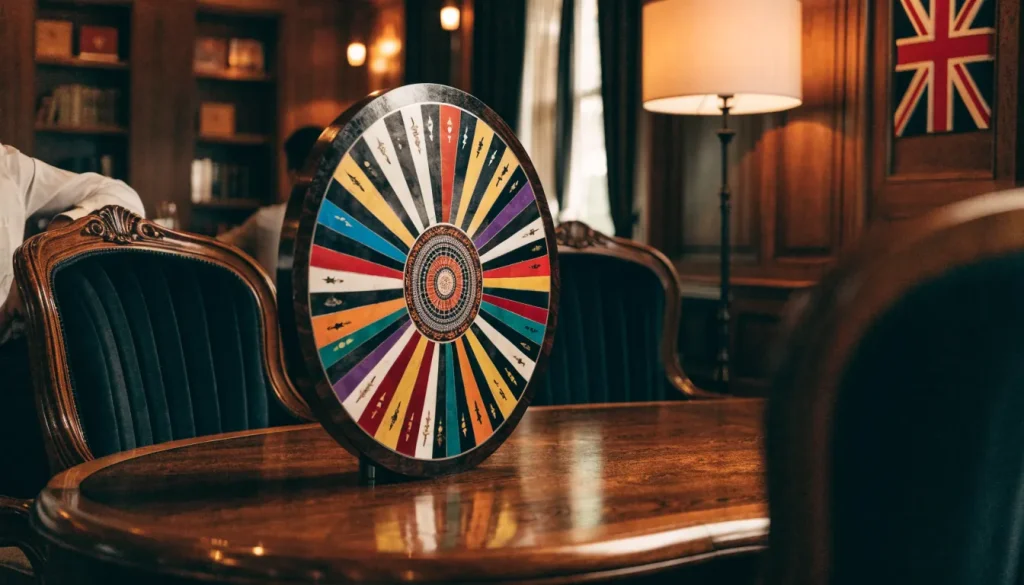
A practical guide to live-game menus, demos, casino reviews, licensing checks and Great Britain’s slot-stake rules.
Dream Catcher in the Live-Casino Line-up
A casino’s game menu is not one continuous thing. It is a collection of different forms of play, each shaped by its own habits and expectations. A live casino sits within that larger menu, alongside digital table games, slots and other products. Its distinguishing feature is the studio setting: a game is presented as a live production rather than as a wholly computer-generated display. That changes the atmosphere, though it does not turn every live title into the same kind of game.
Dream Catcher belongs in the reader’s mind as a name associated with the live-casino conversation, not as a synonym for the whole live section. The distinction matters. A person looking for Dream Catcher online is not necessarily looking for blackjack, roulette or a general catalogue of casino games. Nor does the presence of a live-casino category, by itself, tell anything about which individual titles appear within it. Menus are assembled by operators, and their contents are not interchangeable.
The live format has a history within British-facing casino businesses. Grosvenor first introduced live casino games in 2013, with card and casino options that included Blackjack, Texas Hold’em and Roulette. The detail is useful as a marker of how an operator’s online offer could extend beyond conventional digital games. It is not a claim about Dream Catcher’s own mechanics or place in any particular menu. Live casino was already a broader category, with more than one kind of game under its roof.
That breadth is easy to overlook when a single title attracts attention. A studio may evoke a familiar table, a dealer and the social conventions of casino play; another live production may have a different visual language and rhythm. The word “live” describes the mode of presentation, not a promise that all games share a format, pace or rules. In the same way, an online casino is not defined by one game merely because that game has become the focus of a visit.
Live Baccarat Online Casinos in the UK: How to Choose
The contrast with other casino products is partly a contrast of texture. Slots are commonly encountered as individual digital games, while table games draw on established formats such as blackjack or roulette. A live studio introduces people and a broadcast-like setting into the experience. Those broad categories can help make sense of a casino menu, but they cannot substitute for the specific description attached to an individual title. A category label is a filing system, not a rulebook.
This is why “live Dream Catcher” can mean something narrower than “casino games online”. The phrase points towards a particular title in a live setting, while the wider casino line-up may include unrelated games in other formats. The distinction is practical as well as semantic: a menu can contain many forms of play, but a title’s name does not reveal how it is presented, what rules govern it, or whether an operator includes it. Those are separate questions from the general character of live casino.
There is a small social history in the format, too. Casino games have long borrowed the theatre of a table: the dealer’s gestures, the visible procedure, the sense that other people occupy the same moment. Online studios carry some of that staging into a screen-based setting. Yet an audience watching a live production is still engaging with an online product, not walking into a physical casino. The screen supplies presence, not a change of venue.
For people comparing casino menus, the useful first distinction is therefore between the kind of product and the individual game. “Live casino” names a broad environment; “Dream Catcher” names the particular subject of interest. Neither term should be made to do the work of the other. A broad live section may sit beside digital slots and conventional table games, while the meaning of any one title depends on its own presentation and rules.
That separation also helps keep expectations proportionate. A live label does not, on its own, promise a particular studio, interface or set of options. Equally, an online casino that offers a large variety of games is not thereby a live-casino specialist. The menu is a map, and the labels are only its first layer.
Financial Risk
Only money that can be afforded to lose should be used for gambling.
Casino play also carries a plain financial boundary: only money that can be afforded to lose should be used for gambling. An operator must verify a customer’s age before allowing a deposit into a gambling account. Those conditions sit behind every category in the menu, whether the attraction is a familiar table game or a live title with a distinctive name. The theatre is optional. The financial risk is not.
Recommended online casinos
- SlotoSportBonus: 500% up to £ 10 200+ 777 FS · Payout speed: 1-3 business days
- x3betBonus: Welcome Pack 100% Up to £1.000 + 200 Free Spins · Payout speed: 1-3 business days
- AmunbetBonus: Join now and get 450% up to 2,700 GBP + 450 FS · Payout speed: 1-3 business days
- WinBeastBonus: €5000 + 500 FS + €650 Freebet · Payout speed: 1-3 business days
- NightLuckBonus: Welcome Pack + 805% Up To 6400€ + 280 FS · Payout speed: 1-3 business days
- ZombillionBonus: Welcome Pack 250% up to £4000 + 200 FS · Payout speed: 1-3 business days
- DieselwinBonus: Welcome Pack 250% up to £4000 + 200 FS · Payout speed: 1-3 business days
What the Dream Catcher Search Can—and Cannot—Establish
A search for Dream Catcher in a live-casino setting points towards a particular subject: a named casino product associated in the reader’s mind with live play. It does not, by itself, establish what a particular operator currently offers, how the game is presented, or whether access is available to someone in Great Britain. Those are separate claims, and each needs evidence of its own.
The distinction matters because a product name can travel further than the information attached to it. It may appear in a casino’s menu, in an old review, in a promotional image or in a player’s account of a session. These appearances do not all prove the same thing. A menu can indicate an advertised offering; a review can describe an earlier version of a site; a player’s account can refer to a different operator or date. Similar wording is not a guarantee of identical access.
“Live” also carries a definite expectation. It suggests a game presented in real time, rather than a conventional digital game operating without a live presentation. Yet that word in a page title or product description cannot settle the details of the experience. It does not identify the studio, explain the interface, establish the presence or role of a presenter, or confirm which functions are available. Those particulars should not be supplied by imagination merely because they sound familiar from other live games.
Online Casino American Roulette in the UK: What to Check
The same restraint applies to the name Dream Catcher. Knowing the name does not establish the rules, the pace of play, the layout, the outcomes or the way a wager is placed. Nor does it show whether the presentation has changed over time. A confident description of those features would need to be tied to information about the specific game and the operator displaying it. Without that connection, detail can look authoritative while being borrowed from some other product.
The phrase “live Dream Catcher casino” can also blur two different ideas: the game itself and the casino site through which someone hopes to find it. A product may be discussed generally, while availability depends on a particular operator’s catalogue and the terms under which it serves customers. The name alone does not identify a casino, prove that a listing is current, or show that a visitor can open the game. A page that moves directly from the product name to claims about access has crossed a gap without showing the bridge.
That gap is not a technicality. Gambling is a regulated activity in the United Kingdom, and the legal framework governing online casinos is not the same as a product label or a search result. A remote operator offering gambling to consumers in Great Britain must hold the relevant Gambling Commission licence. The Commission oversees commercial gambling across Great Britain, including remote services aimed at its consumers even when key equipment is located elsewhere. Its remit gives the market a legal structure; it does not certify every claim made about a named game.
Licensing
A remote operator offering gambling to consumers in Great Britain must hold the relevant Gambling Commission licence.
A useful account therefore keeps three things apart: what the product name refers to, what a particular casino says it offers, and what can be confirmed about the operator and its service. Blending those into one sentence produces a reassuring impression but not a reliable description. The details may be correct; the point is that they need support beyond the name.
There is a social history in that caution. Casino language has always made unfamiliar arrangements sound settled: a label compresses a product, a venue and a set of expectations into a few words. Online, that compression becomes especially convenient. A familiar name can suggest that the surrounding experience is equally familiar, even when the operator, presentation and terms differ. Convenience is not proof.
The year in a page title should be read with the same care. A date can frame what a reader is looking for, but it cannot make a listing current or verify that an offering remains available. Current availability is a matter for the operator’s present information, not an inference from a dated heading. An accurate account should not turn a time marker into evidence.
For anyone considering real-money play, the basic distinction remains practical as well as factual: an attractive description is not confirmation of the service behind it. Operators must check a customer’s age before permitting deposits, and gambling should be limited to money that can be afforded to lose. Neither point supplies missing product details. They do, however, keep the conversation grounded in the conditions that matter more than a polished label.
Online European Roulette in the UK: Rules and Odds
The name gives a subject. The rest needs proof.
Choosing a Casino Without an Empty “Best” List
A casino cannot be called the best place to play Dream Catcher simply because its name appears beside the game’s. A useful comparison needs evidence about the operator, not a confident adjective. The distinction matters: a polished page can make an offer look settled before its conditions, availability or practical limits have been examined.
The first question is whether the game is actually presented as available to the relevant customer, rather than merely appearing in general promotional material. Casino catalogues change, and a title mentioned on a landing page may not be accessible through the account or in the live section. A careful assessment separates a specific, current listing from broad claims about a casino’s range. It does not turn an old mention into a promise.
That kind of distinction is less glamorous than a league table. It is also more useful. A ranking without disclosed criteria tells little about why one operator sits above another, or whether the comparison concerns the game, the account terms or the overall service.
What makes a comparison meaningful
The operator’s own wording should be clear enough to test. Claims about access, eligibility and account conditions ought to lead to terms that explain them in plain language. If promotional copy implies one thing while the terms qualify it heavily, the gap is part of the assessment. The relevant measure is not how emphatically a casino describes itself, but whether its public statements can be reconciled with the conditions attached to them.
Do
- Check if the game is currently available to the customer
- Reconcile public statements with attached conditions
- Scrutinize the account journey before funding
Don’t
- Rely on general promotional material
- Trust a ranking without disclosed criteria
- Assume a landing page mention guarantees access
The account journey also deserves scrutiny. A serious comparison considers whether key information is visible before an account is funded, whether the steps are explained without ambiguity, and whether the operator makes its controls easy to locate. These are not decorative details. They shape how much effort is required to understand the service and how readily a customer can act on the information provided.
Payment information is another test of clarity, not a contest in speed claims. The published terms should make clear which methods are accepted for gambling and what conditions apply to deposits and withdrawals. In Britain, remote operators cannot accept credit-card payments for gambling, including credit-card funding routed through a money service business; a wallet that allows credit-card funds to be used for gambling cannot be accepted either. A casino’s description of payment options should reflect those restrictions rather than obscure them in fine print.
There is a modest civic point here. Gambling rules do not stop at the design of a game; they also shape the routes by which money enters an account and the choices available once it is there. Regulation is most visible in these small frictions. Not glamorous, but consequential.
A casino should also make its customer-protection arrangements intelligible. UK-licensed operators must provide responsible gambling tools, including self-exclusion, and remote operators must prompt new customers to set a financial limit before the first deposit while making account-level limit controls accessible. These measures are worth considering as part of the operator’s quality, not as an afterthought reserved for a policy page. The presence of a tool matters; so does whether its purpose and location are understandable.
Casino dice games in the UK: odds and online play
Beware the easy winner
“Best” can mean different things: a clear account process, terms that are easy to interpret, a usable support route, or a game listing that is not dressed up as a guarantee of access. Those qualities cannot be compressed honestly into a universal winner unless the comparison explains how it weighs them. A casino that suits one person’s priorities may be a poor fit for another’s, even before the game itself enters the picture.
For that reason, a shortlist is more defensible than an unexplained podium. Each candidate can be judged against the same practical questions: Are the relevant terms available and comprehensible? Do the operator’s claims match those terms? Are customer safeguards described plainly? Is the game’s availability represented precisely? If the answers are vague, the uncertainty belongs to the operator’s presentation; it should not be converted into a positive rating.
The word “best” carries a quiet authority. It suggests that somebody has compared the field, applied a standard and reached a result. Without those steps, it is just a bright label in a crowded shop window.
The wider British framework gives one firm boundary: the Gambling Commission requires remote operators serving consumers in Great Britain to hold the relevant licence. That is a condition of serving the market, not a guarantee that every aspect of an operator’s service will suit every customer. The merits of a casino still depend on what it says, what its terms provide and how clearly it handles the relationship with its customers.
Operator Verification
- Check the licence number against the Gambling Commission’s public register
- Match the registered business to the site being used
- Verify that the operator’s claims match the terms
- Ensure customer safeguards are described plainly
A ranking built on those distinctions may be less dramatic than a list of winners. It has the advantage of being legible. Any gambling decision also carries financial risk; only money that can be afforded to lose should be wagered.
Dream Catcher Casinos and the Wider Live-Casino Menu
A live-casino lobby is not a single kind of room. It is a catalogue assembled from different table formats: familiar card games, roulette, and other studio-hosted titles, each presented as part of a broader choice. A Dream Catcher listing, if present, would sit within that larger arrangement rather than define the whole live-casino offer.
That distinction matters. A casino can have a substantial live section without every game being available in every lobby, and the presence of one title says little about the rest of the menu. The range may be organised by game type, studio or table, giving the catalogue the feel of several rooms opening off one corridor. The names on the doors do the work of sorting.
The British live-casino tradition has developed alongside more conventional table games. Grosvenor unveiled live casino games in 2013, including Blackjack, Texas Hold’em and Roulette. That history shows how live play became part of a wider casino menu; it does not establish which particular titles are offered there now, or whether Dream Catcher appears on any named operator’s site.
Online Casino Tournaments UK: Formats and Rules
For someone considering live Dream Catcher casinos, the useful context is therefore the surrounding menu, not an assumption that every live casino is interchangeable. A lobby may bring together card tables and other casino games, while a particular title can be absent, temporarily unavailable or presented differently across operators. The category label alone cannot settle those details. A catalogue is not a promise.
There is also a difference between a live section and a site’s full game library. Online casinos may place live tables alongside other casino formats, but those formats are not thereby part of the live studio. The menu’s organisation can help distinguish them: a table hosted as a live game belongs to a different viewing and playing environment from a digital game listed elsewhere. The boundary is practical, not merely decorative.
This wider setting can make the phrase “Dream Catcher casino” sound more definite than it is. It may refer to a casino someone hopes to find the title in, rather than a particular operator or a confirmed listing. No single menu can stand for all live casinos in the UK, and a general live-casino label does not verify a specific game’s availability.
A careful reading of a lobby treats each listing as a claim about that operator’s current offer, rather than as evidence about the market as a whole. The same restraint applies to surrounding games: a catalogue can show the breadth of a casino’s live section without proving that another operator carries the same selection. Menus change; labels travel more easily.
Attention: A category label or a general live-casino lobby listing is not a guarantee of a specific game’s availability.
Live play can be one part of a casino’s wider menu, not its whole identity. The sensible boundary is clear: a broad selection may provide context, but it cannot substitute for confirmation of a particular title. Any gambling should remain within what a person can afford to lose.
The Game, Play and Great Britain’s Slot-Stake Rules
A casino game’s name does not settle how it is regulated. A live presentation may look unlike a conventional slot, yet appearance alone cannot establish which rules apply. For Dream Catcher, the practical question is not simply how a round looks, but how the game is classified by the operator and under the relevant rules. Without that distinction, figures intended for one kind of game can easily be applied to another.
A specialist casino review reports that Great Britain’s online slot-stake limits set a maximum of £5 for each game cycle for adults aged 25 and over, and £2 for each cycle for adults aged 18 to 24. The same review distinguishes roulette and blackjack from slots: those limits do not apply to those games. These are category-specific claims, not a general ceiling for every product found in a live-casino lobby.
That boundary matters when looking at a Dream Catcher casino game. The title, its presence in a live section, or a wheel-like presentation would not by itself show whether the product is legally treated as an online slot, roulette, or another category. Nor does the fact that a game is streamed from a studio resolve the classification. The operator’s published game information and the applicable regulatory treatment are more relevant than visual resemblance.
Live Casino Lightning Roulette in the UK: How It Works
If a game is classified as an online slot, British rules also shape the rhythm of play: autoplay is prohibited, and at least two and a half seconds must pass from the beginning of one game cycle before another can start. Those requirements concern slot play, not every live casino game. Applying them to Dream Catcher without establishing its classification would turn a conditional rule into an unsupported description of the game.
The same caution applies to wagers. A limit for slots should not be treated as a universal maximum for live games, while the exclusion for roulette and blackjack should not be stretched to cover a different product simply because it shares a studio setting or visual motif. Classification is the hinge. Small detail, large consequence.
In Britain, operators must verify a customer’s age before allowing a deposit into a gambling account, and online gambling is for adults aged 18 and over at appropriately licensed sites. The rules also place obligations on operators around account controls and safer gambling tools; those protections belong to the regulated environment, not to a particular game’s design.
A live game can make gambling feel social: a presenter, a shared screen and a sequence unfolding in real time lend a room-like quality to an activity conducted through an account. That atmosphere does not alter the wager’s financial meaning. A sensible boundary remains the plain one: gamble only what can be afforded to lose.
A Wheel’s Casino Context
A wheel changes the way a casino game is imagined. Cards invite attention to hands, choices and turns; a wheel makes the central object visible at once, with its movement carrying the drama. That visual shorthand helps explain why people may look for Dream Catcher as a live-casino wheel game rather than as a general casino product. It does not, by itself, establish how a particular version works.
Visuals vs Rules
A wheel’s visual presentation is a premise, not a rulebook; it does not reveal sections, outcomes, or payout calculations.
The live-casino setting gives the image a social frame. A wheel on a studio floor is not simply a graphic on a screen: the live format connects the game to a presenter, a camera and a shared moment of anticipation. Those elements are part of what the word “live” suggests, but they should not be mistaken for confirmed details of Dream Catcher’s interface or rules. The precise arrangement can only be understood from the information provided by the operator and game supplier.
That distinction matters because wheel-shaped games are easy to describe loosely and harder to describe accurately. A name can bring the object to mind without revealing its sections, how outcomes are determined, what wagers are available or how any payout is calculated. None of those details should be inferred from the wheel image alone. The wheel is a visual premise, not a rulebook.
Britain’s live-casino culture has developed alongside more familiar table games. Grosvenor introduced live casino games in 2013, with offerings that included Blackjack, Texas Hold’em and Roulette. The history places live dealing within a broader casino tradition: established card and wheel games moved into a filmed, hosted environment. It does not show that any one operator carries Dream Catcher, nor does it tell how that title is presented.
A search for a Dream Catcher wheel therefore points to a particular kind of expectation: a visible central object, a live setting and an outcome associated with its movement. Whether the actual game matches that mental picture in layout or pace is a separate matter. The screen may make the experience feel immediate, but presentation and mechanics are not interchangeable.
Mines Casino Game in the UK: Rules and Risks
There is also a human reason the wheel holds attention. Its motion turns waiting into spectacle; the result appears to arrive from the object rather than from a decision made by the player. That can make wagering feel like watching an event, even though it remains gambling. The distinction is worth keeping in view.
Any wager carries the possibility of loss. Gambling should be limited to money that can be afforded to lose.
Checking a Live Casino Site’s Licence
A live casino may look like a studio with a presenter, cameras and a stream, but its remote operation sits within the same regulatory system as other online gambling. In the United Kingdom, the Gambling Commission regulates gambling, including online casinos. In Great Britain, it is the sole regulator for commercial gambling. The distinction matters: regulation follows the service offered to consumers, not merely the building in which equipment happens to stand.
The Commission’s oversight of remote gambling offered to people in Great Britain applies regardless of where the operator’s key equipment is located. A company cannot make the regulatory question disappear by placing servers or studio equipment elsewhere. Businesses receive operating licences; individuals who perform relevant roles in Great Britain may hold personal licences. These are different permissions, attached to different responsibilities. A polished broadcast is not a licence.
Responsible Gambling Tools
UK-licensed operators must provide tools including self-exclusion. Remote operators must prompt new customers to set a financial limit before the first deposit and make account-level limit controls accessible.
That is why a site presenting a live Dream Catcher table should be assessed as an operator, not just as a window onto a game. Before depositing, the licence number should be checked against the Gambling Commission’s public register, with care taken to match the registered business to the site being used. A familiar game name or a professional-looking page does not establish that connection. The register is the useful part; the branding is decoration.
A licence check is not a guarantee that every feature will suit every player, nor does it settle questions about a particular game’s availability or rules. It establishes whether the business has the relevant regulatory authorisation to serve the market. That is a narrower claim, and a more meaningful one.
Licensed operators must provide responsible-gambling tools, including self-exclusion, and an internal complaints process with access to an approved Alternative Dispute Resolution service. These provisions reflect an unromantic view of gambling: disputes happen, and play can become harmful. Regulation is partly the machinery for dealing with both.
Any licence check belongs before the first deposit, not after a payment dispute. Gambling should remain within what can be afforded to lose. That is not a flourish. It is the boundary.
What a Dream Catcher Demo Can and Cannot Show
A practice version, if an operator offers one, can give a sense of how a game is presented on screen. It may help establish whether the layout is easy to follow or whether the pace feels comfortable. Those are modest observations, not evidence that the same experience will carry over to a live table.
Crazy Time Live Casino Game Show in the UK
The distinction matters because a live-casino game is more than a picture of a game. Its presentation can involve a studio feed, a host and interaction through the operator’s interface. A demo may not reproduce those elements, or it may present them differently. Without details from the operator, there is no sound basis for describing a Dream Catcher demo as a particular kind of simulation.
Nor does the word “demo” settle the question of money. A practice mode may be separate from real-money play, but the terms and functions depend on the operator. The label alone does not establish what is available, how it works, or whether the same choices appear in both modes. Fine print is less theatrical than a studio, but more useful.
A live-casino demo, where available, should therefore be treated as a limited preview rather than a promise of identical conditions. It cannot establish that the live version is currently offered, that a particular interface will be used, or that every feature seen in practice will be present for real-money play. Those details need to be confirmed with the operator before funds are involved.
A demo also cannot predict what a player will experience emotionally once money is at stake. Familiarity with a screen is not a measure of control, and practice does not remove the possibility of loss. Any real-money gambling should be limited to what can be afforded to lose. It is a plain rule, and an important one.
Demo Limitations
A practice mode can show only what that mode actually contains and cannot establish that the live version is currently offered.
The useful question is not whether a demo proves that a live game will behave in a certain way. It is whether the available preview clarifies anything about the presentation—and whether its limits are stated clearly. If it does not, the safest reading is a narrow one: a practice mode can show only what that mode actually contains.
Reading a Dream Catcher Casino Review Critically
A review of a Dream Catcher casino offering is most useful when it separates what its writer has observed from what the operator claims. “Available” may mean the game appeared in a lobby during a particular visit, not that it will remain there or be accessible to every account. A careful review makes that distinction visible instead of turning a momentary listing into a permanent promise.
The same discipline applies to descriptions of play. Specific claims about rules, interface or features should be traceable to the game information supplied by the operator or provider. If a review offers detail without showing where it came from, the detail may still be accurate; it is simply harder to assess. Confidence is not evidence.
Reviews also differ in what they are reviewing. One may discuss the casino’s wider service, while another focuses narrowly on a live game. A headline can blur the two. Useful writing identifies its subject, explains the basis for its judgements and avoids implying that a positive account of an operator proves anything about Dream Catcher itself.
Commercial relationships deserve attention, too. Affiliate links or promotional language do not automatically make a review false, but they can shape what receives emphasis. A piece that discusses bonuses at length and says little about conditions, account controls or how its claims were checked offers an incomplete picture. The reader is left with the shine, not the mechanism.
Where a review says an operator is licensed, that statement is testable rather than a substitute for checking. The licence number should be matched against the UK Gambling Commission’s public register before any deposit. A review can help identify what to verify; it cannot do that verification on a player’s behalf.
A measured Dream Catcher live-casino review will therefore leave room for uncertainty. It will distinguish a confirmed observation from a general description, avoid unsupported ratings, and make clear when its account may no longer reflect the current offering. That is less theatrical than a verdict. More useful, too.
A casino review cannot remove the underlying risk of gambling. Any wager should be limited to money that can be afforded to lose.
Playing Live: What the Search Term Leaves Unanswered
The wish to play Dream Catcher live suggests more than interest in a game name. It implies a particular kind of encounter: a real-time casino presentation, with an operator providing access and a format that can be followed as it unfolds. Yet the name alone cannot establish that the game is available at a particular site, what its screen looks like, or how its table rules work. Those details belong to the specific offering, not to the phrase used to describe it.
That distinction matters because “live” can sound like a complete promise. It is not. Before treating a listing as a playable table, the operator, the actual game page and the terms attached to it need to align. A polished label cannot settle questions about access, controls or rules. Casino language is good at making an arrangement sound settled before its particulars appear.
In Great Britain, online gambling is legal at sites holding the relevant UK Gambling Commission licence. Operators must verify a customer’s age before permitting a deposit. Those requirements provide a regulatory frame; they do not confirm that any particular site carries Dream Catcher or explain how its live version operates.
The practical expectation, then, is modest: availability and the experience must be established at the operator itself, rather than inferred from the game’s name. Live play is still gambling, not a performance detached from money. Only wager what can be afforded to lose. That remains the least theatrical rule.
What are the online slot stake limits in Great Britain?
The limit is £5 per game cycle for adults aged 25 and over, and £2 for adults aged 18 to 24. These limits do not apply to roulette or blackjack.
Are online casino games licensed and regulated?
Yes. The UK Gambling Commission regulates online gambling offered to consumers in Great Britain, and remote operators serving them must hold the relevant licence.
Is LuckyPays licensed by the UK Gambling Commission?
The Commission’s public register dated 26 September 2026 does not show an entry for LuckyPays or its stated domain, luckypays.io.
Casino Games
Prepared by the Skrill Casino editorial staff.