
Instant Skrill Casino Deposits: Limits and Processing Speed
 Available in GB
Skrill Casino Deposit Process and Live Cashier Steps
The thing nobody tells you when you first fund a casino with Skrill is how little drama there is. A Skrill deposit at a casino is the boring sibling of a withdrawal — it lands in your balance the instant you confirm it, while a payout makes you wait out a pending period and an operator review. And it behaves nothing like a card deposit either, where your bank sits in the middle deciding whether to wave the transaction through or flag it as a gambling spend. With the wallet, the casino never sees your card number, the money is already sitting in your Skrill balance, and the transfer is a wallet-to-merchant push rather than a card pull. That single structural difference is why the deposit feels instant and why the thresholds are usually lower than a card minimum.
I have spent six years watching cashier flows for a living, and the pattern holds across nearly every UK-licensed site I have audited. The deposit is the easy half of the relationship. The wallet sits at the centre of how British players move money into gambling accounts because it has earned that position — when Paysafe surveyed players in 2026 about how they pay, 35 per cent named digital wallets such as Skrill and Neteller as their preferred method, ahead of pay by bank at 27 per cent and online cash at 22 per cent. So before we get into the mechanics, hold onto this: depositing is the part Skrill optimised hardest for, and it shows.
What this article does, and what the rest of the site does separately, matters here. This is about getting money in — the steps, the floors, the speed, and the things that quietly go wrong. The cost of getting money back out, and the bonus rules that punish wallet users, live in their own pieces. Keep that boundary in mind, because the most common mistake I see is players blaming the deposit for a problem that actually belongs to the payout side.
Funding a Casino Account With Skrill, Step by Step
I once timed myself funding three different casinos with Skrill on the same evening to settle an argument with a colleague who insisted the wallet was “fiddly”. The slowest of the three took forty seconds, and most of that was me typing my password. The flow is genuinely short, but each step has a failure point worth understanding, so let me walk it the way I would walk a new analyst through it.
You begin already logged into the casino and inside the cashier or banking section. Select Skrill from the list of methods. On a well-built UK site the wallet sits near the top, often grouped with Neteller and PaysafeCard under a Paysafe heading, because operators know wallet users convert into deposits at a higher rate and they want them to find the option fast. Enter the amount you intend to fund. This is the moment the casino’s own minimum and any deposit limit you have set come into play, so a number below the floor or above your cap will be rejected here, before Skrill is ever contacted.
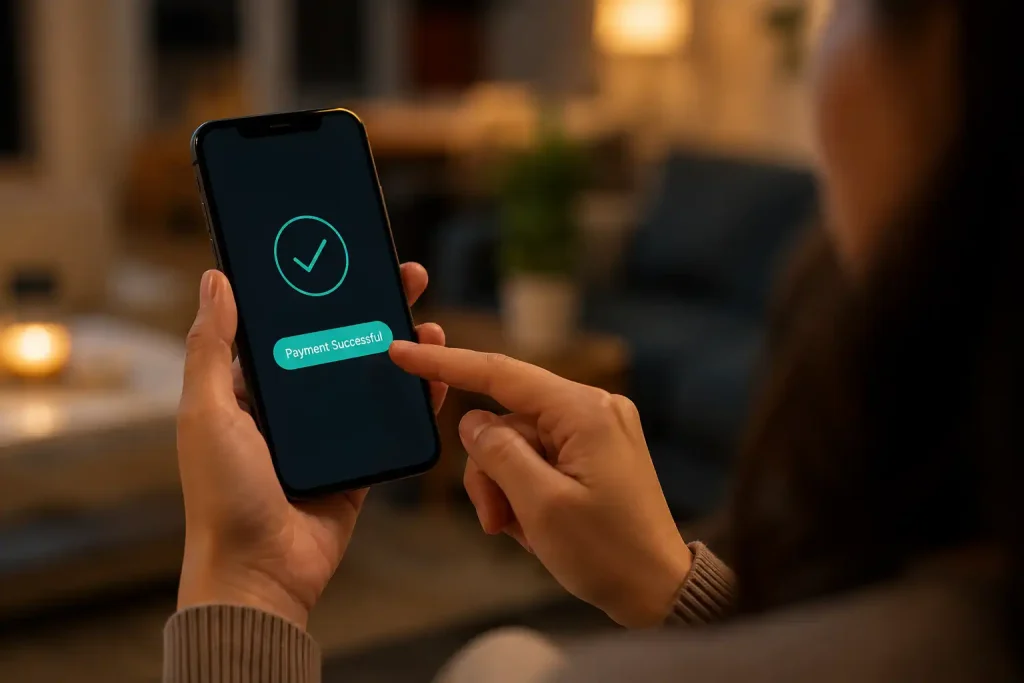
Confirm, and the casino hands you off to Skrill. If you are not already authenticated in the wallet, you log in — email and password, then a verification step if you have two-factor enabled, which on a gambling transaction you absolutely should. Skrill shows you the merchant name, the amount and your available balance. You approve. Control passes back to the casino, the funds appear in your playable balance, and you are done. No card number changed hands. No bank decided whether to honour the request. The whole point of the wallet is that you pre-load it, so by the time you reach the casino the awkward bank conversation has already happened, away from the gaming site.
A few things are worth doing before you ever sit at that cashier. Make sure your Skrill currency matches the casino’s account currency — a GBP wallet funding a GBP casino avoids a conversion margin that has nothing to do with the casino at all. Make sure your wallet actually holds enough balance, because a deposit can only push money that is already there; Skrill will not overdraw or borrow against a card mid-transaction the way some people expect. And confirm that the casino genuinely accepts Skrill for the bonus or game type you have in mind, since acceptance for deposits does not always mean eligibility for everything that follows.
The reason this sequence feels reliable is partly behavioural. British bettors are overwhelmingly mobile and overwhelmingly card-trained — debit cards remain the number one method for UK betting at 48 per cent, well above the 42 per cent seen globally after credit cards were banned for gambling in 2020. Skrill’s deposit flow was deliberately built to feel as quick as tapping a saved card, so that a card-habituated player would not experience the wallet as extra friction. When you strip it back, a Skrill deposit is three taps and a confirmation, and the engineering effort went into hiding everything else.
Minimum Deposit Thresholds Across UK Casinos
Here is a question I get asked more than almost any other: “What is the smallest amount I can put in with Skrill?” And the honest answer annoys people, because it is “it depends on the casino, not on Skrill.” The wallet itself does not impose a casino-deposit minimum. The floor you hit is set by the operator, and it clusters around three tiers in the UK market.
The most common floor is five pounds. A large share of UK-licensed sites set their Skrill minimum at this level, which is low enough to be almost symbolic — it exists so that the operator is not processing fifty-pence transactions all day, not to keep you out. The next tier up is ten pounds, which you see on mid-market and larger brands that would rather not deal with tiny balances. The third tier, twenty pounds, tends to appear at higher-end sites or on specific promotions, and occasionally on methods the operator subtly wants to discourage.

Why does the wallet sometimes carry a different minimum from a debit card on the same site? Because the economics differ. A card deposit and a wallet deposit cost the operator different amounts to process, and a casino can set its floors to nudge players toward whichever rail it prefers. Cards still dominate UK betting deposits, and that dominance gives operators a reason to keep card floors friendly while treating wallets as a slightly more premium lane. It is not a rule, and it is not consistent, but if you notice your Skrill minimum sitting a fiver above the card minimum on the same cashier, that is the logic behind it.
Three practical points follow from this. First, a low minimum is not automatically a good deal — a five pound floor is meaningless if the only bonus you care about demands a twenty pound qualifying deposit by card. Second, your own self-imposed limits stack on top of the casino’s floor, and the casino’s floor always wins where they conflict; you cannot deposit below the operator minimum even if your personal settings would allow it. Third, the floor tells you nothing about the ceiling. A casino with a five pound Skrill minimum may still cap single deposits at several thousand pounds, and high-volume players run into the upper wall far sooner than the lower one. If small-stakes funding is your priority, the floor matters far less than the qualifying-deposit rules and payout caps you meet later, which is where most players actually lose flexibility.
How Skrill 1-Tap Speeds Up Repeat Deposits
The single most underused feature in the entire wallet is 1-Tap, and I say that as someone who ignored it myself for the first two years I used Skrill. 1-Tap is a quick-checkout setting — once enabled, it lets you approve a repeat deposit with a single confirmation instead of the full log-in dance, the way a saved card lets you skip retyping your details. It is built for the player who funds the same casino more than once and is tired of the password step.
The reason it exists is mobile, and the data is blunt about this. Across Skrill as a whole, 74 per cent of all transactions now run through mobile devices, and app usage grew by 38 per cent in the most recent measured stretch. When the screen is small and the keyboard is fiddly, every step you remove from a flow is a step where a player does not abandon halfway. 1-Tap is Skrill’s answer to that, and it is the difference between a deposit that takes thirty seconds and one that takes five.

Paysafe’s own gaming leadership is candid about why this matters to the businesses on the other side of the transaction. As Zak Cutler, who runs global gaming for Paysafe, put it, “Payment methods matter to iGaming players. Digital wallets enhance the iGaming experience and help operators acquire and retain high-value players.” Read between the lines and you can see why operators are happy to surface 1-Tap so prominently — a frictionless repeat deposit is a player who keeps depositing.
That same frictionlessness is exactly why I tell people to set 1-Tap up deliberately rather than drift into it. The feature that makes it trivial to fund your favourite site again is, by definition, the feature that makes it trivial to fund it again at two in the morning when you had told yourself you were done. If you want the full mechanics of enabling, securing and, crucially, switching it back off when you need a speed bump, I have written that up separately in the piece on how Skrill 1-Tap works at the cashier. For deposits specifically, the takeaway is simple: 1-Tap turns the wallet’s already-fast deposit into the fastest funding route a UK player has.
Depositing From Mobile: iOS and Android
Watch where people actually gamble and the desktop fades into irrelevance fast. In the last twelve months, 53 per cent of UK bettors placed a bet from an iPhone and 47 per cent from an Android device — which, once you account for overlap, means the phone is not the secondary screen, it is the screen. Skrill deposits live and die on how well they work in that environment.
The good news is that the deposit experience is broadly identical across iOS and Android, because the wallet handoff happens in a browser layer or a deep link rather than relying on platform-specific payment plumbing. You tap Skrill at the cashier, the device either opens the Skrill app if you have it installed or a mobile web log-in if you do not, you authenticate, and you bounce back. With 74 per cent of Skrill’s transactions running on mobile, this is the path the company has spent the most engineering effort polishing, and it shows in how rarely the handoff breaks.
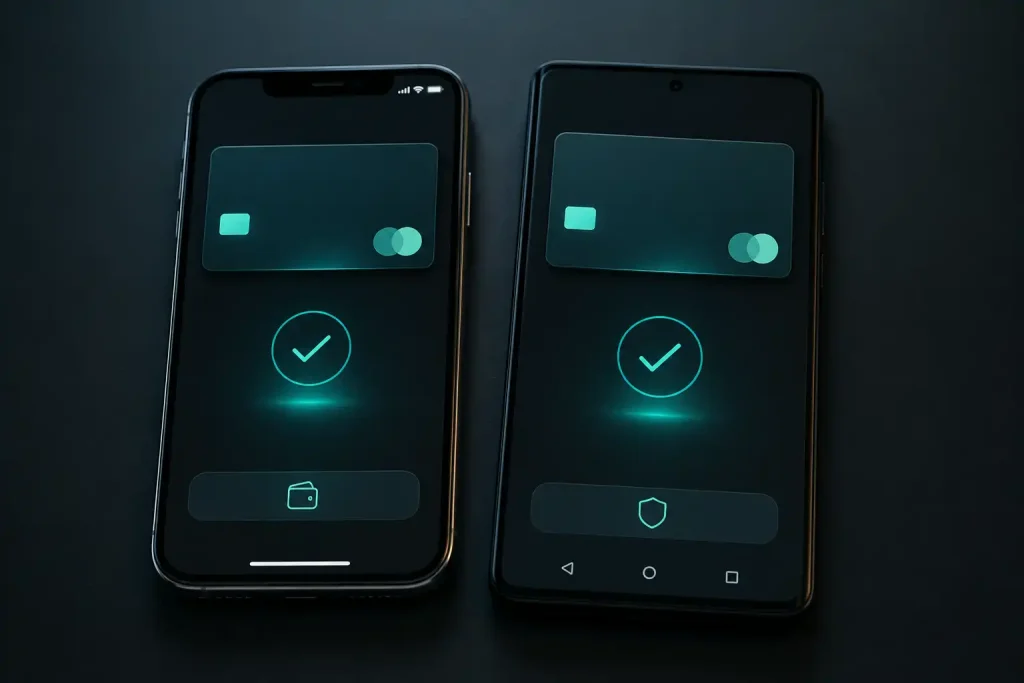
There are small platform quirks worth knowing. On iOS, app-to-app switching is tightly controlled, so a casino that uses a deep link to the Skrill app will return you cleanly, while one that opens a web sheet may ask you to log in even if the app is signed in elsewhere. On Android, the experience is more permissive but more variable across manufacturers — a deposit that flows perfectly on one handset can stall on another running an aggressive battery-saver that kills the background browser tab. Neither is Skrill’s fault, and neither is the casino’s; it is the seam between two apps.
My standing advice for mobile deposits is to install the Skrill app rather than relying on the browser, keep two-factor authentication on, and never approve a deposit on public Wi-Fi without a moment’s thought about who else is on that network. The app reduces the number of times you retype credentials, which both speeds you up and shrinks the surface area for a mistyped or intercepted password. The device side of paying — app versus browser, and how iOS and Android differ in practice — is its own rabbit hole, but for funding specifically the app is the cleaner route.
What to Do When a Skrill Deposit Is Declined
A declined deposit feels like an accusation. The screen goes red, the money does not move, and your first instinct is to assume you have done something wrong or that the casino is dodgy. Nine times out of ten it is neither. Let me hand you the diagnostic order I run through, because the sequence matters — fixing things in the wrong order wastes the most time.

Start with balance. A Skrill deposit can only move money that already sits in your wallet, so the most common decline of all is simply not having enough loaded. Check the wallet balance against the amount plus any wallet-side fee. If that is fine, look at limits — both the casino’s and your own. If you have a deposit cap set, or the casino enforces one, a transaction over the threshold will be refused at the cashier before Skrill is even contacted, and the message often does not make that obvious.
Next, verification status. An unverified or partially verified Skrill account faces tighter transaction ceilings, and a gambling merchant can trip those ceilings faster than everyday spending. The same applies on the casino side, where an unverified gaming account may have funding restrictions of its own. After that, check currency and merchant eligibility — a wallet in the wrong currency or a casino that does not accept Skrill for the specific product you are funding will throw a decline that reads like a generic error.
Only after all of that should you suspect a genuine fault — a payment-processor outage, a temporary block flagged by Skrill’s own risk systems, or a casino-side cashier bug. These do happen, but they are rarer than the self-inflicted causes above. The reason limits sit so high on my list is regulatory: since the end of October 2025, every UK operator must prompt customers to set a deposit limit, and the threshold for what counts as a financially vulnerable spend was cut from five hundred pounds to a hundred and fifty over thirty days. More limit-setting in the system means more limit-triggered declines, and players who do not realise they themselves switched a cap on. Work down that diagnostic list in order — balance, limits, verification, currency, then genuine fault — and the cause reveals itself far faster than blind retrying ever will.
Why Skrill Deposits Clear Instantly
People treat the instant deposit as magic, and it is worth pulling the curtain back, because understanding why it is fast tells you when it might not be. The deposit clears instantly for one reason: the money is already inside the Skrill system before the casino asks for it. When you fund your wallet, the slow part — the bank-to-wallet transfer — has already finished. The casino deposit is just an internal book entry moving balance from your wallet to the merchant, and internal moves settle in real time.

Contrast that with a card, where the casino initiates a request that travels through the card network to your bank, which decides in the moment whether to approve it and may decline a gambling merchant outright. The wallet front-loads all of that decision-making into a step you did earlier, on your own time, which is exactly why it feels frictionless at the casino. It is not that Skrill is faster than a bank; it is that Skrill already did the waiting.
British players have internalised this even if they could not explain the plumbing. When asked which payment type is fastest for getting their winnings, 65 per cent of online bettors pointed to digital wallets, and 57 per cent named wallets the safest way to pay. That perception is not marketing — it is the lived experience of a deposit that lands the instant you confirm and a payout that, while slower, still routes through a method they trust. The instant deposit is the reason Skrill feels effortless, and it is the foundation everything else in the relationship is built on.
Skrill Deposit Questions Answered
A few questions come up so often, and are specific enough to deposits rather than the wider wallet, that they deserve their own answers here. These pick up the threads the sections above could not fully unwind — verification timing, what a deposit does and does not count toward, and the often-misunderstood gap between a standard Skrill deposit and a 1-Tap one. The same instant-clearing logic that makes 65 per cent of bettors rate wallets the fastest route to their winnings sits underneath all three.
Can I deposit with Skrill if my account isn"t verified yet?
Often yes, but with tighter limits. An unverified Skrill wallet has lower transaction ceilings, and a gambling merchant can hit those ceilings sooner than ordinary spending, so a deposit that would clear on a verified account may be refused. Completing Skrill"s identity checks raises the ceilings and removes the most common cause of small-deposit declines. The casino runs its own separate verification on top of this.
Does a Skrill deposit count toward wagering requirements?
The deposit itself does not generate wagering progress, because wagering is counted on the bets you place with the funds, not on the act of funding. The bigger issue for Skrill users is whether the deposit qualifies for a bonus at all, since wallet deposits are frequently excluded from welcome offers entirely. If you are chasing an offer, check eligibility before funding rather than after.
What"s the difference between Skrill and Skrill 1-Tap at the cashier?
A standard Skrill deposit sends you through a full log-in and approval each time. Skrill 1-Tap saves an approved session so a repeat deposit at the same casino takes a single confirmation, much like a saved card. The money moves the same way and clears just as instantly in both cases; 1-Tap only removes the friction of re-authenticating, which is why it dominates on mobile.
Articles
Written by the editors at Skrill Casino.