
Paysafe Network: Skrill and Neteller Casino Ecosystem
 Available in GB
Skrill and Neteller Casino Shared Infrastructure
Players treat Skrill and Neteller as rivals, choosing between them the way you would choose between two competing banks. The truth is stranger and more useful: they are siblings, not rivals, both owned by the same parent, and understanding that relationship explains a great deal about why they feel so similar at a casino cashier.

Both wallets sit under Paysafe, a payments group large enough that its total payment volume was expected to reach around 155 billion dollars by the end of 2025. When two iGaming-focused wallets share a parent of that scale, they inherit shared infrastructure, overlapping operator relationships, and a common strategic view of the gambling market. The competition you imagine between them is, at the corporate level, more like coordination.
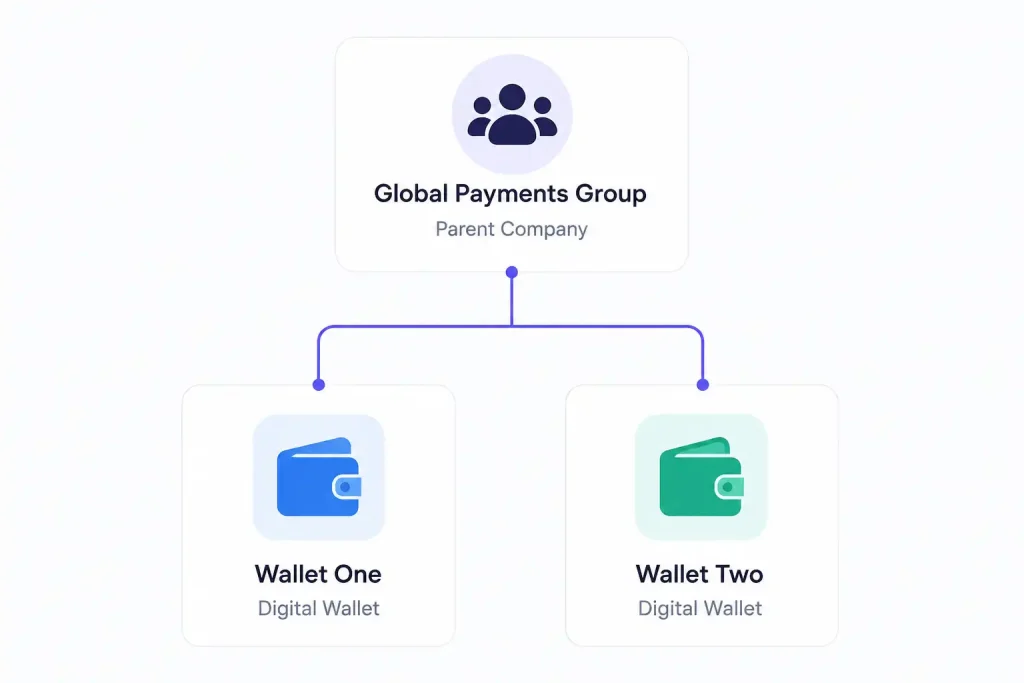
This is not a trivia point. It shapes which casinos accept which wallet, how their fee structures rhyme, and why a player rarely gains much by switching from one to the other. Skrill’s own scale reinforces the picture, with more than 23 million active users worldwide as of 2025 and a projected revenue of around 2.1 billion dollars, up 16 per cent. The reach is global rather than local, too: Skrill operates across more than 135 countries and issues a prepaid Mastercard in around 30 of them, so the UK casino player is tapping into infrastructure built for a worldwide payments business. Neteller draws on the same well, which is why the two products move in such close formation. These are two strong products under one roof, and the rest of this piece is about what that shared roof means for you at the cashier.
Recommended online casinos
- SlotoSportBonus: 500% up to £ 10 200+ 777 FS · Payout speed: 1-3 business days
- x3betBonus: Welcome Pack 100% Up to £1.000 + 200 Free Spins · Payout speed: 1-3 business days
- AmunbetBonus: Join now and get 450% up to 2,700 GBP + 450 FS · Payout speed: 1-3 business days
- WinBeastBonus: €5000 + 500 FS + €650 Freebet · Payout speed: 1-3 business days
- NightLuckBonus: Welcome Pack + 805% Up To 6400€ + 280 FS · Payout speed: 1-3 business days
- ZombillionBonus: Welcome Pack 250% up to £4000 + 200 FS · Payout speed: 1-3 business days
- DieselwinBonus: Welcome Pack 250% up to £4000 + 200 FS · Payout speed: 1-3 business days
Where the Two Wallets Overlap
If Skrill and Neteller feel almost interchangeable when you reach the casino banking page, that is not your imagination. The shared parent means the two products are built on a great deal of common ground, and the overlap is most visible exactly where players interact with them.
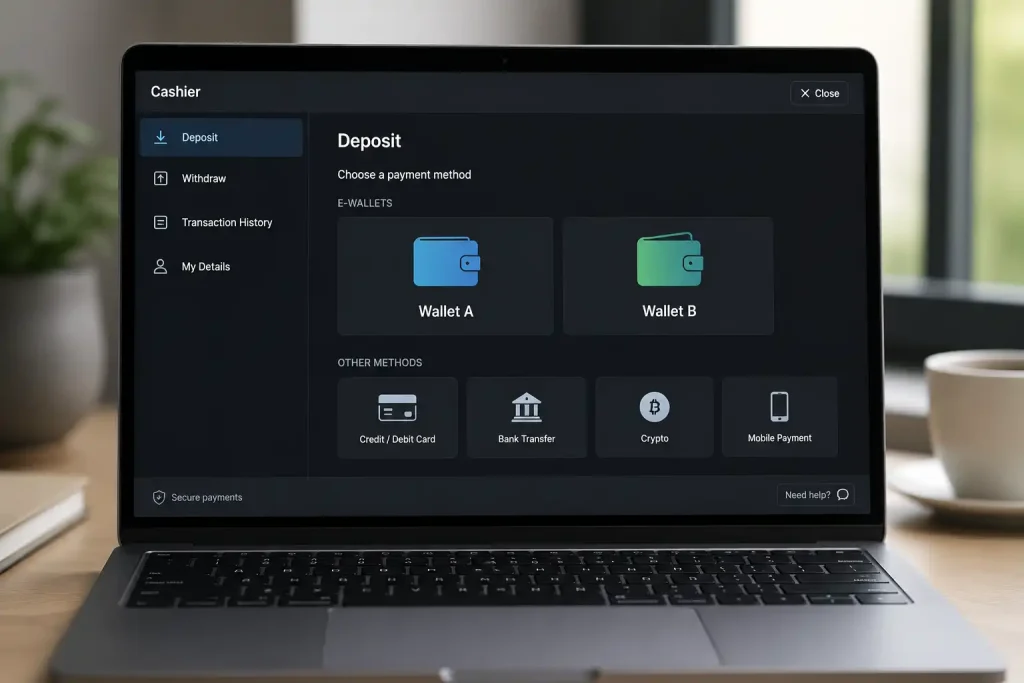
Start with acceptance. Because both wallets are courted by the same iGaming operators and onboarded through related commercial channels, a casino that takes one very often takes the other. The pairing appears together in cashier after cashier, which is itself a clue to their shared origin. Their core mechanics rhyme too: instant deposits, fast wallet-side settlement on withdrawals, identity verification built to the same payments-grade standard, and a similar approach to the gambling category that mainstream wallets treat more cautiously.
The fee logic echoes between them as well. The pattern of free deposits, free or low-cost casino-to-wallet withdrawals, and a charge that bites mainly when you move money out to a card is a family trait rather than a coincidence. Lorenzo Pellegrino, who has led Skrill, framed the wallet’s purpose as being about helping people make a connection, online or in the real world, and that customer-first framing runs through both products because they are shaped by the same hand. The verification standards rhyme too, both being payments-grade know-your-customer processes rather than the lighter checks a casual app might use, which is part of why a player verified at one tends to find the other familiar. For a player, the upshot is that choosing between them on features alone is splitting hairs.
The Differences That Still Matter
Siblings are not clones, though, and the places where Skrill and Neteller diverge are worth knowing precisely because they are easy to miss under all that similarity. The differences are narrow, but for a specific player they can tip the choice.
The most practical divergence is per-casino acceptance at the margins. Despite the heavy overlap, individual operators occasionally support one wallet and not the other, so the deciding factor is sometimes simply which one appears in the cashier of the site you actually want to use. Brand positioning differs too: the two wallets have historically leaned on slightly different regional footprints and user bases, and Skrill is the more prominent name in the UK casino conversation, with around 52 per cent of its users tapping the wallet for online gambling and gaming.
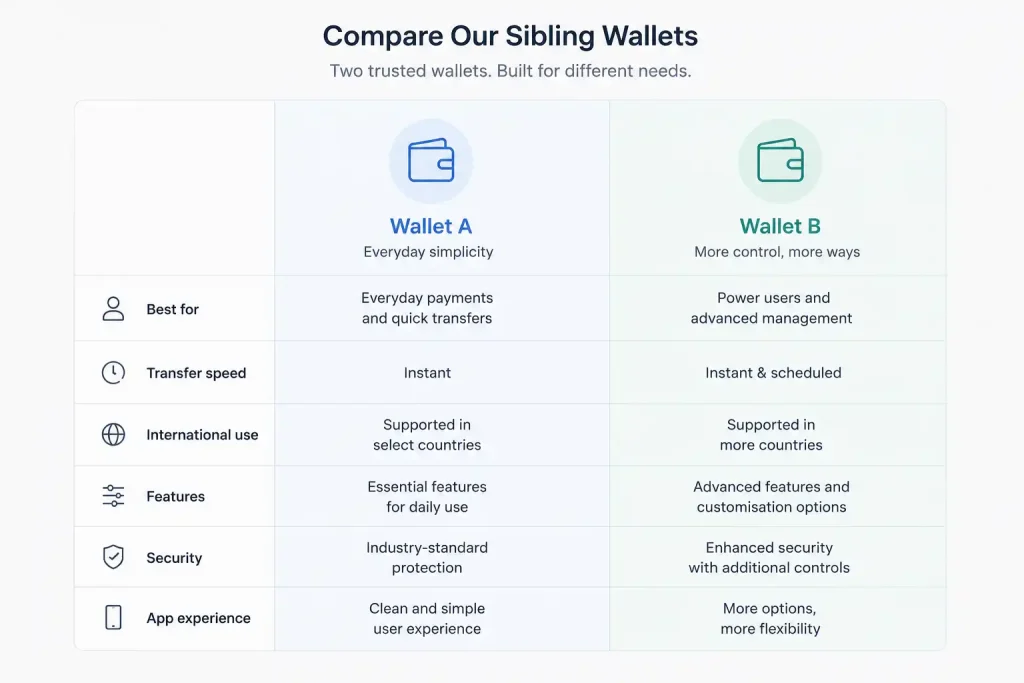
There are also small distinctions in loyalty schemes, promotional history, and the exact menu of supported currencies and cards, none of which is dramatic but any of which might matter to a particular player. My honest guidance is to let the casino decide for you in most cases: pick whichever sibling your chosen operator supports for the full deposit-and-withdrawal journey, and do not agonise over a feature gap that, for the typical UK player, barely exists. For the head-to-head comparison that pits the two directly, the dedicated guide to Skrill versus Neteller at casinos takes the contest further.
What the Shared Ownership Means for You
Step back from the feature comparison and the shared parent turns out to carry a genuine, practical benefit that has nothing to do with which wallet is marginally better. It is about stability, and stability is worth more to a casino player than most realise.

A wallet backed by a payments group moving around 155 billion dollars in annual volume is not a fragile operation that might vanish with your balance inside it. That scale buys regulatory compliance, security investment, and operational resilience that a small standalone wallet could not match. For a player whose winnings sit in the wallet between sessions, that institutional solidity is a quiet reassurance, and it applies to both Skrill and Neteller equally because they draw on the same parent.
The shared ownership also means the two wallets evolve in step rather than in opposition. Improvements to fraud protection, mobile experience, or compliance tend to flow across the family, so choosing one does not strand you on a product that will be left behind. There is a demographic logic underneath this investment, too: the Paysafe wallets skew towards a younger, mobile-first, gambling-active user base, with Skrill and Neteller users roughly 70 per cent male and concentrated in the 18 to 45 age range, the very cohort that drives iGaming volume. A parent serving that audience has every commercial reason to keep both rails modern. The strategic logic is consistent: a group that sees payment choice as central to keeping iGaming players will keep investing in both rails. So the reassuring conclusion is that you are not really choosing between a winner and a loser. You are choosing between two well-funded siblings, and the smart move is to use whichever one fits the casino in front of you and trust the shared backbone underneath them both.
Are Skrill and Neteller owned by the same company?
Yes. Both wallets sit under Paysafe, a large payments group, which is why they share so much infrastructure, overlapping casino acceptance, and similar fee structures. They are sister products rather than independent competitors, and that common ownership explains why they feel almost interchangeable at a casino cashier.
Is it worth having both a Skrill and a Neteller account?
For most players one is enough, since their features overlap heavily. The main reason to hold both is acceptance: a specific casino may support one and not the other, so having both covers the rare gaps. Beyond that redundancy, there is little practical gain in maintaining two near-identical wallets.
Articles
Prepared by the Skrill Casino editorial staff.