
Skrill Casino Cashout Charges and 1.99% Wallet Fees
 Available in GB
Skrill Casino Payout Charges and Hidden Wallet Costs
There is a fee that quietly nibbles at casino winnings, and most players only meet it after it has already taken its bite. It is not a casino charge, it does not appear on the cashier, and you will never see it warned about on a welcome page. It is Skrill’s own withdrawal fee, and it sits at a typical 1.99 per cent on money pulled out of the wallet onto a debit card.
I want to draw a hard line at the top of this piece, because conflating two different things is what costs people money. This is not a casino fee, and it is not a fee on your deposit or on your cashout from the casino into your wallet. It is a fee that lives entirely inside Skrill, and it triggers in one specific situation that I will pin down precisely in a moment. Get the situation right and you can route around the charge almost completely.

The reason it gets overlooked is structural. The casino-to-wallet leg of a withdrawal is usually free, so players assume the whole journey is free and stop reading. Then they move the money from Skrill onto a card, the 1.99 per cent lands, and they blame the casino for a charge the casino never made. Untangling that confusion is the entire point of this article.
When the 1.99% Actually Hits
Let me be exact, because vagueness here is expensive. The 1.99 per cent fires when you withdraw funds out of your Skrill wallet to a debit card. That is the trigger. Not the casino deposit, not the casino payout into Skrill — the final hop, wallet to card.
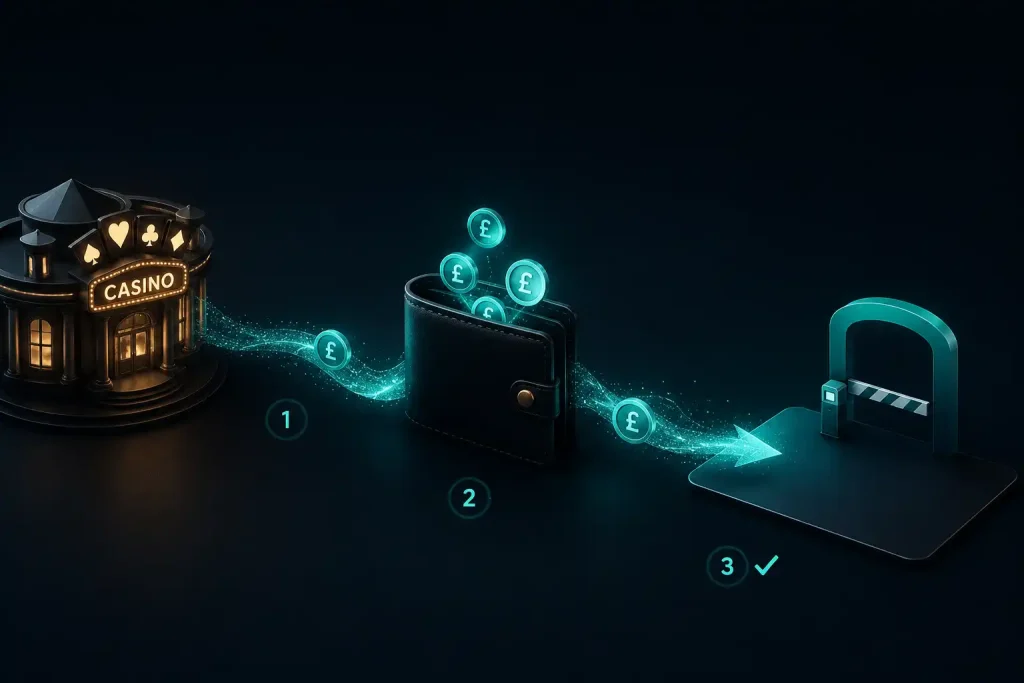
Picture the full money trail of a win. The casino sends your winnings into your Skrill wallet, and that step is typically free. Now the money is sitting in Skrill, and you want it in your everyday spending account. If you send it to a debit card, Skrill applies its 1.99 per cent on that transfer. If you send it somewhere else, the maths changes — and that is the door I will open in the section on reducing the cost.
It helps to see the scale this fee operates at. Skrill’s total transaction volume was expected to top 240 billion dollars by the end of 2025, and a wallet moving money on that scale earns meaningfully from a small percentage on outbound card transfers. The 1.99 per cent is not a punishment aimed at gamblers; it is the wallet’s standard cost of pushing money onto the card network, and casino players just happen to hit it on the way home with their winnings.
One more clarification that saves arguments. The fee is on the wallet-to-card transfer, so it is the same fee whether the money in your Skrill balance came from a casino, a friend, or a top-up. The casino is incidental. Once you internalise that the charge belongs to the wallet’s card-out rail and nothing else, you stop fearing it on every step and start watching for it on the one step that counts. For the wider picture of how payout timing and routing interact, the guide to Skrill casino withdrawals sits right alongside this.
Worked Examples on Real Withdrawal Sizes
Numbers make this concrete in a way that no amount of explaining can, so let me run a few using clean, unbranded figures. None of these are tied to any operator — they are just the arithmetic of 1.99 per cent on a wallet-to-card transfer.
Take a modest cashout of £100. Move it from Skrill to a debit card and the fee is £1.99, leaving you £98.01. Annoying, but small. Now scale it up. A £500 transfer to card costs £9.95, landing £490.05. A £1,000 transfer costs £19.90. A £2,500 transfer costs £49.75. And a £5,000 transfer to card costs £99.50, which is the point where a player tends to suddenly care a great deal about a fee they had been ignoring at the £100 level.
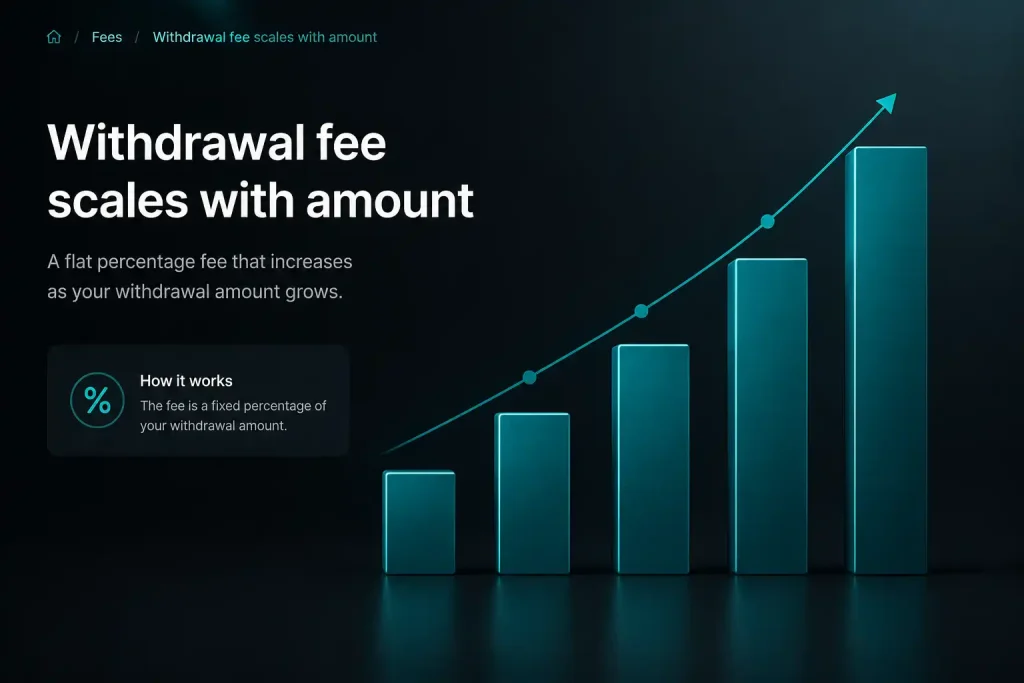
The pattern is the obvious one: the fee is a flat percentage, so it stays trivial on small sums and turns into real money the moment your winnings get serious. A regular player cashing out £100 a week to a card pays roughly £103 a year in fees without ever noticing a single charge above two pounds. A bigger winner taking £5,000 in one go pays nearly a hundred in a single transfer.

Here is the bit I find players never calculate: the cumulative effect of habit. If you reflexively send every win to your debit card because that is how you have always done it, you pay the 1.99 per cent every single time, even when you didn’t need the money on a card at all. The fee is not large per transaction. It is large in aggregate, across a year of unthinking card transfers, and that is the version of the cost that actually dents a bankroll.
Legitimate Ways to Reduce the Cost
Now the part you came for. There is no trick here, no loophole, just a couple of routing choices that keep the money out of the 1.99 per cent lane. Every one of them is straightforward and entirely legitimate.
The cleanest is to keep funds inside Skrill while you are still in your playing cycle. If you are going to redeposit into a casino next week anyway, leaving the balance in the wallet costs nothing, because the fee only fires on the way out to a card. Players who treat Skrill as a working balance rather than a pass-through to their bank simply never pay the charge on money that stays in motion.
When you genuinely need the money out, choose the exit route deliberately. A bank withdrawal generally avoids the card-specific 1.99 per cent, so for larger sums the bank route is usually the cheaper exit even if it takes a little longer to land. The trade-off is speed against cost: the card is fast and charged, the bank is slower and typically cheaper. For a £5,000 win, waiting a day to save the better part of a hundred pounds is an easy call. For a £40 win you want tonight, the card fee is loose change.

The final lever is batching. Instead of transferring small amounts to your card repeatedly, consolidate withdrawals so you pay the percentage once on a larger sum rather than many times on small ones — though since it is a flat percentage, the saving here is about reducing the number of separate card transfers and any minimum charges, not the rate itself. Combine a working balance, a deliberate exit route, and a bit of batching, and the 1.99 per cent shrinks from a constant drag to a fee you pay only when speed genuinely matters more than the few pounds it costs.
Is the 1.99% charged by the casino or by Skrill?
By Skrill. It is the wallet"s own fee for transferring money out to a debit card, and it has nothing to do with the casino. The casino-to-wallet leg of your withdrawal is typically free. The charge only attaches when you move funds from Skrill onto a card, regardless of where that money originally came from.
Can I withdraw to my bank to avoid the card fee?
Yes. The 1.99 per cent is specific to wallet-to-card transfers, so routing a withdrawal to your bank account generally sidesteps it. The trade-off is speed, since a bank transfer can take longer to clear than a card payment. For larger sums the saving usually outweighs the wait.
Articles
Created by the "Skrill Casino" editorial team.