
Responsible Gambling Features for Skrill Casino Sites
 Available in GB
Skrill Wallet Protection Layers for Safer Play
Most safer-gambling advice stops at the casino door, as if the only place to build a guardrail is on the operator’s settings page. That misses half the picture. Your money passes through a wallet before it ever reaches a casino, and the wallet is a control point in its own right – one that sits closer to your bank than any casino does, and one most players never think to use.
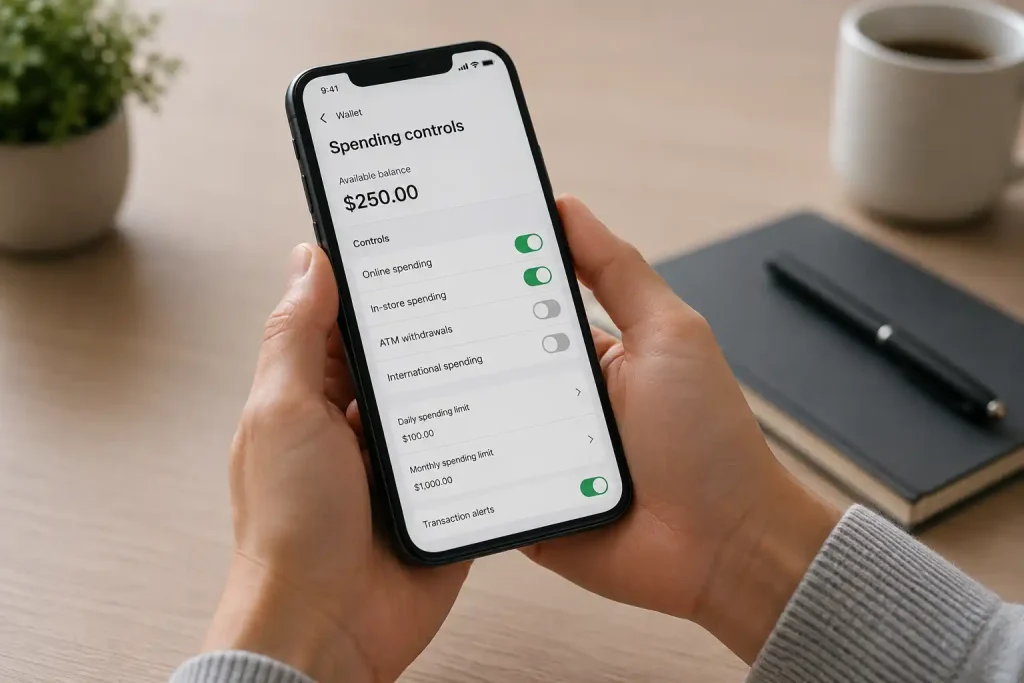
This matters because the stakes are not theoretical. Around 2.7 per cent of UK adults score eight or more on the problem-gambling index, which is roughly 1.4 million people, and the tools that help keep play in check work best when they are layered rather than relied on singly. The wallet layer is the one closest to the source of funds, which makes it a uniquely effective place to slow money down before it gathers momentum.
So my argument here is simple: a Skrill player has two sets of controls available, not one, and the smartest setup uses both. The wallet can govern how money moves at the source, and the casino can govern how money behaves once it arrives. Treating them as a pair, rather than leaning on the casino alone, is what separates a genuinely managed habit from a hopeful one.
Controls Within Skrill Itself
People are quick to set casino limits and slow to look at the wallet, which is backwards if you think about where the money actually originates. The wallet is upstream. Controlling the source is more powerful than controlling the destination, and Skrill gives you levers there that complement anything the casino offers.
This is not a niche concern, given that around 52 per cent of Skrill users tap the wallet for online gambling and gaming – for a huge share of the user base, the wallet is the gambling account in all but name. That makes the wallet-level controls genuinely relevant rather than an afterthought. The most useful of them is awareness: Skrill’s transaction history gives you a clean, single record of every penny that moved toward gambling, which is the raw material for any honest self-assessment.
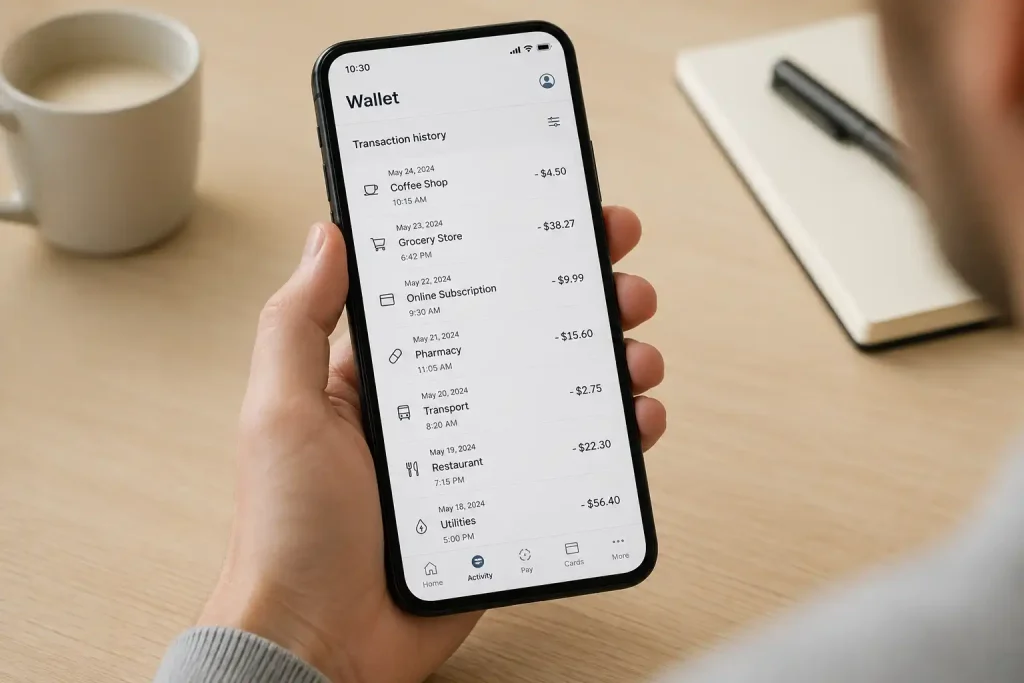
Beyond visibility, the wallet lets you manage how funding flows. You control which payment sources feed the wallet and how much sits in it, and a wallet you keep deliberately lean is a wallet that cannot bankroll an impulsive session it was never funded for. Some players treat the wallet as a buffer they top up consciously rather than a bottomless pipe to their bank, and that single habit – funding the wallet on purpose rather than on reflex – does more for self-control than any number of after-the-fact reviews.
The honest limitation is that the wallet is not a substitute for the casino’s dedicated safer-gambling features, and it does not offer the same formal exclusion machinery. Its role is to be the first, upstream layer – slowing and recording the money before it reaches the table. Used that way, it makes everything downstream easier to manage.
Casino-Side Limits and Time-Outs
The casino is where the heavier machinery lives, and the regulator has spent the last couple of years making sure it is switched on by default. If the wallet is the upstream tap, the casino is the dam – and the dam now comes with controls every licensed operator is required to offer.
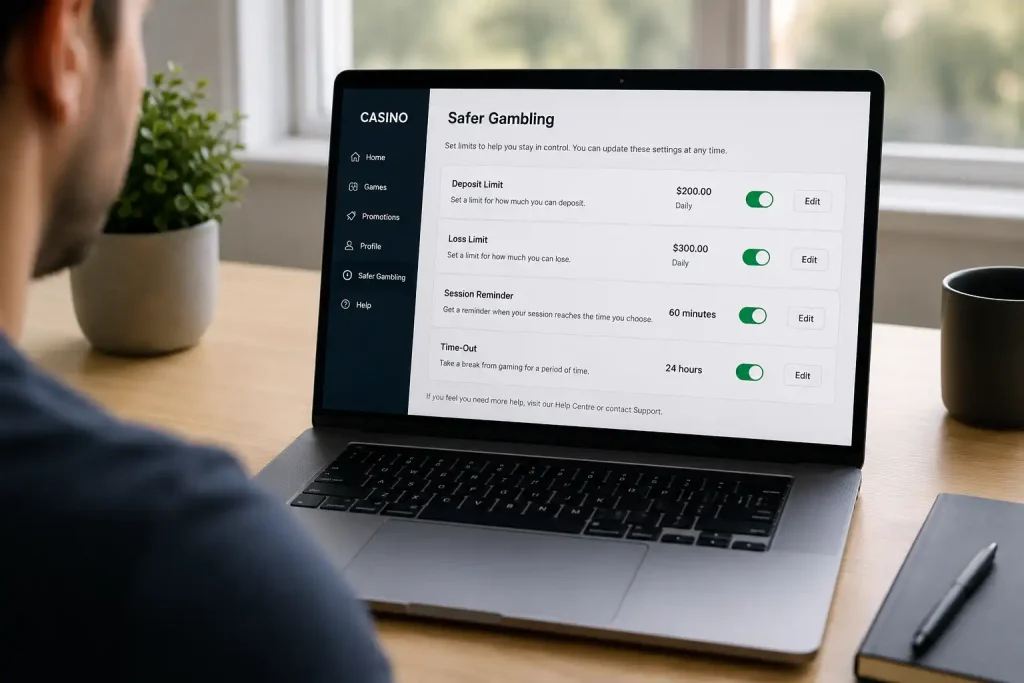
The core tools are deposit limits, loss limits, session reminders, time-outs, and self-exclusion. Deposit limits cap how much you can fund over a chosen period; time-outs lock you out for a short, fixed stretch when you need a breather; and self-exclusion shuts the door for a longer term. There is good evidence these interventions are reshaping behaviour at scale: in the third quarter of the 2025/26 year, the number of online slot sessions lasting longer than an hour fell 16 per cent to 8.9 million, and the average session length dropped by two minutes to 16 minutes. Sessions are getting shorter and the long, grinding ones are getting rarer, which is exactly what the controls are designed to encourage.
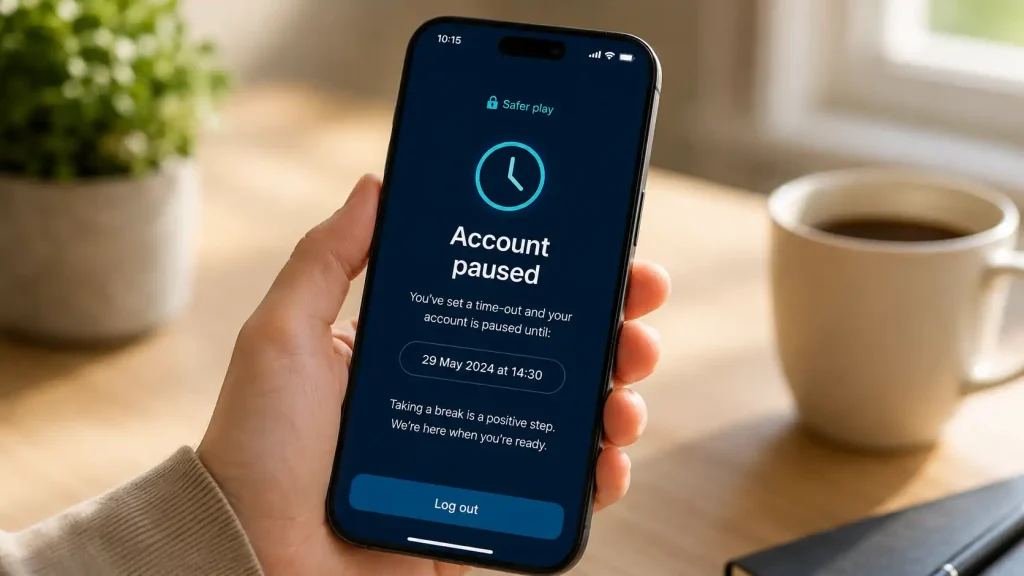
For a Skrill player, the key insight is that these casino tools and your wallet habits reinforce each other. A deposit limit at the casino caps the destination; a lean, consciously funded wallet caps the source. Set both and you have two independent brakes, either of which can stop a session running away from you. Rely on one and you have a single point of failure.
The time-out is the tool I push hardest, because it meets the most common real-world need: not “I want to quit” but “I need to stop right now, tonight”. A short, immediate lock-out is the antidote to the heat-of-the-moment top-up that the wallet’s own speed can otherwise enable, and the interplay between fast deposits and the urge to chase is exactly what the piece on how the £5 slot stake limit affects Skrill players digs into.
Recognising Harm and Getting Help
I want to end on the part that no settings page can do for you: noticing when the tools are not enough. Limits and time-outs are scaffolding, but scaffolding only helps if you can see the building is in trouble, and that recognition is harder than any of us likes to admit.

The risk is not evenly spread. The highest rate of problem gambling sits among 18 to 24-year-olds, where 5.3 per cent score eight or more on the problem-gambling index – more than double the rate across all adults. If you are young, gambling frequently, and using a wallet that makes depositing effortless, you sit at exactly the intersection where harm is most likely to build quietly. That is not a judgement; it is a reason to keep an honest eye on yourself.
The warning signs are worth knowing plainly: chasing losses, depositing more than you planned, hiding the extent of your play, borrowing to fund it, or finding that gambling has stopped being fun and become a compulsion. If any of that rings true, the right move is not another deposit limit – it is talking to someone. In the UK, GamCare runs the National Gambling Helpline, GambleAware offers free confidential advice, and GAMSTOP lets you self-exclude from every licensed operator at once rather than site by site. These are free, and reaching out to them is a sign of control, not failure.
This is a genuinely sensitive area, and if any of this resonates with your own situation, please consider speaking to one of those services or to someone you trust. The wallet and casino tools in this article are there to keep a hobby a hobby. When they stop being enough, the people trained to help are the next, and far more important, layer.
Can I self-exclude through Skrill rather than each casino?
Skrill is a payment provider, not a gambling operator, so it does not run a gambling self-exclusion scheme of its own. For exclusion across the whole UK market, GAMSTOP lets you block yourself from every licensed operator at once with a single registration, which is far more effective than excluding site by site. The wallet can support this by keeping your funding lean, but the formal exclusion happens through GAMSTOP and the operators.
Do deposit pauses on Skrill affect my casino balance?
No. Controlling how and when you fund your Skrill wallet limits the money flowing toward gambling, but it does not touch funds already sitting in a casino account, which are governed by that casino"s own tools. To pause or restrict play at the casino itself, use the operator"s deposit limits, time-outs, or self-exclusion rather than relying on a wallet-side pause.
Articles
Prepared by the Skrill Casino editorial staff.