
Skrill and the Shift in UK Casino Payment Trends
 Available in GB
A Quiet Revolution at the Cashier
The way Britain pays to gamble has changed more in the past few years than in the previous two decades, and most players living through the shift have barely noticed it happening. The cashier looks similar, but what people actually tap has moved decisively toward wallets, and Skrill has ridden that wave squarely.
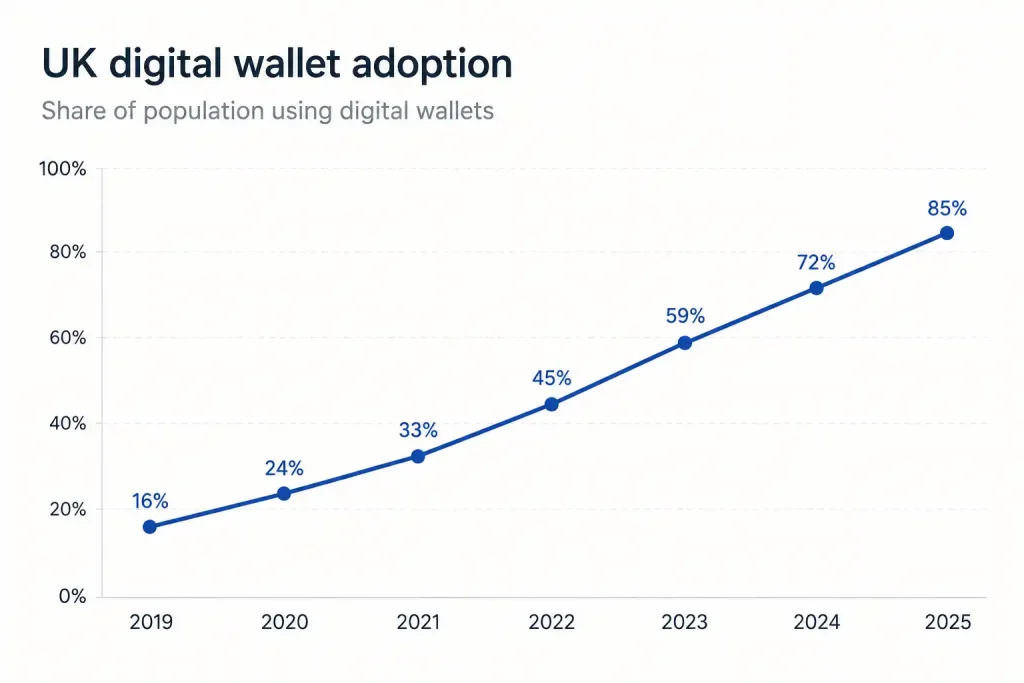
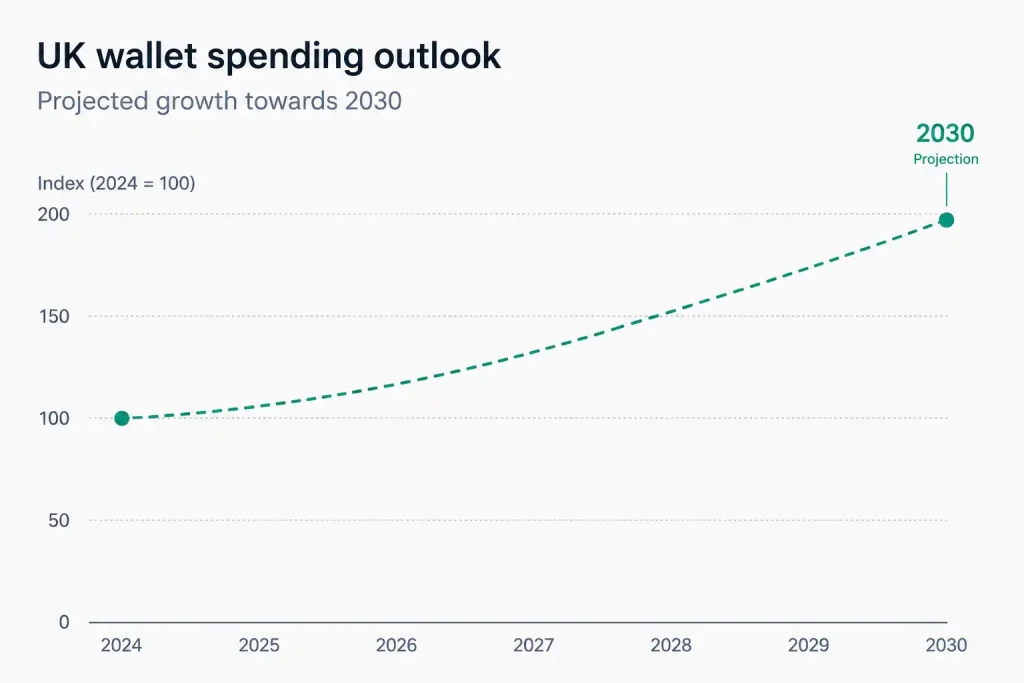
The scale of the underlying change is striking. UK digital wallet spending stood at 269 billion pounds in 2025 and is forecast to reach 453 billion by 2030, a 68 per cent rise, while the country went from around one billion digital wallet transactions in 2019 to more than nine billion in 2023. Over that same period the share of card transactions routed through a wallet jumped from 8 per cent to 29 per cent, a sign that the wallet has not just added new spending but absorbed payments that once went straight through a card. A habit that was niche at the start of the decade is now mainstream, and gambling has moved with the wider economy rather than against it.
This piece is about what that shift means specifically at the casino cashier: why wallets have surged, where cards still hold on, and what the trend lines suggest about where it all goes next. The revolution is quiet, but it is real, and understanding it tells you more about the future of casino payments than any single product comparison could.
Why Wallets Took Over So Fast
Wallets did not win by accident or marketing alone. They won because they solved problems players actually had, at exactly the moment the technology and the regulation lined up to let them. The speed of the takeover reflects how well the fit landed.

The biggest driver was the smartphone. With 53 per cent of UK players betting from an iPhone over the past year and 47 per cent from Android, gambling became a phone activity, and wallets are phone-native in a way that typing card details never was. A second driver was the 2020 credit card ban for iGaming, which removed a funding method overnight and pushed players toward debit and wallets. A third was trust: 57 per cent of online bettors now consider digital wallets the safest way to pay and 65 per cent the fastest route to their winnings, so the wallet won on the two things players care about most. The generational pull reinforced all of it, with 66 per cent of UK 18-to-24-year-olds naming a digital wallet as their preferred online payment method, ensuring the newest players arrived already wallet-first.

The industry read the same signals. Anna Howard of Paysafe has made the point that there is no single standard player when it comes to payment preferences, and that insight is precisely why operators rushed to offer wallets alongside everything else rather than betting on one method. A market that fragmented into many preferences rewarded the cashier that offered choice, and the wallet was the choice the fastest-growing group of players kept selecting. Skrill, built for iGaming from the start, was positioned perfectly when that wave broke.
Where Cards and Cash Still Hold On
For all the wallet’s momentum, it has not swept the board, and the places where older methods persist are revealing. The payment landscape is not converging on a single winner; it is settling into segments, each method holding the ground it serves best.
Debit cards remain the most popular single method for UK betting at 48 per cent, ahead of the global figure of 42 per cent, and that resilience is not nostalgia. The card is familiar, free for simple journeys at most casinos, and more often eligible for welcome offers than a wallet deposit. For the casual, occasional player, the card still makes sense, and a large share of the market is exactly that kind of player. Cards are not dying; they are specialising into the role of the simple default.
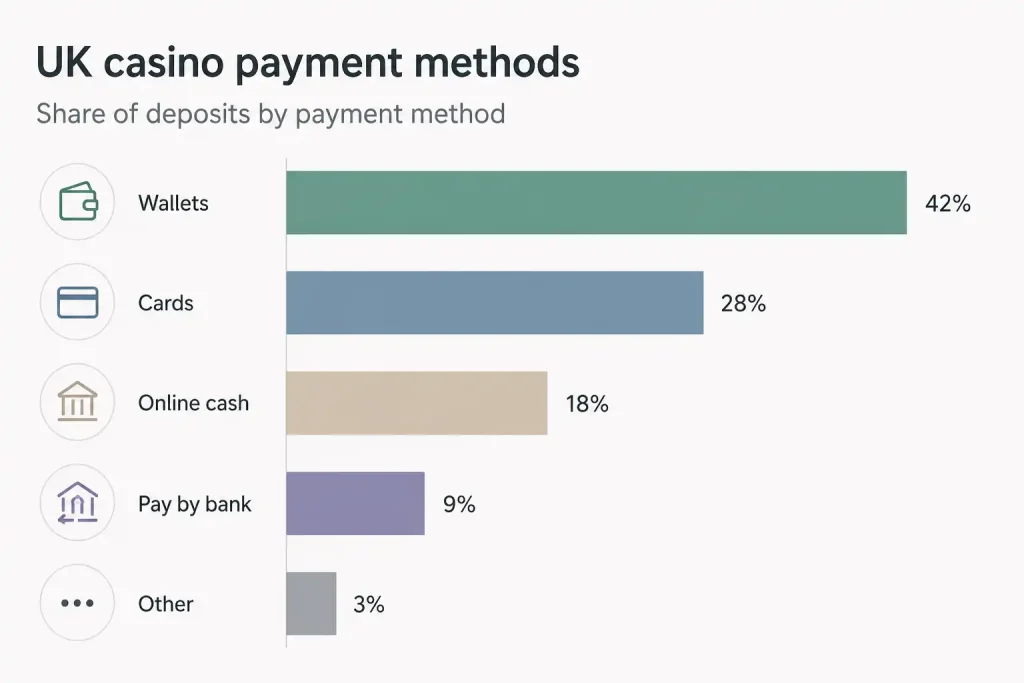
Online cash holds its own corner too, with 22 per cent of players naming it a preferred method, because a prepaid voucher does something wallets cannot: it caps a deposit and detaches gambling from a bank account entirely. Pay by bank sits at 27 per cent, serving players who want directness without a card. The picture, then, is not wallet versus everything else but a genuine spread of preferences, which is exactly what Howard was describing. The wallet leads a fragmented field rather than conquering it, a fragmentation explored further through the lens of who chooses what in the breakdown of who actually uses Skrill at UK casinos.
Reading the Trend Lines Ahead
So where does this go? The honest answer is that the trajectory is clearer than most forecasts admit, because the numbers are not subtle. Several lines all point the same way, and a player can plan around them with reasonable confidence.
The dominant trend is continued wallet growth. A forecast move from 269 billion to 453 billion pounds in UK wallet spending by 2030 is not a wobble; it is a structural rise, and gambling will track it. The shift from one billion to nine billion wallet transactions in four years shows the curve is steep, not gentle. There is room left to run, too: only about one in five UK cardholders currently uses a digital wallet for more than half their transactions, and 59 per cent do not use one at all, so the pool of potential converts is still large. The reasonable expectation is that wallets keep gaining share at the casino cashier, especially among younger and mobile-first players, while the methods they displace retreat into the niches they serve best.
The second trend is integration of choice rather than elimination of it. Because there is no standard player, the winning cashier of the next few years is the one that offers wallets, cards, online cash, and pay by bank side by side, letting each player pick their fit. That is good news for a Skrill user, because it means the wallet’s place is secure without the friction of methods being forced out. The practical takeaway for a player is simple: the wallet you are using is on the rising line, the infrastructure around it is only getting stronger, and the trend rewards exactly the choice a regular Skrill user has already made.
Are digital wallets really overtaking cards at UK casinos?
Wallets are the fastest-growing method and the top stated preference for many players, but debit cards remain the single most popular way to fund UK betting at 48 per cent. The trend favours wallets strongly, especially among mobile-first players, yet cards still hold a large share by serving casual players well. It is a shift in the lead, not a clean replacement.
Will Skrill stay relevant as payment trends change?
The trend lines support it. UK wallet spending is forecast to rise sharply through 2030, and casinos are integrating more payment choice rather than dropping methods, so a wallet built for iGaming sits on the growing side of the market. The likely future is wallets gaining share alongside other methods, which keeps a product like Skrill firmly in the mix.
Recommended online casinos
- SlotoSportBonus: 500% up to £ 10 200+ 777 FS · Payout speed: 1-3 business days
- x3betBonus: Welcome Pack 100% Up to £1.000 + 200 Free Spins · Payout speed: 1-3 business days
- AmunbetBonus: Join now and get 450% up to 2,700 GBP + 450 FS · Payout speed: 1-3 business days
- WinBeastBonus: €5000 + 500 FS + €650 Freebet · Payout speed: 1-3 business days
- NightLuckBonus: Welcome Pack + 805% Up To 6400€ + 280 FS · Payout speed: 1-3 business days
- ZombillionBonus: Welcome Pack 250% up to £4000 + 200 FS · Payout speed: 1-3 business days
- DieselwinBonus: Welcome Pack 250% up to £4000 + 200 FS · Payout speed: 1-3 business days
Articles
Prepared by the Skrill Casino editorial staff.