
Crazy Time Live Casino Game Show in the UK
 Available in GB
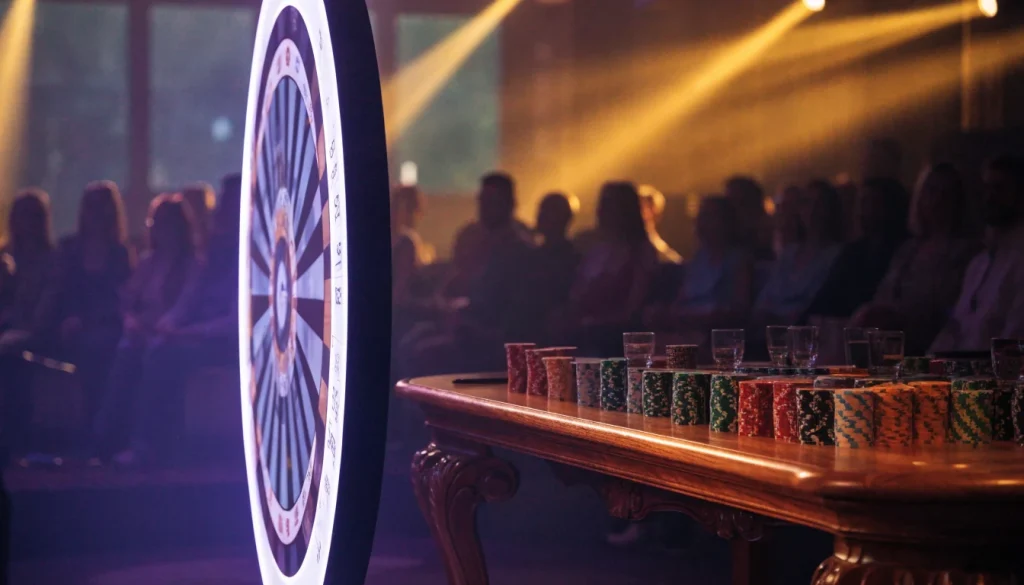
A practical look at operator authorisation, game availability, odds claims, free play and the limits of deposits and bonuses.
A Live Casino Is Also a Licensed Business
A search for a casino carrying Crazy Time can sound like a search for a game. In Great Britain, it is also a search for a business operating under a particular legal arrangement. The distinction matters: a familiar name or polished live-casino presentation does not itself establish who is responsible for offering the gambling, or whether that business is authorised to serve customers in the market.
The regulator and the operator have different jobs. The UK Gambling Commission oversees gambling activity across the United Kingdom, including online casino gambling. In Great Britain, it is the sole regulator for commercial gambling. It sets and administers the licensing framework; it does not run the casinos listed in that framework or provide their games. Those activities belong to licensed businesses and the suppliers they use.
That boundary can be easy to miss on a live casino page, where the game, studio and operator may appear as one continuous service. Legally, they are not the same thing. A game’s presence in a casino’s lobby does not turn its provider into the casino operator, just as a studio’s branding does not replace the operator’s responsibility for the gambling service. For a person looking for Crazy Time online, the relevant licensing question concerns the business offering the gambling to customers.
The rules follow the customer-facing activity rather than the address of the equipment. Where a remote operator serves consumers in Great Britain, it must hold the relevant Gambling Commission licence even if the technical equipment supporting the service is located elsewhere. That is a practical expression of the market’s regulatory principle: moving servers or studios across a border does not, by itself, move the operator outside the rules that apply to selling gambling into Great Britain.
Deal or No Deal Casino UK: How the Game Works
The Commission grants permissions to businesses through operating licences. It also issues personal licences to individuals who perform specified roles in the operation of gambling businesses. These are related but distinct forms of authorisation. The company offering an online casino needs the appropriate operating permission; certain people working within the business may separately need personal authorisation. A personal licence is not a substitute for the company’s operating licence, and the company’s licence does not make every person connected with it a licensee.
This institutional division reflects a wider choice about how commercial gambling is governed. The state does not treat an online casino as merely a website that happens to host entertainment. It treats the activity as a service that requires an accountable operator, subject to a regulator with authority over the market. Live presentation may make a casino feel like a room with a dealer and a crowd, but behind that appearance sit a business and a set of legal responsibilities. The scenery is not the jurisdiction.
For Crazy Time casinos in the UK, then, the first distinction is not between a large lobby and a small one, or between a familiar brand and an unfamiliar one. It is between the regulator, which oversees commercial gambling, and the operator, which provides the service under its licence. The game may be the reason a person arrives; the operator is the entity that makes the real-money offer.
That framing also prevents a common category error. A game provider may create or supply a title, while a casino operator presents it to customers as part of a wider gambling service. The Commission’s licensing role attaches to the regulated business activity, not to the visual impression created by the game itself. A live studio does not acquire the operator’s obligations merely because its name is prominent on screen.
Licensing is therefore part of what “casino” means in this setting, not an administrative detail added after the entertainment has been chosen. The Gambling Act describes a casino in terms of an arrangement that gives people an opportunity to participate in casino games; the regulated offer is made by a business, not by a search result or a game title. The commercial arrangement has an accountable party.
A licence is a condition of lawful operation in the regulated market, not a promise that gambling will produce a particular outcome or a prediction about play.
A licence should not be mistaken for a promise that gambling will produce a particular outcome. It is a condition of lawful operation in the regulated market, not a prediction about play. Nor does the existence of a game in an online lobby answer every question about how that particular title is classified or governed. Those are separate matters from the basic requirement that the operator serving Great Britain holds the relevant permission.
This is why the phrase “Crazy Time casino” can conceal two different ideas: a casino where the game can be found, and a business legally entitled to offer gambling to people in Great Britain. The first concerns the product mix; the second concerns the market’s rules. Neither should be used as a proxy for the other.
The Commission’s role is institutional, but its consequences are ordinary and practical. A licensed operator is the party accountable for the gambling service it provides; the regulator is the public body overseeing that activity. Any decision to gamble remains a financial risk, and only money that can be afforded to lose should be used. The distinction is plain enough. The screen makes it look less so.
The Live Casino Floor Around Crazy Time
A live casino is not a single kind of entertainment. Its floor can place a wheel-based game show beside the familiar choreography of blackjack, roulette and poker: cards dealt, bets settled, a dealer’s hands kept in view. The difference is not simply visual. Traditional table games carry rules that have travelled between physical rooms and digital broadcasts; a game show borrows the atmosphere of a studio, where anticipation is part of the presentation.
Crash Casino Games in the UK: How They Work
Crazy Time sits in that game-show corner of the live-casino world. It is often considered alongside other live broadcasts, but the wider setting matters: an online casino’s live offer may be arranged around different styles of play, rather than one unified idea of what a casino should feel like. A card table and a brightly staged show can share a category while asking for very different kinds of attention. One makes procedure visible; the other makes spectacle visible.
That distinction helps explain why searches for a Crazy Time online casino often lead into a larger conversation about live tables. The game is not a synonym for the whole live casino, any more than roulette stands for every table in a physical venue. Live casino is an umbrella: under it sit games shaped by the pace of cards, the turn of a wheel, and the more theatrical rhythm of a hosted show. The room is broad; the attractions are not interchangeable.
Grosvenor offers a useful British example of how that floor developed. The company first introduced its live casino games in 2013, with card and casino games that included Blackjack, Texas Hold’em and Roulette. That early mix is telling in its plainness. It placed recognisable table formats at the centre, the sort of games whose customs were already established in casinos long before cameras made them available online. A dealer, a table, a set of rules: the old furniture of gambling, given a new address.
Table Games
Includes blackjack, roulette, and poker, featuring established customs, a dealer, and a visible procedure.
Game Shows
Includes titles like Crazy Time, utilizing studio design, hosts, and a theatrical rhythm to create spectacle.
The live format changes the setting, but it does not erase the social history of those games. Blackjack and roulette have long served as shorthand for the casino itself, while poker carries a more explicitly competitive identity. Their movement onto a screen reflects a wider shift in leisure: the casino floor can now be encountered as a broadcast, with the table framed for a viewer rather than surrounded by a crowd. The screen makes the room intimate and distant at once.
Game shows add another layer. Their appeal lies partly in the sense of an event unfolding, with hosts and studio design doing work that a conventional card table does not need to do. That does not make one format more substantial than another. It means the live-casino label covers a range of experiences, from measured turns at a table to a performance built around suspense. The house has more than one stage.
For someone interested in an online casino with Crazy Time, this context is more useful than treating the title as the whole destination. A casino’s live section may bring together game shows and table games, each with its own pace and conventions. The surrounding offer can therefore say something about the operator’s idea of a live floor, even when the featured attraction is a single show. Variety is not proof of quality; it is simply a description of what kind of room is being assembled.
Casino dice games in the UK: odds and online play
The word “live” also deserves a little care. It describes a format in which a game is presented as a real-time event, but it does not turn every offering into the same social experience as a visit to a casino. Online tables are designed for individual screens. Their rituals may echo the physical room, while the audience is scattered elsewhere. The resemblance is deliberate; the difference is structural.
So Crazy Time belongs in a landscape shared with roulette, blackjack and poker, but not because it plays by their customs. It belongs because live casinos have become a meeting place for older table traditions and newer forms of televised entertainment. One side preserves familiar rituals; the other recasts gambling as a show. A crowded floor, even when no one is standing on it.
Recommended online casinos
- SlotoSportBonus: 500% up to £ 10 200+ 777 FS · Payout speed: 1-3 business days
- x3betBonus: Welcome Pack 100% Up to £1.000 + 200 Free Spins · Payout speed: 1-3 business days
- AmunbetBonus: Join now and get 450% up to 2,700 GBP + 450 FS · Payout speed: 1-3 business days
- WinBeastBonus: €5000 + 500 FS + €650 Freebet · Payout speed: 1-3 business days
- NightLuckBonus: Welcome Pack + 805% Up To 6400€ + 280 FS · Payout speed: 1-3 business days
- ZombillionBonus: Welcome Pack 250% up to £4000 + 200 FS · Payout speed: 1-3 business days
- DieselwinBonus: Welcome Pack 250% up to £4000 + 200 FS · Payout speed: 1-3 business days
Checking a Casino Before It Gets a Deposit
A casino’s claim to offer Crazy Time is not, by itself, evidence that it is a suitable place to play. The useful first question is whether the business behind the site is authorised to provide remote gambling to customers in Great Britain. That is a check on the operator, not a verdict on the game, its results or the quality of the casino’s wider offer.
The UK Gambling Commission’s public register is the place to verify a licence number before depositing. A name displayed on a website may be a trading brand rather than the legal name of the licensed business, so the register entry needs to be read alongside the site’s own terms and company details. The aim is to establish that the operator named in the site’s legal information matches the licensed business, rather than relying on a logo or a statement that the casino is “regulated”.
Verifying Operator Licence
Find operator details
Locate the legal operator name and licence number in the casino’s legal information or company details.
Search the register
Search for the identified business on the UK Gambling Commission’s public register.
Compare information
Confirm that the operator named on the site matches the licensed business in the register.
A brand and a company are not interchangeable. A group may run more than one casino name, while a site’s branding can make the relationship less obvious than its legal pages do. If the register lists a business but the casino gives no clear explanation of how that business is connected to the brand, the gap is worth resolving before an account is funded. A licence number copied onto a page is not enough if it belongs to another operator.
A specialist casino review reports that the Commission’s public register, checked on 26 September 2026, did not show a LuckyPays entry under that brand or its stated domain, including luckypays.io. That is a dated finding, not a permanent description of the register: entries and business arrangements can change. It also illustrates why a familiar-sounding brand name cannot substitute for checking the actual record. A result for a similarly named company would not establish that it operates the site in question.
The register can help identify whether a named business holds the relevant permission; it cannot establish that Crazy Time appears in that casino’s lobby, that a promotion applies to it, or that every claim on the site is accurate. Those are separate questions. A casino might be licensed and still not carry a particular game. Conversely, a game title displayed on a page does not prove that the operator behind it holds the required licence.
This distinction matters when comparing sites described as the best Crazy Time casinos in the UK. Rankings, attractive presentation and claims about casino bonuses do not answer the licensing question. Nor do a page of game results or confident talk of a winning strategy. They may describe a product or make a sales pitch; they do not identify who is legally responsible for taking wagers.
The practical check is therefore modest but consequential: find the casino’s legal operator details, locate that operator on the Commission’s register, and compare the details rather than stopping at the brand name. If the information does not line up, a deposit should wait until the connection is clear. The register is a starting point, not a general endorsement. Plainly so.
Mines Casino Game in the UK: Rules and Risks
Finding Crazy Time in an Online Casino
Finding a particular live game is often a matter of navigating a casino’s lobby, but the route is not identical from one site to another. A live casino may have its own page or category, while other lobbies group live tables and game shows together. A search field, where available, can be the most direct route: entering “Crazy Time” is more useful than browsing broad categories if the title is listed.
If the game does not appear immediately, that alone does not explain why. It may be filed under a different lobby heading, absent from that operator’s current selection, or unavailable in the version of the site being viewed. Menus can also look different on a phone and a desktop. It is sensible to check the live section carefully before assuming that a casino offers the game; a general live-casino page is not evidence that every live title is there.
The distinction matters because licensing and availability answer different questions. The Gambling Commission requires remote operators serving consumers in Great Britain to hold the relevant licence. That obligation concerns the business and its permission to provide remote gambling in the market. It does not mean that every licensed casino carries Crazy Time, or that seeing the game’s name in a lobby establishes the operator’s status. A game listing is a clue about the catalogue, not a substitute for checking the business.
The search for a place to play Crazy Time in the UK therefore has two separate stages: first, establish that the operator is authorised for the market; then, establish that the game is actually present in its live offering. Neither result guarantees the other. Casino branding, an attractive lobby, or a prominent game tile cannot do the work of a licence check, and a valid operator licence cannot promise a specific title.
Chicken Road Game Casinos in the UK: How Play Works
Once the game is found, the game page itself can confirm whether it is available to open from that account and device. If the title is greyed out or does not load, the lobby may be showing a catalogue entry without making the game accessible in that moment. The cause should not be guessed from the tile alone. Availability can be affected by the operator’s own offering or by how its site presents games, and a listing does not settle the question.
There is also a difference between finding the game and deciding to play. Reaching a live table is not a reason to deposit, and a quick search through a lobby should not become a shortcut around the checks attached to an account. Operators must verify a customer’s age before allowing a deposit. Any gambling should be limited to money that can be afforded to lose.
A useful approach is modest: look in the live-casino area, use the title search if the lobby provides one, and treat the result as confirmation of catalogue presence only. The operator’s licence and the game’s availability remain separate matters. A wheel on a screen proves little about the company behind it.
Strategy Meets a Game With Unverified Odds
The phrase “Crazy Time strategy” can suggest that a reliable method exists for choosing wagers, timing them or improving their prospects. That suggestion needs restraint. Without dependable, game-specific odds and rules to work from, no particular tactic can responsibly be presented as an edge. A confident tone is not evidence; a chart is not a guarantee.
A sensible approach begins by separating what can be controlled from what cannot. A player can decide in advance how much money is available for gambling, how long to spend, and when to stop. None of those choices changes the game’s underlying chances. Their purpose is more modest: to keep an uncertain leisure activity from making claims on money needed elsewhere.
Do
- Decide in advance the amount available for gambling
- Set a firm limit on time spent playing
- Establish a clear point to stop
Don’t
- Use money needed for essential spending
- Assume past results predict future outcomes
- Chase losses to recover money already lost
That distinction matters in a live game show, where spectacle can make decisions feel more urgent than they are. A presenter, a wheel or a run of visible results may invite interpretation. People are good at finding patterns, especially when an outcome has just mattered to them. But a sequence that looks meaningful is not, by itself, proof that the next result can be anticipated. A story is not a system.
What a tracker can and cannot do
A casino tracker, where one is encountered, may present a record or visual summary of results. Such a record can describe what has already appeared; it cannot establish that a future outcome is due, or that a particular wager is now more likely to succeed. The same caution applies to trackers discussed under different names. A tidy display can lend old results the appearance of a forecast.
That does not make records useless for every purpose. They may help someone review their own activity or notice how much attention the game is taking. But they should not be mistaken for an independent source of game odds, nor used as a reason to increase a wager. If a tracker claims to reveal a winning pattern, the claim needs evidence about the game itself, not merely a sequence of past outcomes.
Casino history is a separate question. The history of a game, an operator or a live-casino format may explain how a product came to be, but age and familiarity do not demonstrate a tactical advantage. Historical context can be interesting without becoming a betting instruction.
A boundary, not a formula
There is no universal stake plan that makes an uncertain game safe. Smaller wagers may reduce the amount exposed on each decision, but they do not turn play into a reliable source of income or remove the possibility of loss. Chasing losses is especially poor reasoning: money already lost does not create an obligation for the next result to repay it.
The useful discipline is therefore a boundary set before play, not a calculation that promises control. Gambling should be limited to money that can be afforded to lose, and stopping should not depend on recovering a particular amount. If that boundary is hard to keep, stepping away is more meaningful than searching for another system.
Live Dream Catcher Casino in the UK: What to Check
Strategy, in this setting, is less about outguessing a game than refusing to let uncertainty dictate the next decision. Dry advice, perhaps. Still advice.
Crazy Time in the UK Casino Landscape
Crazy Time sits at the meeting point of two familiar ideas: the casino game and the television-style show. That combination explains much of its appeal as a subject of interest in Britain, where online casinos have become part of a wider entertainment landscape. Yet the name alone says little about what a particular casino offers, or about the conditions under which a person might encounter it.
The phrase “Crazy Time live casino game show” describes the kind of experience being sought, rather than a separate category of UK gambling law. A live casino is still an online gambling service when real money is involved. In Great Britain, that service belongs within a regulated market: commercial operators serving customers there must hold a licence from the Gambling Commission. The show-like presentation does not put a game outside that framework.
This distinction matters because the language around casino products can make them seem self-contained. A branded game has its own identity, but the player’s relationship is also with the business offering access to it. The product and the operator are not the same thing. Nor does a game’s name, on its own, establish that it is available at every UK casino or that any particular operator is suitable.
The Great Britain market is shaped by a regulator whose reach follows the service offered to consumers, not the physical location of the equipment behind it. That is a telling feature of online gambling: a digital table may appear placeless, while the legal responsibility remains attached to the business providing it. The screen can make geography disappear. Regulation cannot.
For people interested in Crazy Time, the UK context therefore has several layers. There is the game-show identity that makes the title recognisable; there is the broader world of online casino entertainment; and there is the regulated relationship between an operator and its customers. Those layers overlap, but none substitutes for another. Interest in a particular title does not settle questions about a casino’s standing, and a casino’s status does not establish which games appear in its catalogue.
Online Casino Games for Real Cash in the UK
That separation also helps keep claims about the game in proportion. A search for Crazy Time in a UK casino setting may express an interest in a live format, a specific branded title, or simply a way to explore online casino entertainment. It should not be taken as evidence about rules, odds or availability at an individual site. Those are distinct matters, and confident-sounding labels cannot answer them by themselves.
The cultural contrast is modest but revealing. Casinos have long borrowed the grammar of spectacle: hosts, presentation and the promise of an event rather than a quiet transaction. Online platforms carry that theatrical language into a private setting, where the show is watched through a screen and the gambling remains real. The production may feel lighter than the underlying activity. It is not.
Any participation in gambling carries the possibility of loss, whatever the format or presentation. Only money that can be afforded to lose should be used for gambling. That principle belongs as much to a brightly staged live game as to a traditional casino table; spectacle changes the setting, not the financial consequence.
Free Play, Without Assuming a Demo Exists
“Free” can describe several different things, and they are not interchangeable. It may mean a version played without staking cash, a promotional offer, or simply watching a live game without taking part. A search for free Crazy Time play does not establish that any of these options is available at a particular casino.
JetX Casino Game in the UK: Categories and Context
Free spins add another ambiguity. The phrase is familiar from slot promotions, but it does not prove that an offer applies to Crazy Time, or that a casino currently provides one. Promotional wording can make a benefit sound universal when its terms may be tied to a specific game or account. The distinction matters: a general casino offer is not automatically an offer for every title in its live lobby.
Nor does “free” necessarily mean there is nothing to consider. A promotion may have conditions, while a play-money version, if offered, would not by itself show how real-money play works. Each is a different arrangement, with different limits on what it can tell someone about the paid game. A free option should not be assumed from a game name, a banner, or a page describing the casino.
The same care belongs in assessing whether a casino is safe. The word is not a licence, and a favourable review is not a regulator’s finding. In Great Britain, real-money remote gambling operators must hold the relevant Gambling Commission licence. That requirement concerns the operator; it does not establish that a free version, free spins, or any particular promotion exists. The public register and the operator’s terms answer different questions.
There is a social oddity in the language of “free”: it makes gambling sound briefly detached from money, although the surrounding business is built around money changing hands. That does not make every free offer misleading. It does make precision useful. A no-cost way to watch, a promotional reward and a real-money wager are not the same experience.
Whether the game is encountered through a free feature or with a stake, the sensible boundary remains unchanged: gamble only with money that can be afforded to lose. “Free” is not a financial plan.
Bonuses, Deposits and the Limits of Payment
A promotion attached to a casino account is not necessarily an offer for Crazy Time itself. Welcome bonuses and deposit promotions may come with terms governing which games count, how promotional funds can be used and whether winnings can be withdrawn. The label alone settles none of this. A claim of a Crazy Time casino bonus therefore needs to be read as a claim about the operator’s promotion, not proof that the game qualifies or that a particular offer is available.
The same caution applies to searches for a no-deposit bonus. The phrase can suggest that money is available without a payment, but it does not establish that a casino offers one, that it applies to Crazy Time, or that any resulting balance can be withdrawn without conditions. Promotional language tends to make the welcome feel simple; the terms restore the paperwork.
Deposits have boundaries set by regulation. UK-licensed remote casinos cannot accept credit cards for gambling, including credit-card funds routed through a money service business. They also cannot accept payments from a wallet when that wallet allows credit-card funds to be used for gambling. A payment method that looks like an ordinary digital wallet does not change the origin of the money.
There is also a pause before the first deposit. A remote operator must prompt a new customer to set a financial limit before allowing that initial payment, and must provide accessible account-level controls for managing limits. Age verification must happen before a customer can deposit into a gambling account. These steps belong to the account relationship, not to a bonus promotion.
Financial Risk
Any participation in gambling carries the possibility of loss; only money that can be afforded to lose should be used.
Questions about Crazy Time payouts should be kept separate from promises attached to a bonus. A promotion does not establish what a game pays, and a payout claim is not confirmed merely because it appears beside an offer. Nor does the phrase “not on GamStop” make an operator a UK-licensed alternative: UK-licensed casinos must provide self-exclusion, while offshore casinos operate outside the UK regulatory system.
Whatever the promotion says, gambling should be limited to money that can be lost without affecting essentials. The offer is optional. The money is real.
Slot Rules and the Stake Limits That Matter
A specialist casino review reports that Great Britain’s online-slot stake ceiling depends on the player’s age: £5 for each game cycle for adults aged 25 or over, and £2 for those aged 18 to 24. The distinction matters because a game cycle is not simply a button press in isolation; the rule concerns the total stake attached to that cycle. Online slots must also allow at least two and a half seconds between the start of one cycle and the start of the next. Autoplay is not permitted.
These are controls on online slots, not a universal template for every game with a screen, a dealer or a lively soundtrack. The same specialist review notes that the slot stake caps do not cover roulette or blackjack. A familiar casino label does not settle the classification.
That distinction is relevant to searches for Crazy Time casino rules. The title alone does not establish which regulatory category applies to every feature associated with a live game show, nor does it verify any particular multiplier or scoring description. A slot-specific stake limit should not be transferred to a different game merely because both appear in an online casino.
The boundary is less theatrical than the games themselves. It is a regulatory one: rules attach to the product category, not to the mood of the lobby. That matters when comparing slot controls with the rules presented for live casino games, where the game’s own information should be read on its own terms rather than inferred from slot legislation.
Whatever the format, gambling should be limited to money that can be lost without affecting essential spending. The law may set boundaries for products; it cannot make an unaffordable loss affordable.
A Demo Search and What It Cannot Confirm
A page describing a Crazy Time casino demo can establish that somebody is presenting the game under that label. It cannot, by its wording alone, establish that the game opens, that its controls work, or that the experience corresponds to the live casino version. A polished heading is not a test result.
The distinction matters because “demo” can describe different things: a playable version, a preview, or simply a page discussing the game. A result calling it a slot demo does not settle the classification either. Search labels are convenient containers, not evidence about how a particular product is delivered.
A Crazy Time demo in a UK casino context also says nothing by itself about the operator’s standing or the availability of the game to a particular customer. Those are separate questions. Even a functioning demonstration cannot confirm how a real-money session behaves, what terms apply, or whether the same option remains accessible later. A screenshot can prove that a screen existed; it cannot promise that it will be there tomorrow.
The sensible test is modest: treat the word “demo” as a claim to inspect, not a feature already secured. A page that does not lead to a working demonstration has answered only that a page was found. It has not established access to the game.
And no demo changes the central arithmetic of gambling: money staked can be lost. Only gamble with money that can be afforded to lose.
Are online casino games licensed and regulated?
Yes. The UK Gambling Commission regulates online casino gambling, and operators serving customers in Great Britain must hold the relevant licence.
What are the online slot stake limits in Great Britain?
The limit is £5 per game cycle for adults aged 25 and over and £2 for adults aged 18 to 24. These limits do not apply to roulette or blackjack.
Is LuckyPays licensed by the UK Gambling Commission?
No entry for LuckyPays, including luckypays.io, appears in the Commission’s public register dated 26 September 2026.
Casino Games
Created by the "Skrill Casino" editorial team.