
Skrill vs Debit Card at UK Casinos
 Available in GB
The Real Choice Most Players Face
For the average UK casino player, the genuine decision is not between exotic payment methods at all. It is the everyday one: fund with the debit card already in your pocket, or route through a Skrill wallet. This is the choice the largest number of players actually make, and it deserves a clearer answer than the usual hand-waving.
The debit card is the incumbent, and the numbers show it: debit cards are the single most popular way to fund UK betting, used by 48 per cent of players against 42 per cent globally, a dominance reinforced when credit cards were banned for iGaming in April 2020 and pushed everyone onto debit and wallets. The card is what most people reach for by default. That habit is deep-rooted, but it is not unshakeable: across the UK, more than 9 billion wallet transactions were recorded in 2023 against barely 1 billion in 2019, and the share of card transactions running through a wallet climbed from 8 per cent to 29 per cent over the same span. The default is being chipped away at, even if the card still leads. The wallet is the deliberate alternative, and the question is whether the deliberate choice is worth the small extra step.
My answer, after years of watching both, is that it depends entirely on a handful of practical differences rather than on any abstract superiority. Neither is simply better. They trade different strengths, and the right pick comes down to which strengths you value, which is exactly what the rest of this comparison pulls apart.
Recommended online casinos
- SlotoSportBonus: 500% up to £ 10 200+ 777 FS · Payout speed: 1-3 business days
- x3betBonus: Welcome Pack 100% Up to £1.000 + 200 Free Spins · Payout speed: 1-3 business days
- AmunbetBonus: Join now and get 450% up to 2,700 GBP + 450 FS · Payout speed: 1-3 business days
- WinBeastBonus: €5000 + 500 FS + €650 Freebet · Payout speed: 1-3 business days
- NightLuckBonus: Welcome Pack + 805% Up To 6400€ + 280 FS · Payout speed: 1-3 business days
- ZombillionBonus: Welcome Pack 250% up to £4000 + 200 FS · Payout speed: 1-3 business days
- DieselwinBonus: Welcome Pack 250% up to £4000 + 200 FS · Payout speed: 1-3 business days
Speed and the Withdrawal Gap
The clearest daylight between the two opens up not when you deposit but when you try to get paid. On the way in, both feel instant. On the way out, they part company dramatically, and that gap is where the wallet earns its reputation.
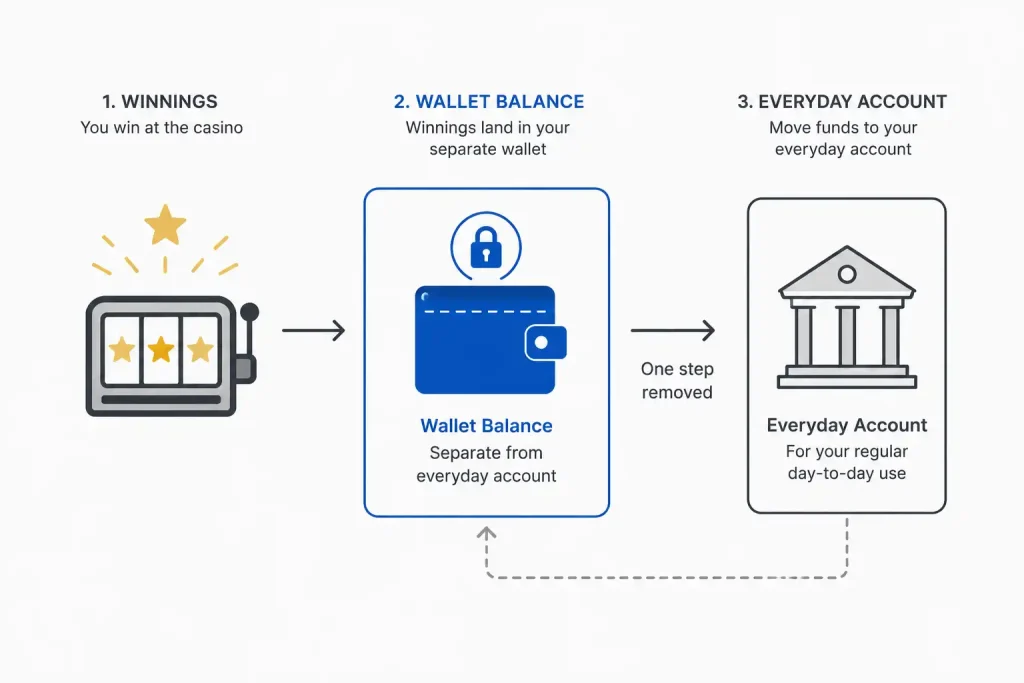
Deposits are a near-tie. A debit card and a Skrill wallet both fund a casino account effectively instantly, so for getting money onto the table there is little to choose between them. Withdrawals are a different story. A wallet payout typically settles fast once the casino releases it, while a debit card withdrawal often takes longer to land in your bank, sometimes several working days depending on the card scheme and the operator. That is why 65 per cent of online bettors regard digital wallets as the fastest route to their winnings.
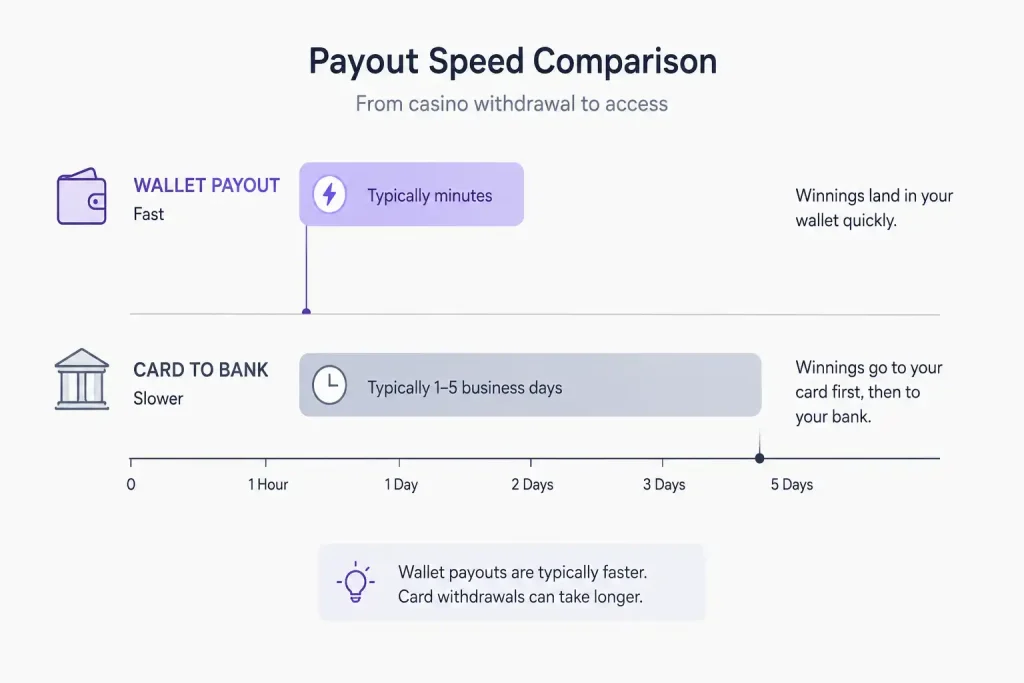
The wallet also offers a behavioural edge on the way out. Because winnings land in a separate balance rather than straight back on the card you spend from day to day, the money is one deliberate step removed from your everyday account, which makes it slightly easier to leave a win as a win. The card, by contrast, blurs gambling money and spending money into the same place. For a player who cares about payout speed and a clean separation between winnings and daily cash, the wallet’s advantage at withdrawal is the strongest single argument in its favour.
Fees, Bonuses and the Hidden Trade-offs
Speed is only half the ledger. The other half is cost and eligibility, and here the debit card quietly wins back some ground, because the wallet carries charges and exclusions the card does not.
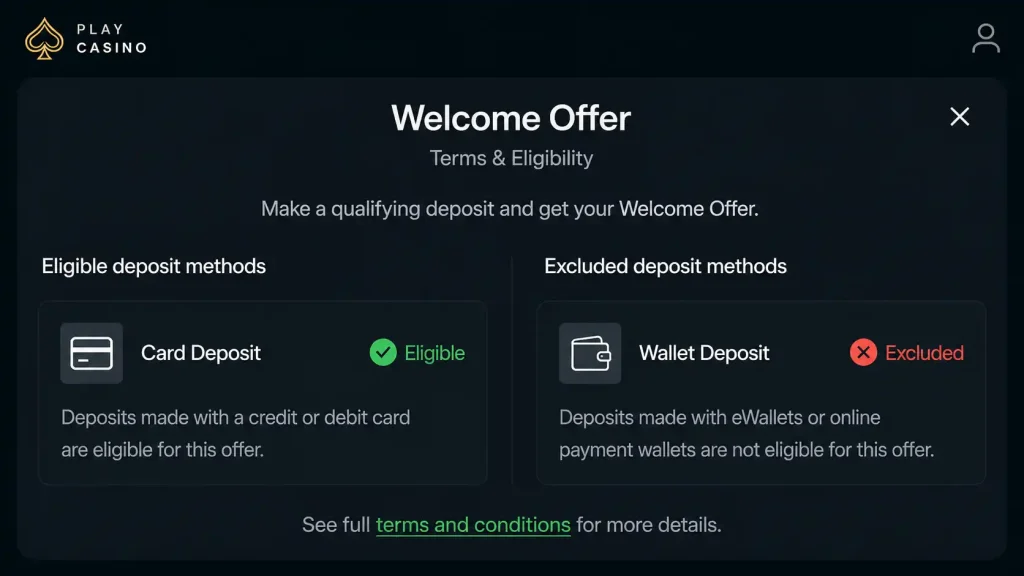
The fee picture favours the card for simple journeys. A debit card deposit and withdrawal at a UK casino is usually free to the player, whereas moving money out of Skrill onto a card carries a typical 1.99 per cent charge, so a wallet user who routinely cashes out to a card pays something the card-only player does not. The wallet avoids this only if you keep funds inside Skrill or withdraw to a bank, which is a habit, not a default. So the card is often the cheaper tool for a player who just wants money in and straight back out to their bank. That said, cost is not the only thing players weigh: 57 per cent of online bettors regard digital wallets as the safest way to pay, a perception that buys the wallet some goodwill even when it is the pricier option on paper.
Bonuses are the other trade-off, and they cut against the wallet. Many welcome offers exclude e-wallet deposits while accepting card deposits, so funding by Skrill can quietly disqualify you from a promotion a debit card would have unlocked. Set against that, the card has a genuine downside the wallet sidesteps entirely: it places your actual bank card details into a casino’s system and ties your gambling directly to your main account, where the wallet acts as a privacy buffer. The honest summary is that the card is cheaper and more bonus-friendly, while the wallet is faster, more private, and better at separating winnings, a contrast that extends to other instruments covered in the comparison of Skrill versus PaysafeCard at UK casinos.
Matching the Method to the Player
So who should use which? The decision sorts cleanly once you stop asking which is better and start asking what kind of player you are, because the two methods genuinely suit different habits.
The debit card fits the occasional, casual player. If you deposit infrequently, want money straight back to your bank with no wallet charge, care about qualifying for welcome offers, and are not bothered about payout speed measured in hours rather than days, the card is the simpler and often cheaper choice. There is no second account to maintain and no wallet fee to plan around. For light play, the card’s directness is a feature.

The wallet fits the regular player who values speed, privacy, and separation. If you play often, want fast and frequent withdrawals, prefer to keep your bank details out of casino systems, and like the discipline of winnings sitting in a balance one step removed from your daily spending, Skrill repays the extra setup. The fee on card cashouts is easily managed by keeping a working balance or withdrawing to a bank. It helps that this is the player the wider market is moving towards anyway, with active bettors leaning wallet-ward and mobile play increasingly the norm, so the regular user choosing Skrill is travelling with the trend rather than against it. My standing line is that there is no universal winner here: match the method to your frequency and your priorities, and the choice answers itself.
Is Skrill or a debit card cheaper for casino play?
For a simple in-and-out journey the debit card is usually cheaper, since UK casino card deposits and withdrawals are typically free, while moving money out of Skrill to a card carries a roughly 1.99 per cent charge. The wallet only avoids that by keeping funds inside Skrill or withdrawing to a bank, so the card edges it on cost for casual play.
Why are debit card winnings slower than Skrill payouts?
A wallet credits fast once the casino releases the funds, whereas a card withdrawal has to travel back through the card scheme to your bank, which often takes several working days. The casino"s own processing time applies to both, but the final leg to a card is the slower one, which is why wallet users tend to see winnings sooner.
Articles
Prepared by the Skrill Casino editorial staff.