
Pay n play casinos in the UK: phone deposits
 Available in GB
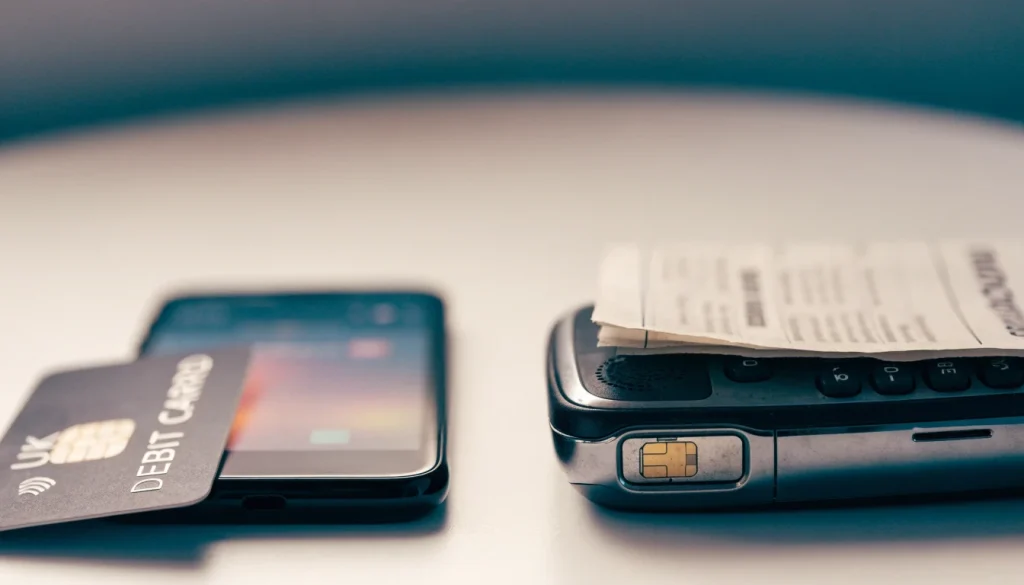
Boku charges deposits to a mobile bill or prepaid credit; it is a payment method, not proof of a bank-based pay n play model.
Pay by phone is not the same as pay n play
“Pay n play” and “Pay by Phone” can sound like two names for the same shortcut. They point to different ideas. Pay n play is commonly used for a model in which a bank connection helps identify a customer and move money into a gambling account. Pay by Phone describes a payment route that charges a deposit to a mobile bill or takes it from prepaid phone credit. The UK information relevant to this topic concerns Boku and other mobile-payment services, not a separately established bank-based pay n play system.
That distinction matters because a casino accepting Boku is not, on that basis alone, a pay n play casino. It is a site offering a particular deposit method. Nor does the phrase “mobile casino” settle the matter: a casino can be used on a phone without taking payment through its phone bill. The labels overlap in casual use, but the mechanics do not.
The available picture of Boku in Britain is also narrower than a directory promising every site that accepts pay n play. A specialist review has listed BoyleSports, Sun Bingo, William Hill, Sky Vegas, PlayOJO, Genting Casino, Betfred, Lottoland, bwin and 888 Casino as Boku options. That list should be treated as a time-sensitive snapshot, not a guarantee that each cashier still displays Boku. A small number of UK-licensed casinos continue to accept it, while the group of operators offering it has contracted since 2023.
The change was not the result of a UK Gambling Commission rule naming Boku and banning it. Individual operators removed the method in response to compliance risk. That distinction is more than a technicality: regulation sets the conditions under which gambling businesses may operate, while a casino’s decision to keep or remove a payment option belongs to the operator. A payment method can therefore disappear from a cashier without a new rule directed specifically at that method.
Casinos That Accept PayPal in the UK: What to Check
There is a larger institutional point here. In Great Britain, the Gambling Commission is the sole regulator for commercial gambling. It issues operating licences to gambling businesses and personal licences to individuals working in relevant roles. Its oversight reaches remote gambling offered to consumers in Great Britain even when the equipment used to provide the service is located elsewhere. Geography does not provide an escape hatch.
For an online casino serving people in Britain, the relevant question is not whether its name appears in an old list of payment options, but whether it operates under the required Gambling Commission licence. That licence concerns the business’s permission to offer gambling; it does not certify that a specific deposit method will remain available, or turn a Pay by Phone deposit into a bank-based pay n play service. The two matters sit beside each other, not inside each other.
This is why an all-in-one list of “pay n play casinos” can mislead. It may gather together sites offering bank-linked registration, casinos that accept Boku, and ordinary mobile-friendly casinos, although those descriptions do not mean the same thing. A site’s appearance in a list can also outlast the payment option itself. Cashiers change; old summaries do not always keep pace.
The more precise description is a limited and changing set of UK-licensed casinos that may accept Boku deposits. The word “may” is doing useful work: the method should be confirmed in the operator’s current cashier and its terms, rather than inferred from a broad label or a copied directory. In a market where operators have been withdrawing the option, a historical mention is not a present-tense promise.
Casinos That Accept Upaycard in the UK
The search for a convenient way to begin playing can blur the difference between identity checks, account funding and the device used to reach a site. Yet each answers a separate question. A bank-based pay n play arrangement concerns how an account and payment are connected; Boku concerns charging a mobile account for a deposit; a phone screen concerns access. Calling all three “mobile” does not make them one service.
So the useful starting point is modest: Pay by Phone is not proof of pay n play, and a Boku listing is not a permanent catalogue. The remaining options are a small, shifting part of the regulated casino market, not a complete map of every site described by a loose label. Names age quickly. Definitions should not.
Recommended online casinos
- SlotoSportBonus: 500% up to £ 10 200+ 777 FS · Payout speed: 1-3 business days
- x3betBonus: Welcome Pack 100% Up to £1.000 + 200 Free Spins · Payout speed: 1-3 business days
- AmunbetBonus: Join now and get 450% up to 2,700 GBP + 450 FS · Payout speed: 1-3 business days
- WinBeastBonus: €5000 + 500 FS + €650 Freebet · Payout speed: 1-3 business days
- NightLuckBonus: Welcome Pack + 805% Up To 6400€ + 280 FS · Payout speed: 1-3 business days
- ZombillionBonus: Welcome Pack 250% up to £4000 + 200 FS · Payout speed: 1-3 business days
- DieselwinBonus: Welcome Pack 250% up to £4000 + 200 FS · Payout speed: 1-3 business days
What replaced Boku—and what did not
The change in Pay by Phone casino payments has not produced one clear successor to Boku. A specialist review describing the market’s recent direction reported that some operators had shifted to Fonix or Siru Mobile, while others had removed phone-payment options altogether. That is a useful map of the change, not a promise that every cashier still matches it. Payment menus are operator decisions, and the names available can change.
The distinction matters because “Pay by Phone” can describe more than one service. A casino accepting Fonix is not thereby accepting Boku; a casino accepting Siru Mobile is not a Boku casino either. They belong to the same broad family of mobile-payment options, but they are separate services. The label on the cashier is more informative than the general idea of paying through a phone.
A specialist review listed MrQ and Duelz as accepting Fonix, and Mr Vegas and Videoslots as accepting Siru Mobile. Those examples illustrate the split: phone payments persist in some form, but not necessarily under the Boku name. Since those operator-by-operator details can become dated, they are best understood as reported examples rather than a permanent directory. A cashier can change without the wider market announcing a new chapter.
Casinos That Accept POLI in the UK: Availability Checks
Some operators have taken the quieter route and removed Pay by Phone entirely. That absence is also part of the shift. A casino may continue to offer other payment methods without replacing Boku with another phone-billing service, so “Boku is gone” does not automatically mean “another mobile option is available”. The landscape is uneven: a new service at one operator, no phone option at another.
Direct payment, indirect route
There is also a less obvious distinction between depositing at a casino with Boku and using Boku somewhere else in the payment chain. A specialist review reported that players could use Boku to fund a Neteller account and then deposit at casinos that accept Neteller. In that arrangement, Boku is not the casino’s deposit method. It is used upstream, before the casino transaction.
That difference can disappear in casual descriptions of “casinos that take phone payments”. The casino cashier may list Neteller, while Boku is involved only in putting funds into that account. It is therefore a two-stage route, not proof that the casino itself accepts Boku. The intermediary has its own role and availability; the casino’s payment menu still determines which method is accepted at the point of deposit.
Nor does the existence of that route make it a universal substitute. It depends on the relevant services accepting the transaction at each stage. The reported arrangement should be treated as an option described in a specialist review, not as a standing feature of every Neteller account or every casino that accepts Neteller. Payment chains are only as dependable as their separate links.
This is where the phrase “alternatives to pay n play” can blur unlike things together. A direct Boku deposit, a Fonix or Siru Mobile deposit, a Boku-funded e-wallet and a casino with no phone-payment facility are four different situations. They may all appear in discussions of paying without entering card details at a casino, but they do not describe the same service or the same route.
Fonix
Accepted by operators such as MrQ and Duelz.
Siru Mobile
Accepted by operators such as Mr Vegas and Videoslots.
Neteller
Can be used as an indirect route by funding a Neteller account via Boku first.
For someone comparing casinos, the practical question is not simply whether a brand is associated with phone payments. It is whether the desired service appears in that operator’s own cashier, and whether it is listed as the direct deposit option rather than as a way to fund an intermediary. Old payment pages and general descriptions can preserve a method long after an operator has changed its menu. The cashier is the final word, though not an eternal one.
The shift away from Boku is therefore less a handover than a thinning and branching of options. Fonix and Siru Mobile appear in reported examples; elsewhere, phone billing has disappeared from the available methods. Boku may still feature in an indirect route through Neteller, but that does not restore it as a direct casino deposit method. Similar convenience, different plumbing.
For UK players, the broader legal setting remains distinct from the payment question: remote gambling operators serving Great Britain must hold the relevant UK Gambling Commission licence. A payment service does not confer that status, and a casino’s use of one mobile provider rather than another says nothing by itself about its licence. The route money takes and the authority overseeing the gambling are separate matters. A useful distinction.
Slots, phone deposits and the limits of the evidence
A slot does not become a different kind of game because an account was funded by phone. Pay by Phone describes a way of putting money into a casino account; it is not a recognised slot category, a game feature or a promise about what appears in the lobby. The distinction is plain, though casino language has a habit of making ordinary boundaries look like products.
That matters when a site is described as offering “pay n play slots”. The phrase can suggest that a particular set of machines is built for that payment route, or that a deposit method brings access to a special catalogue. Neither follows. A casino’s games and its cashier are separate parts of the service. The payment option concerns funding; the game selection belongs to the operator.
Casinos That Accept Giropay in the UK
There is no sound basis for ranking “the best” slots for phone-funded play or naming titles as exclusive to it. A game may be available at a casino that accepts Boku, but that does not make it a Boku slot. Nor does a casino’s use of another Pay by Phone service establish that its games are different. The label on the cashier cannot do the work of a game review.
The same caution applies to claims about a “pay n play slot machine” or an online slot supposedly designed for instant banking. Those descriptions blur three separate things: the casino account, the method used to fund it and the game played after funds are there. Online gambling regulation concerns the operator’s service to customers in Great Britain, not a special class of slot attached to a payment brand. A legal online casino serving that market needs the relevant UK Gambling Commission licence.
That framework also makes the word “legit” more useful when applied to the operator than to a payment-shaped game label. Boku is a payment method; it does not certify a casino, approve a slot or establish that a particular promotion is available. The UK Gambling Commission issues operating licences to gambling businesses, and its public register is the place where a licence can be checked. A name or phrase in a cashier is not a substitute for that status.
The rules governing online slots also sit apart from how an account is funded. In Britain, autoplay is banned and each slot spin must last at least two and a half seconds. The maximum stake per game cycle is £5 for customers aged 25 and over, and £2 for those aged 18 to 24. These are rules about play, not clues that identify games suitable for phone deposits.
The habit of attaching payment terms to game names is understandable. Casinos sell a continuous experience: account, deposit, lobby, play. Searchable labels compress that experience until it looks like one product. But a compressed phrase is not evidence of a distinct machine, a special game list or a different set of slot rules.
So the useful distinction is modest. Pay by Phone may describe how a casino account is funded; it does not, by itself, say which slots are available, which one is best, or whether a game has a special no-deposit route. Those questions belong to the casino’s own game catalogue and terms, while the payment label answers only the narrower question of how money enters the account. A cashier is not a catalogue.
Casinos That Accept iDEAL in the UK: What to Check
Mobile deposits, network rules and the small print
A Boku deposit begins in the casino cashier, not in the phone’s ordinary payment settings. The player chooses Boku, enters an amount and supplies a mobile number. A text message then carries a verification code; entering it confirms that the person controlling the phone has approved the charge. The casino account is funded through that sequence, while the cost is placed on the mobile account.
That distinction matters. Pay by Phone is not the same as entering card details on a small screen: Boku routes the payment through the mobile connection and bills the phone account. The deposit is therefore tied to the number and its billing arrangement, rather than simply to the device being used to play. A smartphone can be the screen for a casino, but the phone number is the part that authorises this payment.
The bill may be a monthly one or, for a prepaid account, the charge comes out of the available credit. In either case, the mobile operator sits between the casino and the player’s phone account. A successful text confirmation does not make the method universal: the cashier must offer Boku, and the network must be able to process the charge. Payment options are a small piece of infrastructure, and infrastructure tends to be less visible than the bright button placed over it.
Pay by mobile services, including Fonix, are supported by EE, O2, Vodafone and Three. That does not mean every casino using one of those services accepts deposits from every customer on the network. Operator support and a particular casino’s cashier are separate conditions. The name of a mobile network on a service’s support list is not, by itself, proof that a given payment route will appear in a given account.
The sequence is deliberately short: select the method, provide the amount and number, then confirm by SMS. But each step is a check in its own right. An incorrect number can send the verification message elsewhere; a number that cannot receive the text cannot complete this confirmation route. The phone is both the billing channel and the means of approving the transaction. Convenient, but not anonymous.
Boku Deposit Process
Step 1: Selection
Choose Boku in the casino cashier, enter the deposit amount and provide a mobile number.
Step 2: Verification
Receive a verification code via text message.
Step 3: Confirmation
Enter the code to approve the charge, which is then placed on the mobile account.
This is also why “pay n play” can give the wrong impression when used for a phone-bill deposit. A Boku transaction still involves a casino cashier, an entered amount and an SMS confirmation. It is not simply a matter of opening a mobile casino and having the account created through a bank payment. The label may suggest a frictionless entry; the actual process is more specific.
For a regulated casino serving Great Britain, payment sits within a wider account process. Operators must verify a customer’s age before allowing a deposit, and new customers must be prompted to set a financial limit before their first deposit. Those checks do not change how Boku sends a charge to a phone account. They are part of the rules around gambling, not features of the payment method.
The small print is the connection between three parties: casino, mobile operator and phone account. The cashier offers the route, the number receives the confirmation, and the operator’s billing arrangement determines where the charge lands. A mobile screen may make the transaction look self-contained. It is not.
A deposit method, not a way to cash out
Pay by Phone can put money into a casino account, but it does not provide a route back out. Boku is deposit-only: winnings cannot be sent to the mobile bill or returned as phone credit. That difference matters because a payment option shown beside the deposit box may look like part of a complete banking service. It is not.
A withdrawal has to use another method accepted by the casino. The account therefore needs a suitable alternative withdrawal option, such as a debit card, e-wallet or bank transfer. The casino’s rules determine which methods are available and whether account details must match; Boku itself cannot settle the withdrawal. A phone can open the door in one direction only.
This one-way arrangement helps explain why claims about pay n play casinos with both deposits and withdrawals by phone need careful reading. “Pay n play” is often used loosely in searches, but a Boku deposit does not establish that a casino offers a bank-based pay n play service, nor that cash-outs work by phone. The useful distinction is between funding an account through the mobile network and withdrawing winnings through a separate payment channel.
Casinos That Accept AstroPay in the UK: What to Check
The remaining direct-Boku options are a small, changing group rather than a broad directory. A specialist review identifies Jackpot Mobile Casino and Peachy Games among the sites still associated with direct Boku deposits. That is a snapshot, not a guarantee of current cashier availability: operators can change payment methods, and the list has been contracting. Before depositing, the casino’s live cashier and its UK Gambling Commission licence record are more relevant than an old list.
The UK’s licensing system places the operator, not the phone network, at the centre of the gambling transaction. Remote casinos serving Great Britain require the appropriate Gambling Commission licence, wherever their equipment is located. That licence does not turn Boku into a withdrawal method, and it does not remove the need for a separate way to receive funds.
So, are phone-based casino deposits still available? In a limited direct-Boku form, yes; as a matched deposit-and-withdrawal service, no. The distinction is less glamorous than the label. But it is the one that decides how money leaves the account.
Bonuses do not necessarily follow the deposit
A deposit and a promotion are separate parts of a casino account. Paying by phone does not, by itself, establish eligibility for a welcome offer: that depends on the operator’s terms, and the payment method may be excluded. The distinction is easy to miss when a promotion is presented as a reward for making a first deposit. The qualifying deposit still has to be made by an accepted method.
A specialist review of pay-by-phone casinos identified MrQ, Duelz, Mr Vegas and Videoslots as operators where such deposits could count towards bonus eligibility. That is a useful indication, not a standing guarantee: offers and terms can change. The safer reading is operator-specific, not a rule attached to Pay by Phone as a category. The promotion’s own conditions determine whether a particular deposit qualifies.
General welcome offers are a different matter from bonuses tied specifically to Boku. A specialist casino review described a common structure as a deposit match of 100% up to £100, with a 35x wagering requirement. Those figures are an illustration of the kind of terms that may appear, not a promise that any named casino currently offers them or that a Pay by Phone deposit will qualify. The small print decides both the eligible payment method and what must be done before bonus funds can be withdrawn.
Casinos That Accept EntroPay in the UK: What’s Confirmed
There is also a narrower point: specialist reviews of Boku casinos found that Boku deposits generally came without a dedicated bonus. That does not necessarily prevent an operator from counting a phone deposit towards a broader welcome promotion; it means the payment method itself should not be mistaken for a bonus offer. A deposit can be accepted while its promotional status remains conditional.
“Free spins” and “no deposit” describe offers, not payment methods. A no-deposit promotion does not require a qualifying deposit in the same way as a deposit match, while free spins may be attached to separate conditions. Neither label establishes that Boku is accepted, or that a Boku-funded account receives the offer. The terms belong to the operator.
The cautious arithmetic is simple: distinguish the casino’s general promotion from any reward specifically attached to Boku, then check whether Pay by Phone is an eligible funding method. A banner is not a contract.
Small transactions, operator-set limits
A Boku deposit does not have one dependable ceiling that applies across every UK casino and mobile network. A specialist review describes £30 as the standard maximum for a single transaction, with some casinos or network operators permitting £40 or £50. Those higher figures are not a general promise: the amount available can depend on the particular payment route.
There is also a disagreement over how the limit is framed. One account gives a per-transaction cap of £30, while another describes a daily limit of £30 and specifies no transaction cap. These are different rules, not two ways of saying the same thing. Without a consistent basis for reconciling them, neither should be treated as a universal limit for every Boku user.
The distinction matters for anyone weighing up a small deposit. A casino cashier may set an amount it will accept, but the mobile operator can impose a separate daily ceiling. A transaction within the casino’s stated range may still be refused if the network’s limit has already been reached. In a specialist review, daily Boku limits are attributed to the mobile operator rather than the casino; the arrangement may therefore differ between customers even when they use the same gambling site.
Attention: A transaction may be refused if the mobile operator’s daily ceiling has been reached, even if the amount is within the casino’s stated range.
Pay as you go accounts have another practical constraint. A specialist review says a Boku deposit cannot exceed the remaining phone credit. If the available balance is too low, the payment may not go through; the casino’s listed minimum cannot make that balance stretch further. Monthly-billed accounts avoid that particular balance test, but they remain subject to the limits applied by the operator and network.
That is why a supposed minimum deposit, or a claim that a site accepts deposits with no minimum, needs to be read as a condition of that specific cashier rather than a general feature of Pay by Phone. Boku’s transaction ceiling, the casino’s accepted amounts and the network’s daily allowance are separate parts of the calculation. Small sums do not make the rules simpler.
GamStop claims need separate evidence
Pay by Phone and GamStop describe different things. Pay by Phone is a way to put money into an account through a mobile network. GamStop is a self-exclusion scheme. One concerns payment; the other concerns whether a person has chosen to block their access to gambling sites. A casino’s payment options do not establish its position on self-exclusion.
That distinction matters when a site is described as a casino outside GamStop that accepts phone deposits. The two claims need separate checking. A payment logo or a working mobile-payment option cannot show whether an operator participates in the scheme, and a claim about GamStop cannot establish that a particular deposit method is available.
There is a more basic question of regulation. In Great Britain, an operator selling remote gambling to consumers must hold a UK Gambling Commission licence, wherever its equipment is located. The Commission issues operating licences to gambling businesses and is the regulator for commercial gambling in Great Britain. Online casinos serving British players are not made legitimate by a phone-payment option.
Casinos That Accept Klarna in the UK: Payment Checks
GamStop is especially sensitive territory because self-exclusion is not an ordinary preference setting. UK-licensed casinos must provide self-exclusion tools, alongside other responsible-gambling measures. A promise that a site is “not on GamStop” should therefore not be treated as a reassuring feature or as evidence of a safe workaround. It says nothing about whether the operator is licensed, and it should not be confused with a payment description.
The wording can also blur several different claims: that a casino accepts Pay by Phone, that it is outside GamStop, or that it offers particular slots. Each needs evidence of its own. None follows automatically from the others. A site might advertise one feature without establishing the rest; the shared vocabulary does not make the claims interchangeable.
The UK’s licensing system draws a firm line around operators offering remote gambling to people in Great Britain. Payment convenience sits on the transactional side of that line. Self-exclusion and licensing sit on the protection and oversight side. Treating them as one package turns a mobile deposit method into a claim it was never designed to make.
Separate questions. Separate proof.
Slot apps and the phone-billing connection
A casino app and a way to pay for a casino account are separate things. An app is the interface: it may provide access to an operator’s games and account. Boku concerns the funding step. It does not, by itself, identify a particular app, slot title or app-only offer.
With Boku, the deposit is charged to a monthly mobile bill or taken from available pay-as-you-go credit. That describes where the money comes from, not what appears on the screen afterwards. A phone-bill payment does not turn a slot into a special kind of game, nor does it show that a casino has a dedicated app. The payment route and the software are different parts of the arrangement.
Casinos That Accept Solana in the UK: What’s Verified
The phrase “pay n play slots app” can blur those distinctions. A slot app may accept several payment methods, while a casino accepting Boku may be accessed through a mobile browser rather than an app. The presence of a payment option in a cashier is not evidence of an app-specific catalogue. Nor does Boku make an account anonymous: the mobile number is part of the billing process, and the deposit is attached to the casino account.
Free play belongs to another category again. A free version of a slot, where an operator offers one, is not funded by a Boku deposit simply because the same casino may accept phone billing for paid play. The payment method tells nothing about whether free games are available or how they work. It is a means of charging a deposit, not a label for the game mode.
That distinction matters in Britain, where a small screen can make several different services look like one. The app, the casino account, the slot and the payment provider may sit together in a few taps, but they do not become interchangeable. Boku links a deposit to a mobile bill or prepaid balance; it does not establish which casino apps support it, which games those apps contain, or whether a particular title carries a mobile-only promotion.
The useful description is therefore plain: Boku is phone billing used to fund an account. App access, game selection and free-play features are separate operator choices. A phone payment is not an app catalogue.
Real-money play, deposit steps and bonus codes
A Boku payment can put money into a casino account for real-money play, but the deposit itself does not establish that a bonus has been added. The distinction is easy to blur: payment is one transaction, while a promotion is governed by separate terms. A funded balance is not a promotional entitlement.
Casinos That Accept Apple Pay in the UK
Claims about Boku deposit amounts need careful handling. One specialist review describes deposits in multiples of ten, giving £10, £20 and £30 as examples. Other accounts disagree about the limits: one gives euro-denominated minimum, maximum and monthly figures, while UK-focused reporting describes a £30 transaction limit and says some operators may permit £40 or £50. These are not a single settled schedule. The amounts and rules should therefore be treated as operator- and payment-provider details, rather than as a universal promise attached to every casino.
That uncertainty matters when assessing claims about playing slots for real money. Boku is a way to fund an account, not a guarantee that a particular game, offer or feature will be available. Nor does a deposit amount reveal whether the balance will qualify for a promotion. A casino’s cashier and terms determine the available payment choices and the conditions attached to an offer.
The bonus-code question is narrower still. No particular code or no-deposit offer can be confirmed for Boku users. A code advertised for a casino may have its own qualifying payment methods, and entering it does not override those conditions. Boku deposits generally have no specific bonus attached; where an operator allows a pay-by-phone deposit to count towards another offer, that depends on the operator’s published terms.
Real-money casino play in Great Britain is offered by operators holding a UK Gambling Commission licence, and operators must verify a customer’s age before allowing a deposit. These safeguards describe the setting in which a deposit is made; they do not turn a payment method into a bonus or a free-play offer.
The practical test is the wording attached to the promotion: whether the payment method qualifies, whether a code is required, and what the offer actually grants. Without those terms, a balance remains a balance. Not a bonus.
What are the deposit limits at pay-by-mobile casinos?
Limits depend on the mobile operator and casino. Boku’s usual UK maximum is £30 per transaction, though some casinos or networks may allow £40 or £50; network-level limits are typically about £10 per transaction and £30 per day.
What is the standard Boku deposit limit in the UK?
The standard maximum is £30 per transaction, although some casinos or mobile operators may allow up to £40 or £50. Network-level limits are typically lower, at about £10 per transaction and £30 per day.
How does Boku work?
Boku charges a casino deposit to your monthly mobile bill or deducts it from your prepaid phone credit. At the casino cashier, select Boku, enter an eligible amount and your phone number, then confirm the payment with the SMS verification code.
Payments
Written by the editors at Skrill Casino.