
Casinos That Accept Ripple XRP in the UK
 Available in GB
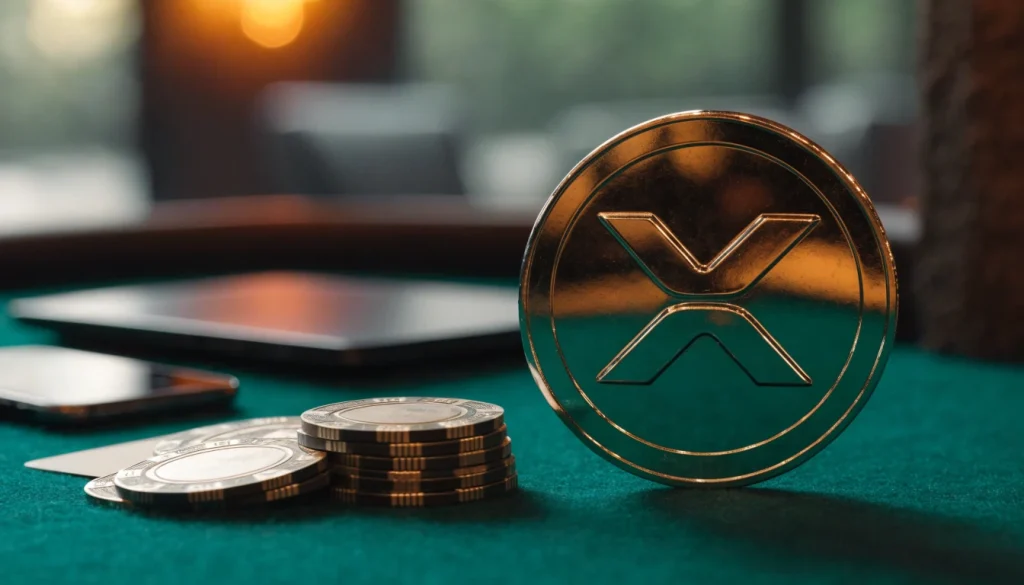
XRP must appear as a selectable cashier option; general crypto claims and payment logos do not confirm availability for UK accounts.
The XRP question: availability has to be checked at the cashier
A casino’s general reference to cryptocurrency does not establish that it accepts XRP. The term may cover several coins, and the payment option shown on a page or in a logo may not be available to every customer, in every region, or at the time a transaction is made. XRP needs to appear as a selectable deposit method in the casino’s cashier before the claim can be treated as current.
That distinction matters when looking for casinos that accept Ripple XRP in the UK in 2026. A site can discuss digital currencies without naming XRP at all; it can name XRP without showing that UK accounts can use it; and it can display a payment mark that reflects a general service rather than a working route for a particular account. These are different claims, not interchangeable signs of acceptance.
A specialist review of casino payment pages describes a varied set of methods, including Visa, Mastercard, bank transfer, e-wallets and several cryptocurrencies. That is useful as a map of what such pages may mention, but it does not turn every listed casino into an XRP casino. Nor does a broad “crypto accepted” label answer the practical question: whether an XRP deposit option is present in the cashier for a customer based in the UK.
The cashier is where the distinction becomes concrete. Before an account is funded, the payment menu should identify the available deposit methods, and the XRP option should be explicit rather than inferred from a cryptocurrency badge. If it is absent, a coin logo elsewhere on the site cannot make it available. If it appears, the displayed instructions and account terms still need to match the intended transaction.
There is also a difference between a casino that accepts a digital asset somewhere and one that accepts it under the conditions relevant to a UK customer. Payment menus can vary by location, account status and operator settings. A page written for a broader audience may therefore describe a method that does not appear once a UK account reaches the cashier. The word “available” has a small but consequential geography.
Casinos that accept Siru Mobile in the UK
The legal setting gives the question another boundary. Remote gambling licensees serving customers in Great Britain must hold a Gambling Commission licence, wherever the operator is based. A casino’s acceptance of a cryptocurrency does not itself establish that it is licensed to serve the British market. Online gambling is legal in the UK only at licensed and regulated sites; an offshore casino’s payment page is not a substitute for the local operating permission.
This makes lists of all Ripple XRP casinos in the UK difficult to read as definitive catalogues. A list can collect names and claims, but the useful test remains whether the named operator’s current UK cashier offers XRP. New sites and changing menus can make static lists stale, while an old review can preserve a payment claim after the option has changed. A search result is a signpost, not a receipt.
The same caution applies to phrases such as “best XRP casinos”, “new XRP casinos” or “XRP casino bonuses”. Those labels can make availability sound settled before the basic payment route has been confirmed. A bonus page, game catalogue or mobile version says nothing by itself about which deposit assets the cashier accepts. The payment method and the rest of the casino experience are separate questions.
Card logos deserve a similar check, even though Visa and Mastercard are familiar names. The cashier is the relevant place to confirm both. A familiar logo can be accurate in one context and still fail to describe the transaction a customer is trying to make.
The sensible meaning of “XRP casino” is therefore narrow: a casino whose current UK-facing cashier expressly offers XRP for deposits. A general cryptocurrency statement is not enough, and a logo alone is not enough. The payment screen settles the immediate question. Not the branding.
If XRP is not an option, the payment routes UK casinos do use
A casino payment menu is less a catalogue of interchangeable buttons than a map of different financial habits. A debit card draws directly on a bank account; an open-banking payment connects a transaction to online banking; an e-wallet adds an account between the bank and the casino. A prepaid voucher takes a different path again. Each route can feel simple at the moment of deposit, but the useful distinctions are where the money comes from, what the cashier supports and whether the method suits the whole transaction.
Debit Cards
Commonly accepted Visa and Mastercard options linked directly to bank accounts.
PayPal
An intermediary account providing speed and convenience, though sometimes excluded from bonuses.
Open Banking
Direct bank connections that can provide instant deposits and fast withdrawals.
Prepaid Vouchers
Deposit-only methods like Paysafecard used to add a prepaid balance.
Debit cards are a familiar starting point. UK casinos commonly accept Visa and Mastercard debit cards, though the logos alone do not settle whether a particular card product will work at a particular cashier. A card may be easy to use because it is already linked to a bank account, but it is still a card transaction, not an XRP payment or a cryptocurrency conversion. The cashier’s current options matter more than a general list of payment brands.
PayPal offers a different kind of separation: the casino receives a payment through the PayPal account rather than directly through the card details entered at the casino. Specialist casino reviews describe it as popular for speed and convenience, but that assessment is not a guarantee about every operator or account. A further qualification is that a casino may exclude PayPal deposits from bonus eligibility. The payment route can therefore affect more than the mechanics of funding an account; it can sit alongside separate offer conditions.
Open banking and bank transfers connect a casino payment more directly with the customer’s bank. A specialist review of UK payment options reports that these routes can provide instant deposits and fast withdrawals at many sites. That is a description of possible service, not a timetable that applies universally. The casino and the banking service both shape the experience, and a bank transfer remains subject to practical details such as processing arrangements. The attraction is straightforward: a bank-based route may serve both sides of a transaction, rather than being limited to adding funds.
Casinos That Accept Apple Pay in the UK
Prepaid vouchers appeal for a different reason. Paysafecard is a voucher used for deposits only. That makes it a funding method, not a complete payment route for money moving both into and out of a casino account. Its role is easy to understand precisely because it is narrow: it adds a prepaid balance, while withdrawal arrangements have to be considered separately. A payment method can be convenient for one direction and still leave the rest of the account journey unresolved.
E-wallets occupy the middle ground between a bank account and a merchant. Skrill and Neteller are available at some casino sites, but a specialist review describes them as often excluded from promotions. Availability is not universal, and the cashier should be checked for the particular account. Nor should the presence of an e-wallet logo be treated as proof that it can handle both deposits and withdrawals at that site; payment routes need to be confirmed in both directions before they are treated as a full substitute.
The practical comparison is therefore not simply between a digital currency and a bank card. It is between different arrangements for moving money: the directness of a debit card, the intermediary account of an e-wallet, the bank connection of open banking or a transfer, and the deposit-only character of a voucher. A method that looks fastest at the point of deposit may not be the most useful overall if it cannot support the next stage, while a route described as available may carry conditions that only appear in the cashier or payment terms.
Do
- Check the cashier for explicit XRP options
- Confirm the route supports both deposits and withdrawals
- Match account details with the payment source
Don’t
- Rely on general “crypto accepted” labels
- Assume a logo guarantees availability for UK accounts
- Use credit cards for gambling deposits
That is the less glamorous part of payment choice. The method needs to fit the casino account, the customer’s own financial account and the direction in which funds need to travel. An XRP search may begin with the appeal of paying in a particular asset, but the alternatives in a UK cashier are more conventional—and each comes with its own boundary. Debit cards and bank-connected services can be familiar; e-wallets add another account; Paysafecard stops at deposits. The distinctions are small on a screen. They are not small once money has moved.
Recommended online casinos
- SlotoSportBonus: 500% up to £ 10 200+ 777 FS · Payout speed: 1-3 business days
- x3betBonus: Welcome Pack 100% Up to £1.000 + 200 Free Spins · Payout speed: 1-3 business days
- AmunbetBonus: Join now and get 450% up to 2,700 GBP + 450 FS · Payout speed: 1-3 business days
- WinBeastBonus: €5000 + 500 FS + €650 Freebet · Payout speed: 1-3 business days
- NightLuckBonus: Welcome Pack + 805% Up To 6400€ + 280 FS · Payout speed: 1-3 business days
- ZombillionBonus: Welcome Pack 250% up to £4000 + 200 FS · Payout speed: 1-3 business days
- DieselwinBonus: Welcome Pack 250% up to £4000 + 200 FS · Payout speed: 1-3 business days
Depositing is only half the transaction
A payment method shown at deposit does not, by itself, tell the whole story. A casino may accept a particular route for money going into an account while applying separate conditions when a balance is paid out. That distinction matters to anyone considering an XRP deposit: the ability to fund an account, where available, would not establish that winnings can be sent back in XRP or to the same wallet.
For UK gambling, the direction of travel is shaped by anti-money laundering controls. Payouts are generally expected to return to the original payment source. This closed-loop approach helps connect the money leaving an account with the funds that entered it, rather than allowing the casino account to become a convenient route between unrelated payment destinations.
Casinos That Accept Zimpler in the UK: Payment Guide
The practical effect is that the withdrawal method may be determined by the deposit method and the operator’s rules. A casino might need to return a payment to its source before it can use another approved route for any remaining balance. The exact sequence can depend on the account and the cashier’s terms; a deposit screen alone cannot settle it.
This is where cryptocurrency searches can become less straightforward than they appear. A general statement that a site accepts cryptocurrency does not establish that XRP is available for deposits, and a deposit option would not prove that withdrawals are supported through the same asset or address. The two stages need separate confirmation. Payment compatibility is not a single switch.
A withdrawal request also passes through the casino’s own processing stage. The funds do not necessarily move as soon as the request is made: the operator must review and approve it before the payment provider or banking route completes its part. A specialist review describes first withdrawals as potentially taking longer while identity and account checks are completed. That qualification matters because a first payout can involve work that later requests do not repeat in the same way.
KYC is not an ornamental obstacle placed between a player and a balance. It is part of establishing who controls the account and whether the payment route belongs to that same person. If details on the casino account and the named payment source do not match, the operator may need further information before releasing funds. Keeping account and payment details consistent can reduce avoidable friction, though it cannot remove checks the operator is required to make.
payouts are generally expected to return to the original payment source to comply with anti-money laundering controls.
The first withdrawal is therefore a poor moment to discover that the deposit route and payout route do not line up. Before funding an account, the useful questions are not only whether a method appears in the cashier, but whether withdrawals can be sent to it, whether another route may be required, and what verification is needed. Those answers belong to the operator’s current payment terms, not to a logo or a broad claim about supported currencies.
There is a small but important difference between a payout being approved and money arriving. The casino’s review is one stage; the receiving provider or bank has its own role after that. A request can therefore remain in process even when the account balance has been deducted. The distinction is especially relevant where the original source is a wallet, bank route or digital asset service, because the casino cannot make the recipient’s processing rules disappear.
For anyone weighing XRP against another payment route, the exit matters as much as the entrance. A deposit that can be made but cannot be withdrawn through an expected route is not a complete payment solution. The cashier’s withdrawal terms, identity requirements and closed-loop rules determine what happens after play. The money has a return journey.
Mobile slots, payment screens and the GBP question
A slot site can fit neatly on a phone and still leave the important payment question unanswered. Mobile access describes how a service appears and works on a smaller screen; it does not establish that Ripple XRP is accepted, either for a real-money deposit or anywhere else in the account. A payment logo, a cryptocurrency reference or a playable slot cannot fill that gap. The cashier is where the available transaction methods have to be checked.
That distinction matters because games and payments occupy different parts of the service. A slot may load and run on mobile while the cashier presents a separate set of options. Seeing a game on a phone, or finding a free-play version, says nothing by itself about whether a real-money account can be funded with XRP. The interface may be compact; the evidence is not.
Casinos That Accept Google Pay in the UK: What’s Known
The practical check is to view the account’s payment area on the same device used for play, then confirm what the account itself displays before starting a transaction. A method mentioned elsewhere may not appear for a particular account. Nor does the general label “crypto” identify which assets are actually available. XRP must be named as an option, rather than inferred from a broad category.
Currency deserves the same attention. A specialist review reports GBP support on the pages it covers, but that is not a reason to assume every account is already denominated in pounds. The account currency should be confirmed before the first transaction. If it is set to another currency, conversion may arise between the payment and the casino balance, adding a cost or a difference between the amount sent and the amount credited. The screen’s displayed currency is more useful than an assumption based on a UK-facing design.
There is a small cultural lesson in this interface. The phone makes gambling feel portable and private; the cashier turns it back into an account relationship, with a currency and a named route for funds. Convenience does not dissolve those details. It merely puts them behind a smaller screen.
For a UK player looking for mobile slots funded with XRP, the useful distinction is therefore between access to the game and access to a particular payment method. One can be present without the other. A mobile-friendly casino is not, by that fact alone, an XRP casino; and a GBP display should be checked in the account before any money moves. A modest pause at the payment screen can prevent a larger misunderstanding later.
Real-money slot play and the delay between a stake and a payout
A real-money slot session has two separate clocks: the time it takes for a deposit to reach the casino balance, and the time it takes for money requested back to clear. They can be very different. A specialist casino review describes card deposits as potentially instant while a payout may take several business days. That is a reported timing pattern, not a promise attached to every casino or payment method.
Casinos That Accept Wirecard in the UK: What to Check
The distinction matters when a slot balance is funded with a card. A quick credit to the account says little about how quickly a later withdrawal will arrive. The deposit is the incoming leg of the transaction; a payout has to pass through the casino’s own approval process before it is sent. A further delay can follow while the receiving payment service or bank processes it.
Nor does a winning spin itself start the withdrawal clock. Money credited to the casino account is not the same as money received outside it. The casino may first review the withdrawal request and confirm that the account is fully verified. If verification is incomplete, the approval stage can take longer. The player’s balance may show a payout request in progress while the money remains unavailable in the original account.
This is one reason that searches for real-money slots using XRP can carry an unstated expectation: that a crypto deposit, if available, will make the whole journey quicker. That does not follow. A payment method’s speed into an account cannot establish the speed of a withdrawal, and a casino’s mention of cryptocurrency cannot establish that XRP is available for either leg. The cashier and the withdrawal terms determine what the account can actually do.
For slot play, the practical consequence is simple but easy to overlook: the stake is available once the deposit has arrived, while a later payout may still be waiting on a separate review. A fast start does not imply a fast finish. Even a balance that changes immediately after a spin remains inside the casino account until the withdrawal process has run its course.
Timing also needs to be read as a sequence rather than a single figure. First comes the casino’s handling of the request; then, once approved, the payment is sent through the relevant route. A delay at the first stage is not the same as a delay in the payment network, and the stated period for a payout may include both. Where verification is still under way, the expected wait may not describe the actual one.
In a real-money session, the visible movement of the balance is immediate and persuasive. The movement out is more procedural. That is the less glamorous half of the transaction.
Credit Card Ban
Credit-card payments for gambling have been prohibited since 14 April 2020 and remain strictly forbidden at UK-licensed casinos.
Cards, deposits and the credit-card line UK gambling does not cross
Debit cards are a familiar way to fund a UK casino account, but the word “card” does not make every card eligible. Credit-card payments for gambling have been prohibited since 14 April 2020, and the rule has not been relaxed. It applies to deposits at UK-licensed casinos, not merely to a particular brand or payment screen.
The distinction matters when a search combines Ripple XRP, credit cards and casino deposits. XRP and a bank card are different payment routes; neither a card logo nor a general reference to cryptocurrency changes the credit-card restriction. A credit card cannot be used to fund gambling, including through a money service business, and a wallet cannot be used where it allows credit-card funds to reach gambling. A detour does not make the line disappear.
Debit cards remain different. A UK casino may accept a debit card, subject to the payment options and checks in place for that account. The product attached to the card matters: a card that draws on credit is not made acceptable by being presented through a wallet or described as a fast payment. The rule follows the source of funds, not the neatness of the checkout design.
There is a quieter kind of friction, too. When the casino account details and payment route belong to the same person, basic ownership checks are less likely to become an obstacle. A mismatch can prompt questions about who controls the account or where the funds came from; consistency does not remove KYC, but it avoids creating an unnecessary discrepancy. This is administration, not a judgement on the player.
The principle also helps explain why “direct withdrawal” should not be read as permission to nominate any destination at will. Payment providers and casinos may need to establish that the account receiving funds belongs to the customer. Keeping the account name and payment details aligned makes that ownership trail easier to follow.
The credit-card ban is a clear boundary, while debit-card use depends on the specific product and casino. An XRP-labelled offer or deposit route cannot turn a prohibited credit-card payment into an eligible one. The cashier’s list is not the whole story; the source of the money matters. A small distinction with a firm edge.
Casinos That Accept POLI in the UK: Availability Checks
Bonuses do not necessarily follow the payment method
A deposit method and a promotion are separate parts of a casino’s terms. An XRP option in a cashier, if available, would not by itself show that an XRP deposit qualified for a welcome offer or a slots promotion. The bonus rules decide that, and they can distinguish between payment methods.
That distinction matters even with familiar wallets. A specialist review reports that PayPal may be excluded from bonus eligibility. It also notes that Skrill and Neteller are often excluded from promotions at sites that offer them. These are not fixed rules across every casino: eligibility depends on the operator’s current offer conditions. A payment route that is accepted for deposits can still be ineligible for a particular promotion.
The practical check is the promotion’s own terms, not the payment logos or the welcome banner. Terms may identify excluded methods, specify what counts as a qualifying deposit, or set conditions on how an offer is claimed. If the relevant wording is unclear, the offer cannot safely be treated as attached to the deposit merely because the transaction went through.
This is especially important when an offer is described as a slots bonus or a no-deposit bonus. The label says little about which payment methods qualify, or whether a payment method is relevant at all. A bonus code also does not settle the question: the code may activate an offer, while the terms still govern eligibility. XRP wording in a promotion would need to be explicit before it could support a claim that XRP deposits qualify.
Promotional copy tends to put the reward in large type and the qualifications in smaller type. The arrangement is old; the fine print does the accounting. A welcome offer may look universal while applying only under stated conditions, and those conditions can change.
For real-money play, the safer interpretation is narrow: an accepted deposit method is not proof of bonus eligibility, and a bonus advertised at a casino is not proof that every payment route qualifies. The terms attached to the specific offer are decisive. If they name exclusions, those exclusions matter; if they do not clearly address a chosen method, eligibility should not be assumed.
Casinos That Accept Citadel in the UK: What to Check
Small deposits, minimums and the limits around them
A small advertised minimum can look like a simple promise: deposit a little, open a balance and begin. In practice, the minimum belongs to a particular payment route and casino, not to the account in the abstract. A specialist casino review gives a starting range of £10–£20, with the figure depending on the selected method. That is a reported guide, not a universal tariff.
This matters to searches for a £5 XRP deposit. A five-pound starting point cannot be assumed from the fact that a casino mentions cryptocurrency, or from a payment logo elsewhere on its site. Even where XRP appears as an option, the cashier’s stated minimum for that method is the useful figure; a minimum for a card or e-wallet does not establish the minimum for a digital currency. Nor does a low minimum prove that the method is available to a UK account.
Minimums and maximums answer different questions. The first says how small a permitted deposit can be; the second sets a ceiling that may apply to one transaction or to deposits accumulated over a period. Specialist casino reviews report that maximums can differ by payment method and account status, and may be set per transaction, per day or per month. A single figure found in an old review may therefore tell little about the limit currently shown to a particular account.
A low threshold is not necessarily the cheapest way to move money. Fees, where applicable, can affect the value of a small deposit, while a displayed limit only describes what the cashier permits. The amount that leaves an account and the amount credited should not be treated as interchangeable without checking the transaction details.
For anyone considering a modest first deposit, the practical distinction is between a site-wide claim and a method-specific limit. The cashier can show whether the selected route is available and what minimum and maximum apply to that transaction. For XRP, that is where any claim about a small deposit has to become concrete.
Attention: A low minimum deposit for one method does not establish the minimum for XRP; check the cashier for the specific digital currency limit.
Limits are not promises.
Practical alternatives when the search is really for a usable payment route
A search for a Ripple substitute is often less about the coin itself than about what it was meant to offer: a clear route into a casino account and a workable way back out. Open banking and bank transfers are worth comparing on that practical basis. A specialist casino-payment review reports that both can provide instant deposits and fast withdrawals at many sites. That is a reported possibility, not a promise attached to every cashier; the available route and its timing depend on the particular casino and payment service.
Bank transfers have a familiar advantage: money moves through a bank account rather than a separate crypto wallet. Open banking can connect a payment directly to that account, reducing the number of separate services involved. The distinction matters less as a matter of fashion than of access: a payment route is useful when it is available for both sides of the transaction and the account details belong to the same customer. No special glamour required.
Skrill is another practical candidate for players who already use an e-wallet. A specialist review of UK-facing casino sites describes Skrill as one of the most common deposit methods in 2026. That makes it a recognisable alternative, though availability remains specific to each cashier. It is also worth checking the withdrawal route before depositing: a method displayed for deposits does not, by itself, establish that payouts can be sent back through it.
There is no single substitute that fits every reason for choosing XRP. Someone seeking fewer intermediaries may prefer a bank-linked route; someone who already keeps funds in an e-wallet may find Skrill more familiar. The useful comparison is therefore not a contest between technologies, but a check of the full payment path: what can be deposited, how withdrawals are handled, and whether the casino supports the same route for the account in question.
Crypto can make a payment feel portable. The less dramatic test is whether the cashier can complete the whole journey.
XRP casinos and GamStop: two separate questions
A casino’s payment menu and its GamStop status describe different things. The appearance of Ripple XRP in a cashier would indicate a payment option, not whether the operator is connected to GamStop. Equally, a site described as outside GamStop cannot be assumed to accept XRP. Each claim needs separate confirmation; neither follows from the other.
That distinction matters because payment branding can make a site look more transparent than it is. A cryptocurrency label does not, by itself, establish who runs the casino or which regulatory system applies. For customers in Great Britain, remote gambling licensees serving the market must hold a UK Gambling Commission licence. Before depositing, the operator’s licence number can be checked on the Commission’s public register.
GamStop membership is not a substitute for that check. Nor does the existence of UKGC account controls establish whether an operator participates in GamStop. Remote operators must prompt new customers to set a financial limit before their first deposit and make account-level limit controls accessible. Those are regulatory safeguards; they do not identify an operator’s GamStop status.
The reverse is also true: an operator’s claimed position on GamStop says nothing about whether XRP deposits are available, or whether they are available to a particular customer. Cashier options can vary, and a general mention of cryptocurrency is not proof of a working XRP route. Two separate checks, then: the operator’s regulatory standing and the payment method currently offered.
Searches for non-GamStop casinos accepting XRP often combine both questions into one phrase, but the answer cannot responsibly be treated as a single category. A site may claim one feature without establishing the other. The distinction is especially important when the site’s regulatory status is unclear. Offshore operators outside the UKGC system are not UK-licensed, and a payment option does not change that.
A logo is not a licence.
Can I use a credit card at 333 Casino in Great Britain?
No. Credit card gambling has been banned for UK customers since 14 April 2020.
Do UK casino withdrawals require verification?
Yes. Casinos may complete verification before approving a withdrawal, and first withdrawals can take longer while this is done. Payouts usually need to return to the original payment source.
Which payment methods are accepted in Great Britain?
Common options include Visa and Mastercard debit cards, PayPal, open banking, bank transfers and Paysafecard. Some sites also offer Skrill, Neteller or Apple Pay; check the cashier for the options available to your account.
Are Visa and Mastercard deposits definitely debit cards?
No. Visa and Mastercard are payment networks, and their logos alone do not confirm that a particular card product is eligible. Check the cashier and use a debit card; credit card gambling is banned in the UK.
Is Skrill available?
Yes. Skrill is offered at some UK-friendly casino sites, though availability and bonus eligibility can vary by casino.
Payments
Written by the editors at Skrill Casino.