
Casinos That Accept POLI in the UK: Availability Checks
 Available in GB
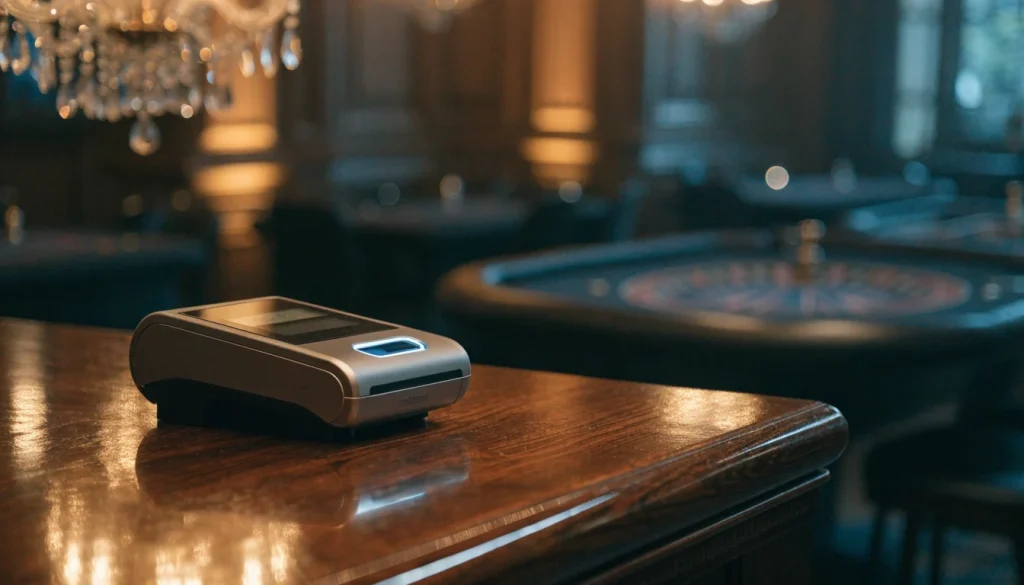
POLI availability depends on the live cashier, while alternative deposits, withdrawal timing and bonus conditions require separate checks.
POLI’s UK Availability Is the First Question
A casino’s name on an old POLI payment list is not proof that POLI can still be used there. Payment arrangements change, and a method once displayed on a site may no longer appear for a UK account. At present, no named casino can be treated as a confirmed UK POLI option on that basis. The practical test is the operator’s live cashier, where the methods available to that account are shown.
That distinction matters because a payment logo and a working deposit route are not quite the same thing. A logo can outlast a commercial arrangement; a review page can describe a former cashier; an operator can alter what it offers without rewriting every page that mentions payments. The cashier is closer to the transaction itself. If POLI is absent there, a promise on an older list does not make it available.
The word “current” carries most of the weight. A list of every POLI casino in the UK would need to be checked against live operator pages, and then checked again when payment arrangements change. Without that, “all” is an assertion with an unusually short shelf life. A list that does not explain when and how its entries were confirmed is better read as a lead than as a directory.
Casinos That Accept Dogecoin in the UK: What to Check
The same caution applies to rankings and labels such as “best”. A casino may be well known, newly opened, or praised for its games without offering POLI. None of those qualities settles the payment question. Nor does a bonus announcement establish that POLI deposits qualify for it. That is a separate matter governed by the operator’s promotion terms and the method selected in the cashier. A payment route, a welcome offer and a catalogue of games are three different things, though they are often bundled together in marketing copy.
Mobile access does not resolve it either. An Android casino is still an account with an operator and a cashier; the handset does not create a payment option that the account does not show. A site may display payment information on a desktop page that differs from what appears after signing in on a mobile device. The relevant detail is not the size of the screen but the list presented for the specific account and transaction.
Payments at UK Casinos: Deposit and Withdrawal Options
That uncertainty about POLI should not be mistaken for an absence of payment choices across UK casinos. Visa and Mastercard appear on payment-method lists discussed by specialist casino review pages, but that does not establish that either card product is available to every UK customer at every operator. The cashier must confirm the live option and whether the particular card is eligible. In Britain, credit-card payments for gambling are prohibited at UK-licensed casinos; a card logo is not permission to use every kind of card.
Currency deserves the same quiet check. Specialist casino review pages list pounds sterling as a supported account currency, but the selected account’s currency should be confirmed before the first transaction. A payment entered in pounds can still meet an account configured in another currency, leaving conversion to intervene. It is a small administrative detail with a real financial consequence.
The larger point is that a UK-facing casino is not simply a payment menu with games attached. Remote gambling licensees serving Great Britain need the appropriate Gambling Commission licence, wherever the business itself is based. That framework places the operator inside a local system of obligations; it does not guarantee that any particular payment brand will be offered. Regulation and cashier availability answer different questions.
So the phrase “casinos that accept POLI in the UK” should be treated as a live-status question, not a permanent category. A site may have accepted it before and may not now; another may show it only to certain accounts or under particular conditions. The point at which the deposit is actually being made is the point at which availability can be confirmed. Old lists can help identify names to investigate, but they cannot substitute for the current cashier.
This is less satisfying than a neat catalogue. It is also more honest. Payment methods are not monuments, and a dated web page cannot keep a cashier open by force of memory. For POLI, the decisive evidence is what the operator currently offers to the UK account in front of it—not what a stale badge, ranking or bonus page once implied.
Attention: A payment logo on a website or an old list does not guarantee that a method is currently available; the only definitive proof is the operator’s live cashier.
Recommended online casinos
- SlotoSportBonus: 500% up to £ 10 200+ 777 FS · Payout speed: 1-3 business days
- x3betBonus: Welcome Pack 100% Up to £1.000 + 200 Free Spins · Payout speed: 1-3 business days
- AmunbetBonus: Join now and get 450% up to 2,700 GBP + 450 FS · Payout speed: 1-3 business days
- WinBeastBonus: €5000 + 500 FS + €650 Freebet · Payout speed: 1-3 business days
- NightLuckBonus: Welcome Pack + 805% Up To 6400€ + 280 FS · Payout speed: 1-3 business days
- ZombillionBonus: Welcome Pack 250% up to £4000 + 200 FS · Payout speed: 1-3 business days
- DieselwinBonus: Welcome Pack 250% up to £4000 + 200 FS · Payout speed: 1-3 business days
When POLI Is Missing, Other Deposit Routes Remain
A cashier that does not display POLI may still offer several ways to fund a casino account. In the UK, debit cards are a familiar route: casinos commonly accept Visa and Mastercard, although the options shown at a particular site can vary. A payment brand appearing on a general information page is not enough to establish that it is currently available to every customer. The live cashier is the practical check.
Debit cards can be useful because the same card may also be involved when funds are returned. That does not mean every card product or transaction will be eligible: the operator’s cashier and withdrawal instructions determine what can be used. Credit-card payments for gambling are prohibited at UK-licensed casinos, so a card route means an eligible debit card, not a credit card. A payment method’s logo is not permission to use every product bearing the same logo.
PayPal is another possible route at some casinos. Its appeal is the familiar account-based payment process, but availability is operator-specific and should be confirmed before a deposit. A specialist gambling review has described PayPal, open banking services and debit cards linked to faster payout systems as among the quicker withdrawal routes. That is a description from one kind of source, not a promise about every casino or account. A deposit option and a withdrawal option are not automatically the same thing.
Casinos That Accept Revolut in the UK: What to Check
Open banking offers a different connection to a bank account, while a bank transfer moves funds through the banking system. A specialist gambling review has reported that open banking and bank transfers can support instant deposits and fast withdrawals at many sites. The qualification matters: the route shown, the operator’s process and the customer’s account circumstances all shape what happens in practice. A payment method may be listed for deposits but not offered for withdrawals, so both sides of the transaction need checking.
This is where a simple comparison of logos can mislead. A deposit is the movement of money into an account; a payout is a separate process governed by the casino’s available withdrawal routes and payment controls. UK anti-money laundering requirements generally mean that winnings are returned to the original payment source. This is often called a closed-loop rule. If a deposit was made through one method, the casino may therefore direct the return to that source rather than letting the customer choose an unrelated destination.
Prepaid vouchers occupy a narrower place. Paysafecard is a voucher used for deposits only, so it should not be treated as a route for receiving a withdrawal. It can fund play where a casino accepts it, but another arrangement is needed for a payout. That distinction is worth noticing before a deposit: a method that gets money into an account may not complete the journey back out.
When a casino cannot return funds to the original route, its instructions may require another payment method or additional checks. Returning money to the same source is a common anti-fraud and money-laundering control, while alternatives can involve further verification. Using an account and payment route that belong to the same customer helps avoid basic ownership mismatches. Administrative friction is rarely dramatic. It is still friction.
Do
- Check the live cashier for current deposit options
- Verify if a method supports both deposits and withdrawals
- Ensure payment details match the account holder
Don’t
- Rely on outdated payment lists or logos
- Assume a deposit-only voucher can be used for payouts
- Use credit cards at UK-licensed casinos
The broader lesson for anyone looking for an alternative to POLI is that “accepted” can mean different things. A cashier may show a method for deposits; a separate withdrawal page may set out which routes can receive funds. Cards, PayPal, open banking and bank transfers should be checked in both contexts. Paysafecard is the clear deposit-only case among these options. None of these alternatives establishes that POLI itself is available, and none makes a particular casino suitable without checking its current cashier and account terms.
A UK-facing casino should also sit within the country’s licensing framework. Remote gambling operators serving Great Britain must hold the relevant Gambling Commission licence, and a current licence is part of the basic distinction between a legal UK casino and an offshore site outside that system. Payment convenience does not replace that status. Nor does a familiar bank or wallet brand prove that a casino’s payment arrangements are appropriate.
The useful comparison is therefore not simply which method appears fastest or most recognisable. It is whether the method is available for the intended transaction, whether a withdrawal can return through it, and whether the account holder’s details align with the payment source. POLI may be the route someone first sought; the alternatives are not interchangeable, and a deposit-only voucher is not a substitute for a withdrawal channel. The cashier sets the boundary.
Deposits, Minimums and the Limits Set Before Play
A payment method’s presence in a casino cashier does not reveal how much must be deposited to use it. The minimum is a separate condition, set for the selected route and displayed when the transaction is prepared. A casino may accept several methods while setting different entry amounts for each. A small deposit that fits one option may fall below the threshold for another.
Casinos That Accept Solana in the UK: What’s Verified
A specialist casino review reports that minimum deposits begin in the £10–£20 range, depending on the payment method. That is a guide reported by that type of source, not a fixed rule for every casino or cashier. The amount shown at the point of deposit is the operative one; payment pages can change, and a general description may not match a particular account’s available options.
That distinction matters to searches for a POLI deposit with no minimum. The question of whether a brand is accepted and the question of what minimum applies are not interchangeable. Even where a payment route appears in a casino’s information, its current availability and its transaction threshold are separate details. The cashier is where the amount attached to the chosen route becomes visible.
The same separation applies to maximums. A specialist casino review notes that deposit caps can be set per transaction, per day or per month, and that the figures may differ by payment method and account status. There is no single ceiling that can be safely carried from one route to another. A limit displayed for a bank transfer, for instance, cannot be assumed to apply to a debit-card deposit, or to another customer’s account.
Several kinds of boundary can therefore sit around the same transaction. The cashier may reject an amount below the method’s minimum or above its transaction cap. A separate daily or monthly cap may restrict further deposits even when each individual payment falls within the transaction limit. These are practical payment restrictions, not proof that a particular payment brand is or is not supported.
Minimum deposits typically range from £10 to £20, but this varies by payment method and operator.
Account-level financial limits form another layer. UKGC rules require remote gambling licensees to prompt new customers to set a financial limit before their first deposit and to make account-level limit controls accessible. That requirement concerns a customer’s own control over spending; it should not be mistaken for the cashier’s minimum or a payment provider’s maximum. One sets a boundary for gambling expenditure, while the others govern whether a particular transaction can be processed.
The ordering is deliberate: a financial limit is set before the first deposit, not after a pattern of spending has already formed. This places a pause at the threshold between an account being opened and money entering it. The rule does not make every payment limit identical, nor does it remove the need to understand the figures shown for a selected method. A personal limit may be lower than the amount a payment route permits, and the route’s cap may be lower than the customer’s chosen limit.
For anyone weighing a low deposit, the useful comparison is therefore not simply a list of accepted brands. It is the minimum attached to the selected method, the transaction cap, any daily or monthly restriction, and the account’s own financial limit. These conditions can coexist without being the same rule. The cashier supplies the immediate transaction figures; account controls supply the broader spending boundary.
A deposit can be blocked for being too small, too large, or inconsistent with a separate account limit. That is a question of thresholds, not a verdict on the payment method’s name. The distinction is easy to miss. The figures are not interchangeable.
Mobile Slots Do Not Make a Payment Method
A slot played on a phone does not acquire a payment method from the shape of its screen. The game interface and the casino cashier answer different questions: one concerns how the game is displayed and controlled; the other concerns how money can be added to an account. A mobile slot, therefore, is not evidence that POLI can be used to fund it.
Casinos That Accept Boku in the UK: What to Check
The distinction matters because the phrases “POLI slots” and “slots that accept POLI” can make the payment route sound like a feature of the game itself. It is not. A slot does not accept a bank payment directly; the casino account sits between the customer and the game. Whether POLI appears as a deposit option depends on the operator’s current cashier, not on whether the slot runs on a phone, tablet or computer.
That is also why a game’s mobile compatibility cannot confirm that POLI is available for online slots in the UK. The same game may be reached through different devices, while the payment options shown by a casino can be separate from the games it offers. Availability must be established at account level, in the cashier, before a payment is attempted. A mobile layout is not a payment receipt.
There is another difference between mobile play and the older picture of a slot machine. Online slots in Britain have specific controls: autoplay is banned, and each spin must last at least 2.5 seconds. The player cannot set a sequence of spins running unattended, nor can the next result arrive instantly. These restrictions apply to online slot play, not to a particular payment brand or device.
The rules change the rhythm of the game. A phone may make the interface portable, but it does not remove the pauses built into the format. Nor does the presence of a POLI logo, payment label or game icon on a page, by itself, settle whether a transaction will work. The practical distinction remains between the game’s controls and the casino’s payment process.
Online Slot Regulations
In Britain, online slots must have a spin duration of at least 2.5 seconds, and the autoplay feature is banned.
“Free POLI slots” can also blur two separate ideas. A slot may be offered in a free-play mode, while POLI describes a possible route for depositing money. Free play does not demonstrate that a casino accepts POLI, and a payment option does not establish that a specific slot has a free version. The terms belong to different parts of the experience.
So a mobile slot and a POLI deposit are not a package. The device determines how the game is accessed; the cashier determines which payment routes are presented. The screen is not the cashier.
Real-Money Slots and the Account Behind Them
A slot played for cash is defined by the account and the way the game is offered, not by the payment brand used to fund that account. POLI, where a casino makes it available, would be a route for moving money; it would not turn a particular slot into a POLI game. The distinction is easy to lose in phrases such as “POLI slots”, but the machine and the cashier belong to different parts of the service.
That also means there is no meaningful category of slot titles that inherently accepts POLI. A casino may offer the same games to customers using different payment methods, while the cashier determines which routes are available to an individual account. An app bearing a casino’s name is not proof that it supports POLI, nor does playing a slot for real money establish anything about how a deposit was made. The account is the connecting point.
Casinos That Accept Bitcoin in the UK: What’s Known
Real-money access in the UK is not simply a matter of opening a game. Online gambling is legal for adults aged 18 and over when the casino holds a current UK Gambling Commission licence. Remote gambling licensees serving Great Britain must be licensed, wherever the business itself is located. A familiar game or polished app cannot substitute for that status; presentation is not regulation.
There is a quieter safeguard at the point where play begins. UK rules require a remote operator to ask a new customer to set a financial limit before the first deposit, and to make account-level limit controls accessible afterwards. These controls sit with the account rather than with a specific slot or payment method. They provide a way to shape spending across play, not a feature attached to one game. A limit is not a promise about outcomes; slots remain gambling, not a method of earning.
Account details matter too. Using an account and payment route belonging to the same person can reduce avoidable friction over basic ownership information. A mismatch does not make a slot different, but it can complicate the relationship between the casino account and the funds used with it. In this system, identity sits behind the entertainment like a clerk behind a velvet curtain.
Searches for real-money slots paid for with POLI can therefore collapse three separate questions: whether a casino offers real-money play, whether a particular account can access a game, and whether its cashier lists POLI. None answers the others. The game catalogue does not certify the payment route, and an app does not certify the operator. Account first. Game second. Payment separately.
Account and Game
- Slot titles do not inherently accept specific payment methods
- UK-licensed operators must hold a Gambling Commission licence
- New customers must set a financial limit before their first deposit
- Account ownership must align with the payment source to reduce friction
Deposits Are Quick; Withdrawals Have Their Own Clock
A deposit and a withdrawal are separate journeys, even when they begin with the same payment method. A card payment may appear in a casino balance instantly, while a payout can take several business days. A specialist casino-payment review describes this contrast; it is not a promise that every deposit or withdrawal will follow the same timetable.
The delay often starts before money leaves the casino. A withdrawal request may need internal approval, and the operator may still need to complete KYC. A specialist payment review notes that first withdrawals can take longer while verification is completed. An account that has not been fully verified can therefore face a different wait from one already cleared. The payment provider’s part comes afterwards, so a casino’s stated processing time and the time until funds arrive are not necessarily the same clock.
There is no basis for treating a POLI deposit as proof of a direct or fast POLI withdrawal. Payment availability and payout timing are distinct: a cashier may offer a route for deposits without supporting it for withdrawals, and the withdrawal process can depend on approval and account checks. The same distinction applies to searches for instant banking or fast debit-card payouts. A quick deposit does not establish how quickly a later withdrawal will reach a bank account.
Closed-loop rules also shape the route. UK anti-money laundering requirements generally mean a payout must go back to the original payment source. If that route cannot return funds, an operator may need to arrange another method and check ownership details. Using an account and payment route belonging to the same customer can reduce avoidable friction; it does not remove verification or guarantee a particular arrival time.
Casinos That Accept Zimpler in the UK: Payment Guide
Credit-card payments for gambling are not an alternative on UK-licensed casinos. That restriction is separate from POLI and from the speed of a withdrawal. A debit card and a credit card may sit in the same wallet, but they do not carry the same status under the UK rules.
This transaction timeline is not the same as deposit minimums or maximums. Those concern how much can be put into an account under a particular method and account status. Withdrawal timing concerns what happens after a balance is requested for payment. Treating them as one issue obscures the practical distinction: funds can enter promptly and still wait for checks before they leave.
For a POLI-linked account, the cashier’s current withdrawal instructions and the operator’s verification requirements matter more than an old claim of “instant” banking. No shortcut follows from the deposit screen.
Bonuses Come With Payment-Method Conditions
A welcome offer and a payment route are separate parts of a casino account, even when they meet at the same deposit screen. A cashier can list a method without making it eligible for a promotion; the terms of the offer decide whether a deposit made that way qualifies. For POLI, the method’s appearance alone would not establish that a welcome bonus, slots promotion or bonus code applies.
A specialist casino review describes PayPal as valued for speed and convenience while noting that deposits made with it may be excluded from bonus eligibility. That is a qualification, not a rule for every casino: the relevant operator’s terms determine the outcome. A promotion may also distinguish between depositing through a method and using that method for a qualifying payment. Small print, rather than the payment logo, carries the decision.
Payment Exclusions
Deposits made via certain methods, such as PayPal, Skrill, or Neteller, may be excluded from welcome bonuses and promotions.
The same caution applies to Skrill and Neteller. A specialist review reports that some sites offer these e-wallets and that they are often excluded from promotions. The wording matters: availability at a casino does not establish eligibility for its offers, and a condition attached to one promotion need not govern another. Promotions are made of exceptions as much as of headline figures.
This is why a POLI deposit should not be treated as a shortcut to a POLI-specific welcome offer, no-deposit bonus or slots code. Those labels promise different things. A welcome offer may depend on the first qualifying deposit; a no-deposit promotion may have separate entry conditions; and a code may be valid only under its stated terms. None follows automatically from a payment method being available.
The order of checks is simple, if not glamorous: read the promotion’s payment exclusions, then confirm that the chosen method appears among eligible deposits. The terms may also state whether opting into an offer is required and what happens if a deposit is made through an excluded route. A deposit can be accepted without counting towards a bonus.
The separation is deliberate. Payment processing concerns how money enters an account; promotion rules define the bargain attached to an offer. Confusing the two turns a visible cashier option into an assumption about eligibility. The cashier shows the route. The terms set the condition.
A Small Deposit Still Has to Fit the Cashier
A small deposit is not defined by the amount someone hopes to send. It is defined by the minimum attached to the payment route at that casino. A specialist casino review places common starting deposits in the £10–£20 range, while noting that the figure depends on the method selected. That is a guide, not a promise that every cashier will accept the same amount.
Casinos That Accept iDEAL in the UK: What to Check
POLI, if shown among a casino’s deposit options, would still have to meet that cashier’s own minimum. The payment brand and the deposit floor are separate matters: seeing a method does not mean every amount can pass through it. A small transfer may be refused because it sits below the stated minimum, even when the account and payment method are otherwise eligible.
The cashier is the practical place to settle both points. It shows which methods are available to that account at that moment and presents the transaction conditions before confirmation. An old payment list can become a poor guide as operators change their arrangements; the live payment screen is less romantic and more useful.
Mobile access does not alter the arithmetic. A deposit made on a phone remains subject to the same method-specific minimum displayed by the casino. Nor does the word “instant” remove that threshold: speed describes how a permitted payment is processed, not whether a smaller sum qualifies. A mobile page that lists POLI is not, by itself, proof that the method is available to every customer or supports the intended deposit.
Card options need the same check. Visa and Mastercard appear on supplied casino payment lists, but current UK availability and eligibility depend on the cashier and the card product. UK-licensed casinos cannot accept credit-card payments for gambling, so a familiar card logo is not enough to establish that a particular card can be used. Debit-card eligibility should be clear before the transaction is submitted.
Deposit Verification
- Check if the method is available in the live cashier
- Confirm the minimum deposit amount for the route
- Verify the account currency
- Ensure the card is a debit card, not credit
The small-deposit decision is therefore a modest piece of housekeeping: check the displayed method, its minimum and the account’s currency before confirming. A payment screen can make a low amount feel simple. The rules beneath it remain exact.
Comparing POLI Alternatives by Speed and Cost
There is no single replacement for POLI that is best for every account. A route can look quick at the deposit stage and still be less appealing when a withdrawal is due, or when fees and currency conversion enter the calculation. The useful comparison is not simply the payment logo in the cashier, but the full path between the casino account and the player’s own bank or payment account.
A specialist review identifies PayPal, open banking services and debit cards connected to fast payout systems among the quicker withdrawal routes. That is a comparison to check against the individual casino’s cashier, not a promise of a particular processing time. Availability and account verification still matter: an unverified account may face extra checks, and payment details that do not match the account holder can create avoidable friction.
Bank transfer has a different set of trade-offs. A specialist review notes that delivery can be affected by the bank’s cut-off times, weekends and currency conversion. It may suit someone who values a direct route to a bank account, but those conditions make the calendar and the currency as relevant as the transfer option itself.
Cost is not always visible beside the payment method. A specialist review describes possible charges from the casino, payment provider, card issuer or bank, as well as exchange-rate spreads and network fees. A displayed flat fee is only part of the picture: conversion can also affect the amount received, even when no separate charge is shown. Comparing the same intended amount in the same account currency makes the difference easier to see.
Closed-loop rules add another consideration. UK anti-money laundering controls generally require withdrawals to return to the original payment source; an alternative route may therefore involve further verification rather than an effortless switch. Keeping one named account for deposits and withdrawals can reduce basic ownership questions.
Casinos That Accept Monzo in the UK: Payment Guide
The practical choice rests on the cashier’s current options, the withdrawal route attached to each method, the verification status of the account and the total cost after conversion. Speed is only one part of the bargain.
POLI and GamStop Claims Need Separate Verification
A casino’s relationship with GamStop and the payment methods shown in its cashier are separate matters. A claim that a site is not connected to GamStop does not establish that it accepts POLI; seeing POLI listed does not establish anything about the site’s GamStop status. Both claims need checking on their own terms.
That distinction matters because “not on GamStop” is not a measure of a casino’s legal standing in Great Britain. Remote gambling licensees serving British customers must hold the relevant UK Gambling Commission licence. The public register is the place to confirm that licence before depositing. GamStop status is not a substitute for this check, and neither a cashier listing nor a site’s own description proves that it is licensed.
The same care applies to accounts and safety controls. UK-licensed remote operators must ask new customers to choose a financial limit before their first deposit and make account-level limit settings accessible. These controls can help a customer manage spending, but their presence does not show whether a casino is enrolled in GamStop. Nor should an apparent absence of a control be treated as proof of a particular scheme status.
Self-exclusion is another distinct safeguard. UKGC-licensed casinos must offer responsible-gambling tools, including self-exclusion. GamStop participation and an operator’s own account controls are not interchangeable labels: the existence of one does not, by itself, confirm the other.
For anyone considering a site described as outside GamStop, the relevant checks therefore remain separate: verify the operating licence, confirm the current payment options in the cashier, and understand what account-level safeguards are available. A polished payment page answers only a payment question. It does not settle the others.
Separate checks. Clearer claims.
What is the fastest withdrawal method for UK casinos?
PayPal, open banking and debit cards connected to fast payout systems are generally among the quickest options. The casino’s approval process and whether your account is verified also affect how soon funds arrive.
Do UK casino withdrawals require verification?
Verification may be required, and first withdrawals can take longer while it is completed. Casinos commonly return funds to the original payment source, so using an account and payment method in your own name can help avoid unnecessary delays.
Which payment methods are accepted in Great Britain?
UK casinos commonly offer debit cards such as Visa and Mastercard, while some also accept PayPal, open banking, bank transfers, Skrill or Neteller. Paysafecard is for deposits only, and the available options should be checked in the casino’s cashier.
Is Skrill available?
Yes, Skrill is available at some UK-friendly casino sites and is a common deposit method. It may be excluded from promotions, so check the casino’s terms.
Are Visa and Mastercard deposits definitely debit cards?
No. A Visa or Mastercard logo does not establish that every card product is eligible; check the cashier for the specific card. Credit-card gambling is prohibited at UK-licensed casinos, so the permitted card route is an eligible debit card.
Payments
Published by the Skrill Casino team.